yahoo Press
How do education tax credits work, and who qualifies?
Images
1 / 11

2 / 11

3 / 11

4 / 11
5 / 11

6 / 11

7 / 11

8 / 11

9 / 11

10 / 11

11 / 11
The average cost of attending a four-year college in the U.S. was $38,270 per year, according to the Education Data Initiative. Whether you’re a parent paying for a child’s education or a college student paying your own way, education tax credits can ease some of that burden.

The two main education tax credits the Internal Revenue Service allows taxpayers to claim are the American Opportunity Tax Credit (AOTC) and the Lifetime Learning Credit (LLC). We’ll cover the rules for claiming these credits and discuss how you can use them to defray the costs of higher education.

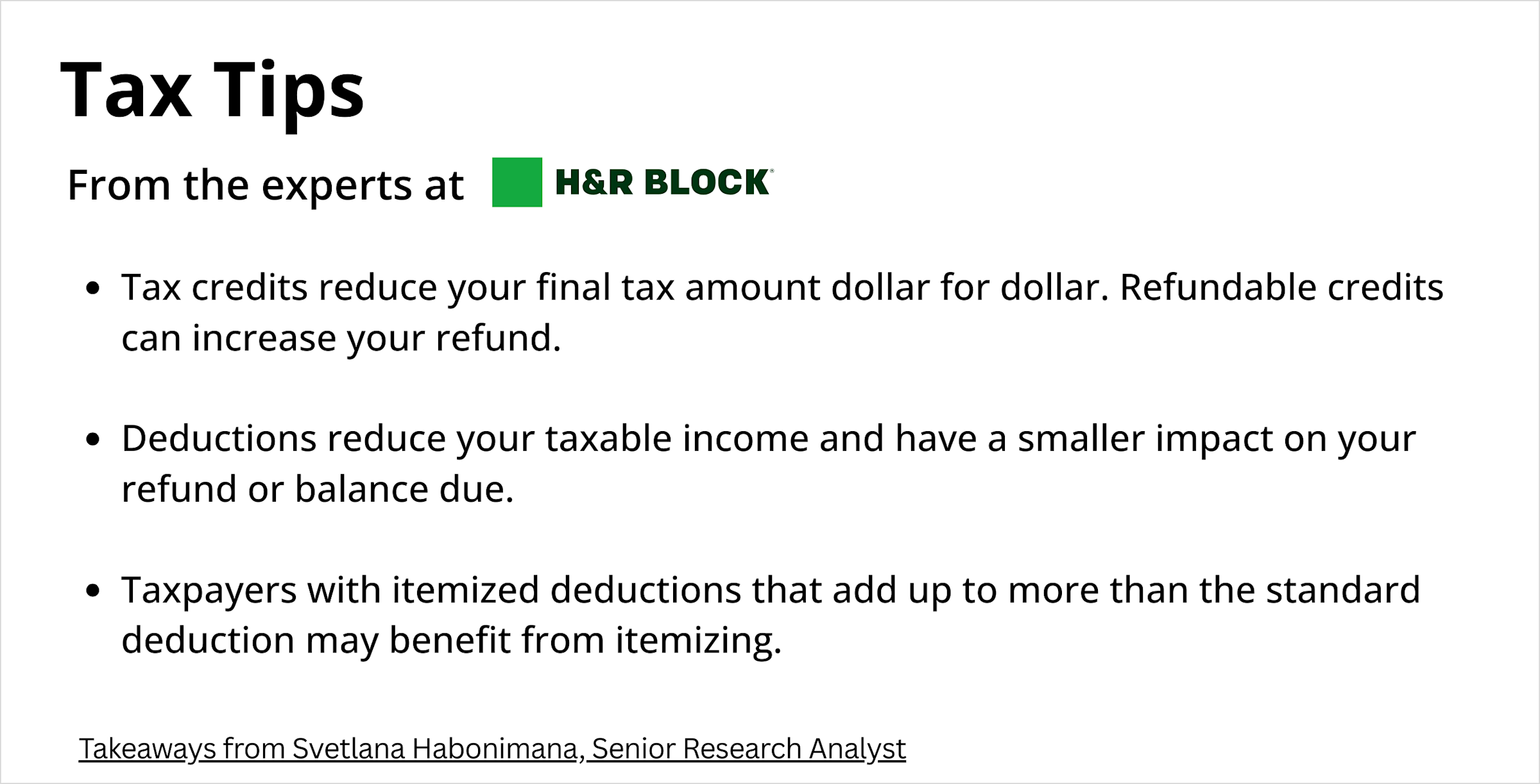
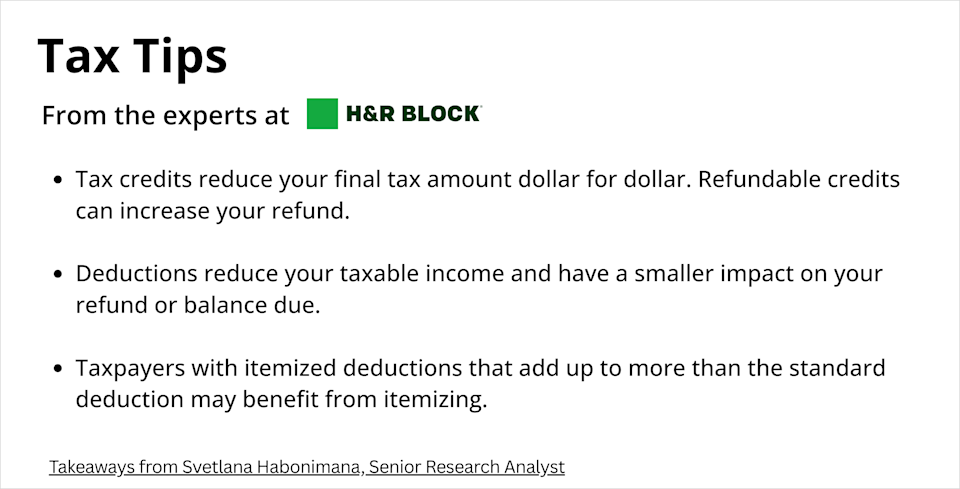
Education tax credits are a type of tax credit designed to help individuals and families pay for higher education. Unlike a tax deduction, which lowers your taxable income, a tax credit reduces your tax bill dollar for dollar.

You can claim an education tax credit if:

You’re a college student (or your spouse is a student) paying for your own education, and no one can claim you as a tax dependent.

You’re a parent paying college expenses for a dependent child.

The following income limits apply to both the American Opportunity Tax Credit and the Lifetime Learning Credit for both 2025 and 2026. Income limits are determined by your filing status and based on modified adjusted gross income. Neither credit is available if your tax filing status is married filing separately.

How it works: The American Opportunity Tax Credit is an education tax credit that’s worth up to $2,500. Of that, up to $1,000 is refundable, which means you can use that portion to score a bigger tax refund. You can use the rest of the credit to lower the amount of tax you owe.

You can claim up to 100% of the first $2,000 of qualified education expenses through the AOTC, plus 25% of the next $2,000 (or $500) in IRS-approved expenses. That means to max out the $2,500 credit, you’d need to spend at least $4,000 on education for the eligible student during tax year.

Who can claim it: To claim the AOTC for a student’s education expenses, the student must meet the following eligibility requirements:

They’re an undergraduate student pursuing a college degree or another recognized educational credential.

They’re enrolled in school at least half-time for at least one academic period during the tax year.

They’ve completed less than four years of higher education at the beginning of the tax year.

No one has claimed the AOTC or the former Hope credit on their behalf for more than four tax years.

They don’t have a felony drug conviction at the end of the tax year.

You can only use the American Opportunity credit to pay for tuition, fees, books, course materials, and equipment necessary for the degree program. Other expenses, like room and board and transportation, don’t qualify.

Read more: Child tax credit: Everything you need to know for the 2025 tax year

How it works: The Lifetime Learning Credit is an education tax credit worth up to $2,000, or 20% of qualified education expenses up to $10,000. Unlike the AOTC, it’s entirely nonrefundable, so you won’t receive any unused portion as a tax refund.

Who can claim it: To claim the LLC for a student’s education expenses, the student must be:

Taking courses at an eligible education institution

Seeking a degree or credential or taking classes to enhance their job skills and opportunities

Enrolled in at least one course during the tax year

The rules for the Lifetime Learning Credit are more relaxed than the American Opportunity Tax Credit rules in a few respects: While you can’t claim the AOTC for more than four years per student, there’s no limit on the number of years you can claim the LLC.

You can use the LLC for undergraduate or postsecondary education expenses, as well as courses that could help you find a job, but you can only claim the AOTC for a student who’s completing an undergraduate degree or a similar program. Students can also qualify for the LLC if they have a felony drug conviction.

However, you’re a bit more restricted in terms of what education expenses you can use the LLC for versus the AOTC. You can use both education tax credits for qualified tuition and required fees, but you can only use the Lifetime Learning Credit for books, supplies, and equipment if they’re paid directly to the institution. You can use the American Opportunity Tax Credit to purchase these items even if you go through an off-campus store.

Learn more: Tax credit vs. deduction: Which is better?

Before you claim either education credit, there are a few more rules to know:

You can’t claim both credits on the same return for the same student.

You also can’t claim an education tax credit if you’ve already gotten a tax break (like a tax-free withdrawal from a 529 plan) for an education-related expense.

If you have a scholarship that you don’t need to repay, you can’t claim an education tax credit if the scholarship covers the same expense.

You can, however, claim both the AOTC and LLC on the same tax return for different students. So if you’re a parent who has two children enrolled in a college or university, you could claim the AOTC for one child and the LLC for another, assuming you’re paying for their education.

To claim either education tax credit, you’ll need to use the information on IRS Form 1098-T, Tuition Statement, which is a statement colleges and universities send to some students that shows how much they (or their families) paid for higher education expenses. You’ll then use Form 8863 to calculate and claim the education tax credit.

Read more: Need more time for your taxes? Here’s how to file a tax extension.

Since you can’t claim both the AOTC and LLC for the same student, here are some guidelines to help you decide:

Consider the American Opportunity Tax Credit (AOTC) if:

You can claim either tax credit for the student (since the maximum AOTC is higher and the credit is partially refundable).

You’re using the credit for expenses like books and supplies that you don’t purchase directly from the school.

The student is enrolled at least half-time and hasn’t completed four years of college.

Consider the Lifetime Learning Credit (LLC) if:

The student is enrolled less than half-time or has already completed a four-year degree.

You’re not using the money for a degree program.

You’ve already claimed the AOTC on the student’s behalf for four years.

The student has a felony drug conviction.

There are a couple of other tax benefits students and their parents should be aware of for tax planning purposes.

You can deduct up to $2,500 in student loan interest you pay during a tax year, provided that you’re legally obligated to repay the loan. The student loan interest deduction is subject to annual income limits.

Both federal student loans and private student loans qualify for the deduction. To deduct student loan interest, you must have taken out the loan to pay education expenses for yourself, your spouse, or someone who was your dependent at the time. You aren’t eligible for the deduction if you (or your spouse if you’re married filing a joint return) can be claimed as a dependent by someone else.

A 529 plan is an investment account for education. They can be used for college savings or to offset tuition to a private grade school, middle school, or high school.

You’ll never get a tax break on federal income taxes for your contributions to a 529 savings plan, though many states offer tax incentives. But the money grows on a tax-deferred basis. As long as you use the money for qualified education expenses, withdrawals are tax-free at the federal level. Many states don’t impose taxes on education-related distributions, either.

If you’re claiming an education tax credit, you can’t withdraw 529 plan money to use for the same expense. However, if you have extra college savings, you can roll over up to $30,000 of unused 529 funds into a Roth IRA for the beneficiary (subject to annual Roth IRA limits) once the account is at least 15 years old.

You can’t get a tax write-off for your child’s college tuition, as the tuition and fees deduction ended in 2020. However, you may be eligible for the American Opportunity Tax Credit or Lifetime Learning Credit if you paid your child’s college tuition. Either credit can reduce your tax obligation, and a portion of the AOTC can be issued as a refund.

You may not qualify for an education tax credit for the following reasons:

If you earn more than the income limits

If you didn’t pay the educational expense you’re claiming the credit for

If someone else can claim you as a dependent for tax purposes

If your tax filing status is married filing separately.

The Trump education tax credit refers to the Education Freedom Tax Act established under the One Big Beautiful Bill Act. The credit is worth up to $1,700 and is available to donors who contribute to nonprofits called Scholarship Granting Organizations, or SGOs, which provide private school scholarships to K-12 students. The credit is only available to SGO donors; you can’t use it to offset education-related expenses.

Learn more about tax credits and tax deductions, including how they work, how they affect taxable income, and which is better.

Learn how the child tax credit changed for the 2025 tax year, who's eligible, how much it's worth, and how to claim it on your federal tax return.

The student loan interest deduction can reduce your taxable income by up to $2,500. Find out if you qualify.

Learn more about the child and dependent care tax credit, including how to qualify and what it’s worth.

Everything you need to know about the earned income tax credit, including how it works and an income table to help determine if you qualify.

Wondering if you can claim the saver’s credit to reduce your 2025 tax bill? Learn whether you qualify and how it works.