buzzfeed Press
Here's What You Need To Camp In The Coldest Place On Earth
Images
1 / 16

2 / 16

3 / 16

4 / 16

5 / 16

6 / 16

7 / 16

8 / 16

9 / 16

10 / 16

11 / 16

12 / 16

13 / 16

14 / 16

15 / 16

16 / 16
We hope you love our recommendations! While every product is independently chosen by our editors, BuzzFeed and our publishing partners may collect a share of sales or other compensation from the links on this page. You can read more about how our affiliate partnerships work in our Editorial Standards & Ethics Guide.

Sleeping overnight on the ice isn’t for the faint of heart.

The agency’s vice president of expedition development, Karin Strand, is one of the world’s most experienced explorers and pioneers in expedition travel, and she shared her tips and advice for camping in Antarctica and other frigid conditions. Strand is the executive committee chair at the Association of Arctic Expedition Cruise Operators (AECO) and has visited the frozen continent more than 150 times. Although she does not endorse any specific product, she shared great advice on making extreme cold-weather camping not just tolerable but enjoyable.

Admittedly, much of the gear suitable for camping in extreme temperatures is pricey. However, if you’re spending the night somewhere, conditions can be life-threatening, or just really uncomfortable, it’s worth the investment to be prepared.

The experts consulted for this story do not necessarily endorse the products ahead unless otherwise noted.

When camping in cold conditions, a sleeping pad does more than create a more comfortable place to get some shut-eye, our onboard expedition leader explained during the onboard camping briefing. The right product can keep you off the frigid ground so you will stay warmer and wake up better rested. “Insulation from the ground is critical, where the ice beneath you can rapidly drain body heat,” explained Karin Strand, the vice president of expedition development at HX, a company that specializes in travel to Antarctica.

The Nemo Equipment Tensor ultralight insulated sleeping pad is a good choice for many cold-weather campers because it is light but insulated for extra protection.

“Amazing sleeping pad! Kept me nice [and] warm. These pads [are] not crinkly and loud when you move around on them. The inflatable pump sack is a game-changer. Also ounces count, these are super light!,” says reviewer C4chops.

Get it from REI for $199.95+ (available in four sizes).

One of the most important pieces of equipment you can have when camping in the cold is a sleeping bag that is up to the challenge. “A suitable sleeping bag is an absolute must in these conditions," Strand explains. On our Antartica trip, we used custom sleeping bags that aren't available commercially, but Strand explained that they're “intentionally roomy enough to allow guests to wear insulating layers inside, which helps fine-tune warmth without restricting movement overnight,” she says. With this guidance in mind, you'll want to look for a sleeping bag that offers more interior space for bulking up, and not a lightweight or mummy-style bag that hugs the body.

One option is the Sea to Summit Boab synthetic 15F sleeping bag. While it may not be warm enough for Antarctic conditions on its own, it is water-resistant and can stand up to wind, and you can also pair it with a sleeping bag liner or camping quilt for extra warmth. If you want something even warmer and have a bigger budget, the Sea to Summit Spark 0F down sleeping bag is a great choice for extreme cold.

Of the Boab sleeping bag, reviewer Rick W. says: “This is a really great all around bag. Not too heavy and being able to unzip the bottom for ventilation keeps you comfortable in the warmer months but also super warm when it gets chillier. This past weekend I went on a trip when it got pretty chilly and damp and I was super cozy. The material makes it great for damp and wet weather by repelling water but not making it all sticky."

Get it from REI for $145+ (available in two sizes).

During a briefing about camping in Antarctica, our expedition leader emphasized the importance of a sleeping bag liner to add extra warmth. I’ve traveled with a sleeping bag liner before and can attest that it can help keep you toasty in very cold conditions. My Sea to Summit Reactor insulated sleeping bag liner helped me get a great night’s sleep in the Wadi Rum desert, where temperatures can drop below freezing at night.

This liner turned out to be a great choice for frigid conditions elsewhere as well. The liner is designed for conditions up to -25 degrees, making it a great choice for even more extreme conditions similar to those in Antarctica.

“Currently own a 20 degree bag and saw that the lows were going to be in the teens for my winter camping trip. I don't mess around when it comes to comfort in my sleeping bag in the winter. This liner did the trick! Slept in long-johns, wool socks, and a flannel and woke up perfectly comfortable the next day. I've had multiple friends buy the liner since that trip,” wrote reviewer Matthew.

Get it from Amazon for $48.96+ (available in 15 sizes and styles).

While my husband and son didn’t use a camping blanket in Antarctica, having one as part of your arsenal for cold-weather camping is useful. It can be used for extra insulation inside your sleeping bag or placed under your sleeping bag for extra protection against the cold ground. The Rumpl original puffy blanket is light yet provides a lot of warmth. It comes in two sizes, and the brand is constantly updating the blanket’s prints and colors.

“Best camping blanket. Love this company super warm, super soft, lightweight excellent value for money and the quality is amazing,” says Danielle Wright.

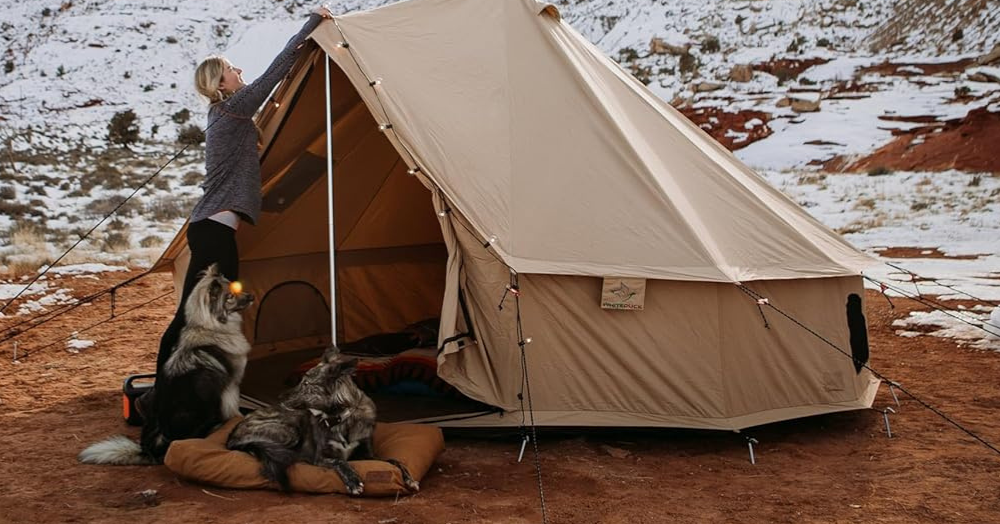
“In very cold conditions, staying warm is mainly about protection from wind and moisture,” Strand explained. While HX’s proprietary windproof and waterproof tents aren’t available to purchase, tents don’t need to have a lot of bells and whistles to be effective, and simple but well-constructed models are usually all that’s needed to survive the Antarctic night, Strand said. “The approach is inspired by early polar explorers like Ronald Amundsen, the first person to reach the South Pole, who focused on simple, efficient systems that protect from wind and snow rather than unnecessary complexity,” she said.

It’s not the exact tent that HX uses, but the Whiteduck Regatta canvas bell tent is a simple, waterproof structure that can stand up to the rain. It has two-layered doors and windows for extra protection. And although campfires are not permitted in Antarctica due to fire regulations, the Regatta tent is designed to accommodate a wood stove to safely heat the tent’s interior (if you’re camping in a region where this is permitted). The tent is available in six colors and five sizes, along with some flame retardant and waterproof options.

“We went ahead and took the plunge into a more expensive camping tent, and WOW! We have had many tents before but nothing compares with this canvas tent! Wow! It’s warm, like you’re indoors!!...When the rain hits the canvas it’s loud though haha, but completely waterproof. The zippers are highest grade. Great investment for our family,” wrote reviewer J.B.K., Jr.

Cold can set into your feet quickly. Visitors to Antarctica are required to comply with environmental guidelines set by the International Association of Antarctica Tour Operators, Strand says. Many expedition operators, including HX, provide specialized boots that protect Antarctica’s fragile environment. However, for camping in other cold weather conditions, you should look for insulating, waterproof boots, she says.

I have found that the Danner Mountain 600 Leaf boots hold up well in snow and ice while keeping my feet warm. (I've actually written about these boots before). They also come in men’s sizes.

Get them from Amazon: in women's for $108.84+ (available in sizes 5–11, with wide options, and 16 colors) and in men's for $163+ (available in sizes 7–15, with wide options, and 16 colors).

On my Antarctica expedition, the crew recommended wearing a pair of thin socks covered by a pair of thicker socks. The system worked well for my husband and son during their overnight on the ice.

Darn Tough Vermont’s merino wool hiking socks keep feet warm without bulk. As a bonus, they have cooling vents for increased breathability and they are guaranteed for life. If these aren’t your style, browse Darn Tough’s other styles.

 “I’ve been disappointed by every other brand of socks I’ve tried. Now I’m addicted to Darn Tough, and I wear these socks everyday. I’m hooked for life. They’re a bit expensive but worth every penny,” wrote reviewer J Fraser.

Get them in women's from Amazon for $25.95 (available in sizes S–L and eight colors) and in men's from REI for $26 (available in sizes M–XXL and nine colors).

Most people know that wearing a hat keeps you warm during the winter, but keeping your head covered is essential in extreme conditions. “A warm hat or head covering makes an immediate difference, since a lot of body heat escapes through your head if it’s left uncovered,” Strand says.

A Smartwool thermal merino reversible cuffed beanie is a light but warm hat. Although I didn’t camp in Antarctica, I did use this hat while traveling on the continent, and it kept me warm without feeling bulky. It’s available in 13 styles, so everyone should be able to find one they like.

Setting up a tent or being active in extreme temperatures means you need to use your hands while keeping them protected from the cold. “Layered gloves or mittens allow you to stay warm without sacrificing dexterity, which is key when you’re adjusting zippers, cameras, or camping gear,” Strand says.

The North Face Insulated Apex Etip gloves are a great choice for extreme conditions where you can’t sacrifice dexterity. These gloves are insulated and water-resistant while allowing for a range of movement. They are available in sizes S–XXL.

When dealing with freezing temperatures, scarves are more than a fashion accessory. “Neck protection like a scarf, buff, or gaiter helps seal in warmth and protect your face from wind, especially during Zodiac rides or overnight camping,” Strand explains.

While camping, a Smartwool thermal balaclava helped keep my husband and son warm. They loved that the balaclava was soft and warm. At various points throughout the night, they used the balaclava to cover their faces and heads and as a scarf. The unisex balaclava is available in one size and four colors.

“Worked perfectly for skiing. Kept my face and neck very warm. Great quality and definitely good value,” said one Amazon reviewer.

Thermal base layers on your top and bottom are the most important part of staying warm, even in the world’s harshest conditions. “They sit closest to your skin and help your body hold onto heat all day and night. Think merino wool or wool-blend long underwear,” Strand says.

My husband wore Smartwool classic all-season merino wool base layer bottoms and a matching top for his Antarctic camping adventure. He found the set comfortable enough to sleep in, and it helped him stay toasty throughout the night. He has since worn the set at home for winter hikes, even during a polar vortex. The Smartwool classic bottoms are available in three colors, and the top is available in seven colors. Both are available in sizes S–XXL. Women’s bottoms are available in four colors and sizes XS–XL. The women’s top is available in 10 colors and sizes XS–XXXXL.

“Love these as a base layer, kept me warm and dry in a mountaineering hike in Alaska. Soft and comfortable would buy again,” wrote reviewer froggy frogger. “These pants have incredible material quality. They fit very well and keep me warm on cold days,” wrote Lone Wolf.

Get the top from Amazon for $90 in men's or in women's and the bottoms also from Amazon for $90+ in men's and in women's.

Although base layers are essential to staying warm, they are just the beginning. “Insulating mid-layers,  like fleece pullovers, wool sweaters, or lightweight insulated jackets, create that cozy buffer of warm air around your body, which becomes especially important when you’re outside for extended periods in extreme cold,” Strand explains.

During my husband’s camping experience, he wore a Fjällräven Abisko Trail fleece jacket as his mid-layer. He really likes that this fleece zips up all the way to his chin for extra protection against the cold. Plus, it looks great when you remove your top layer.

The jacket is available in four colors with sizes ranging from S–XXL. There is also a women’s version available in six colors, with sizes ranging from XXS–XL.

“[Go-to] midlayer. Don't know you have it on, no restriction of movement. Excellent all round fleece,” says Simon J.

Get it from REI for $165 in men's and in women's.

After bundling up in quality base layers and mid-layers, an outer layer may feel like an afterthought. However, “Waterproof, windproof outer layers matter more than people expect. Cold on its own is manageable, but it’s wind and moisture that strip heat away the fastest,” Strand explained.

The North Face McMurdo jacket (left) was built for extreme weather — it even shares a name with the McMurdo research station, one of Antarctica’s largest. It’s insulated, waterproof, and can stand up to strong winds. The coat is designed with an oversized fit that allows for layering and ease of movement. The men’s McMurdo is available in two colors in sizes S–XXXL. The McMurdo does not come in women’s sizing, but The North Face Arctic insulated parka (right) is similar and comes in seven colors and sizes XS–XXXL. If you are looking for a thinner and less expensive outer layer, the waterproof and windproof The North Face Antora waterproof jacket is a solid choice.

Promising review: “I did a lot of research on parkas before deciding on the North Face McMurdo. This one checked all my boxes with regard to warmth, wind protection, waterproof and price…. I was able to put it to the test this morning in Minnesota. I was out clearing my driveway. The base temp was -23° with a 30mph wind dropping the “real feel” temp to -48°. The outer shell stopped the wind and I was toasty warm. I really appreciate the down insulation throughout the parka and the hood. This will be my go-to parka for when the temps are really cold for years to come. I highly recommend it.” —K.J.

Get them from Amazon: the McMurdo in men's sizes for $280+, the Arctic insulated parka in women's sizes for $350, and the Antora in men's sizes for $110+.

A warm pair of pants over your bottom base layer is just as important as a top outer layer that can stand up to the elements — one reviewer reported wearing the pants in windy, five-degree weather. Fjällräven's Keb hiking trousers (left) are waterproof, wind-resistant, and stretchy enough to allow for a range of movement. They are available in nine colors. For men, sizes range from 28W by 32L to 44W by 30L. They're also available in women’s sizes 0–20 with nine color options and long and short options.

Get them from Amazon in men's for $119.78+ and in women's for $237.55+.

Reviews for this post have been edited for length and/or clarity.

BuzzFeed Shopping is service journalism first: our writers and editors spend all day shopping so you don’t have to, vetting products, fact-checking brand claims, and surfacing what actually helps in real life. We center readers over revenue, recommend products with authenticity (using real experiences, not ad-speak), and reflect our diverse audience, inclusive of a variety of price points, people, and needs. We cut through fake deals, favor useful info over glossy fluff, and recommend both budget and splurge options with context so you can decide what’s right for you — and still have a little fun along the way.