yahoo Press
I smell a crash coming, says former Goldman Sachs boss
Images
1 / 6
2 / 6

3 / 6

4 / 6
5 / 6

6 / 6
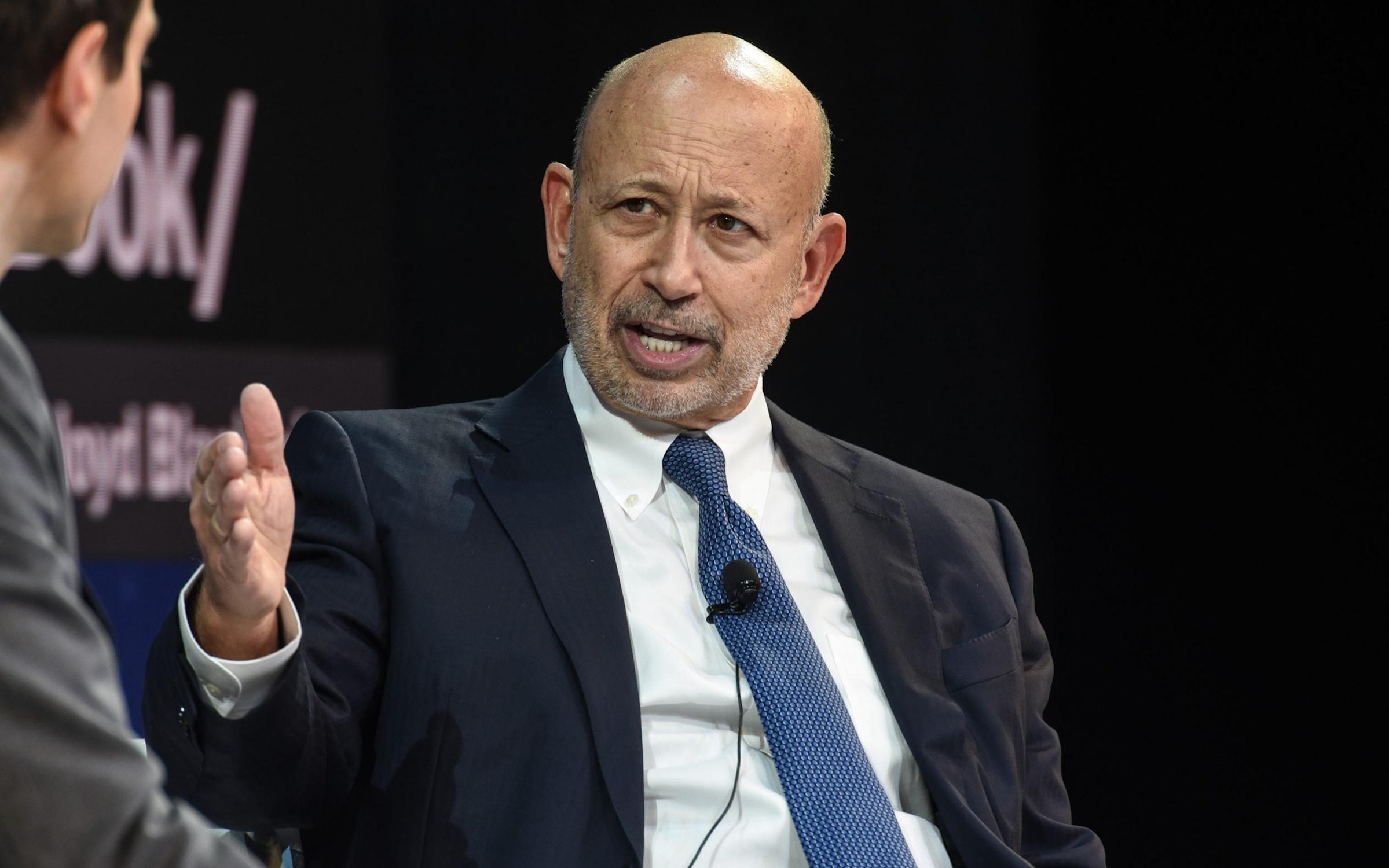
The man who led Goldman Sachs through the 2008 financial crash says he can “smell” a fresh crisis brewing.

Lloyd Blankfein said he saw parallels to the global financial crisis and saw signs the economy was getting closer to a crash.

“I wonder where there’s hidden secret leverage,” he said in an interview with Pablo Salame, Citadel’s co-chief investment officer.

“Now everyone says, ‘Oh, the world’s not leveraged.’ That’s exactly what everybody said in the mortgage crisis until you suddenly discover that there was a lot of mortgage risk in Iceland.”

“It sort of smells like that kind of a moment again,” Mr Blankfein added. “I don’t feel the storm, but the horses are starting to whinny in the corral.”

Mr Blankfein, who ran Goldman from 2006 until 2018, said the financial system appeared to be moving towards another catastrophe as a result of the boom in private credit, a corner of the market often referred to as shadow banking.

He criticised private credit lenders for attempting to encourage retail access at a time when they are most unstable.

“One has to worry about opaque assets where there’s illiquidity,” he told Bloomberg in a separate interview. “We’re getting close to the end of late stages of cycles on this and we’re due for a kind of a reckoning.”

While tougher regulations for banks following the financial crisis have boosted their resilience, it has also pushed traditional lending activities towards shadow banking. Private credit lenders do not take deposits and so are not subject to the kind of strict regulations as banks.

Britain’s private market has grown by 56pc since 2015 to $185bn (£138bn) and is the second largest after the US, according to a recent report by the House of Lords.

The sector’s rapid growth has raised concerns about its stability and the potential impact of a crash on the wider financial system. In the UK, the Bank of England plans to conduct the world’s first “stress test” of the shadow banking sector to see how it would cope with a global shock.

Private credit companies have increasingly been launching vehicles that allow ordinary investors to back the loans it extends to businesses.

It is a particularly difficult time for the $1.8tn private credit market, both in the UK and the US. Analysts have warned that as much as 35pc of the $1.7tn private credit market is exposed to disruption from AI. In a worst case scenario, private credit could see default rates surge to as high as 13pc.

Blue Owl, one of the largest players in the sector, was forced to permanently shut the gates on one of its tech-heavy private credit funds last month after investors were spooked by the possibility that software companies might be disrupted by AI.

In the UK, Market Financial Solutions (MFS), a bank-backed private credit company that provided mortgages, collapsed last week amid allegations of fraud.

Firms including Barclays, Jefferies and Apollo’s Atlas SP Partners, its structured credit arm, extended £2bn of financing to MFS, which, while not a regulated bank, still provided bank-like credit products such as mortgages. It is understood that Elliott Investment Management also has roughly £200m of exposure to mortgage-backed facilities to MFS, which it bought from UK-based digital lender Chetwood Bank.

Mr Blankfein’s comments echo similar warnings from Jamie Dimon, the chief executive of JP Morgan, who was among the first to note the growing number of so-called cockroaches in private credit.

“Unfortunately, we did see this in ’05, ’06 and ’07, almost the same thing – the rising tide was lifting all boats, everyone was making a lot of money,” Mr Dimon said last week. “I see a couple people doing some dumb things.”

Try full access to The Telegraph free today. Unlock their award-winning website and essential news app, plus useful tools and expert guides for your money, health and holidays.