yahoo Press
Nvidia pulls the plug on China H200 production as Vera Rubin takes priority
Images
1 / 5
2 / 5

3 / 5

4 / 5
5 / 5
The move confirms what Washington's regulatory whiplash made inevitable: Nvidia has stopped betting on China's AI chip market and redirected its most precious manufacturing resource toward the future

Nvidia Corp (NASDAQ:NVDA, XETRA:NVD) has ended production of H200 chips destined for China, according to a Financial Times report published Thursday, redirecting manufacturing capacity at Taiwan's TSMC toward its next-generation Vera Rubin platform.

The decision comes less than a week after Nvidia reported its full-year results, and it puts concrete operational weight behind a line that appeared in those results almost as a footnote: the company said it was not assuming any data centre revenue from China in its forward guidance.

At the time, that disclosure was read by some analysts as cautious housekeeping. It now looks like a statement of settled intent.

What the results showed

Nvidia reported record quarterly revenue of $68.1 billion on February 25, up 73% from a year earlier, driven almost entirely by its data centre business, which contributed $62.3 billion, or more than 91% of total revenue. For the full fiscal year, revenue reached $215.9 billion, up 65%. The company guided for $78 billion in the current quarter, well ahead of the $72.6 billion analysts had expected.

None of that assumed a single dollar from China's data centre market. The H200 generated zero revenue in the fourth quarter. Nvidia said explicitly it was not counting on Chinese data centre compute revenue in its outlook.

At the time, some observers still framed China as potential upside, a dormant revenue stream that could activate if Beijing approved imports. Thursday's production halt makes clear that Nvidia is no longer structuring its manufacturing around that possibility.

The deal that stalled

In January, the Trump administration formally approved H200 exports to China, subject to a 25% sales fee paid to the U.S. government. Chinese technology companies had reportedly placed orders for more than 2 million chips for 2026, against an Nvidia stock of roughly 700,000 units.

The commercial opportunity looked significant. At approximately $27,000 per chip, meeting even a portion of that demand would have added several billion dollars in revenue. ByteDance alone was reportedly prepared to spend around $13.8 billion on Nvidia chips this year, up from roughly $11.7 billion in 2025.

But the orders never became shipments. Beijing had not formally approved imports despite Washington's authorisation. Chinese officials were reportedly considering a rule that would require domestic chip purchases alongside any H200 imports, intended to protect local semiconductor companies.

By early January, the Chinese government had asked some technology companies to temporarily pause H200 orders while officials decided on terms. A Commerce Department official confirmed last month that none had been sold.

Why manufacturing capacity couldn't wait

TSMC's production capacity is finite, and every wafer allocated to one product is unavailable for another. Nvidia now has a more pressing use for that resource.

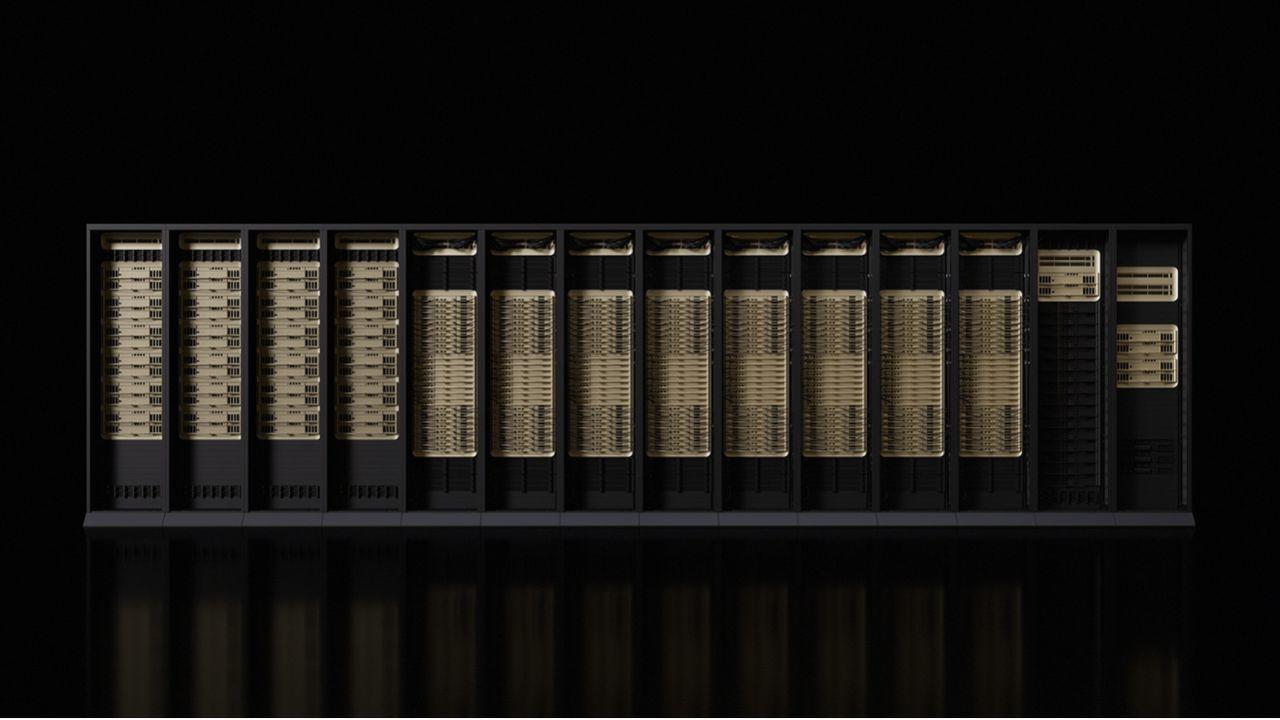
Vera Rubin, announced at CES 2026 in January, is already in full production at TSMC on a 3-nanometer process. The platform delivers around 50 petaflops of inference performance, five times the output of the Blackwell generation it replaces. Partner availability is set for the second half of 2026, with AWS, Google Cloud, Microsoft and Oracle among the first cloud providers committed to deployments.

Jensen Huang told analysts last week that the company expects sequential revenue growth throughout 2026, and that its $500 billion order book for Blackwell and Rubin was, in his view, now too conservative.

The H200, by contrast, runs on TSMC's older 4-nanometer process and is based on Hopper architecture, two full generations behind the current standard. It remains the most powerful chip Nvidia is permitted to sell in China, but holding production capacity for a product with no confirmed revenue pipeline, while a far more valuable platform ramps up with confirmed orders, was a trade-off Nvidia could not sustain.

What it means for China

Chinese AI companies lose access to a chip that offered a meaningful performance step up from anything domestically available. The H200 provides six times the floating-point performance of the H20, the older export-compliant chip that was itself later restricted. Huawei has been closing the gap with its Ascend processors, but the H200's compute density for AI training remained ahead of what local suppliers can match.

The broader problem is structural. Vera Rubin, now in production, is not available to Chinese buyers under current export control rules and delivers performance roughly 22 times that of the chips Nvidia is otherwise permitted to sell in China. Each new generation widens the gap between what China's AI industry can access and what the rest of the world is deploying.

Nvidia's calculation

The western market for Vera Rubin is large, well-funded and free of regulatory uncertainty. Microsoft is deploying Vera Rubin NVL72 rack-scale systems across its next-generation data centres.

CoreWeave, AWS and Google Cloud are all scheduled for second-half 2026 deployments. Hyperscaler capital expenditure across the top five cloud providers is now approaching $700 billion for 2026, and Nvidia captures a significant share of that spend.

Against that backdrop, China was a conditional opportunity carrying meaningful regulatory risk and a track record of non-delivery. Last week's results showed that Nvidia is growing at 73% annually without it. The $78 billion Q1 guidance beat expectations by more than $5 billion, again without assuming any Chinese revenue. The production halt is the logical endpoint of that arithmetic.

The wider picture

The shift shows how thoroughly U.S. export controls have reshaped the AI supply chain. Nvidia is not leaving China because demand is weak. The demand is very real. It is redirecting capacity because the regulatory environment makes the trade-off unfavourable against confirmed orders elsewhere, and because its own results have demonstrated that China is not a precondition for the growth story.

For Washington, the result is mixed. The controls have limited China's access to advanced chips. They have also given western hyperscalers an uncontested runway to build out next-generation AI infrastructure. The TSMC capacity that might have gone toward Chinese orders is going instead to Vera Rubin systems being installed in data centres across the United States and Europe.

Nvidia's results last week looked like a company firing on all cylinders without China. Thursday's news confirms it intends to keep things that way.