yahoo Press
Why Short Sellers Are Targeting Visa (V), One of the Most Shorted Dow Stocks
Images
1 / 4
2 / 4

3 / 4

4 / 4
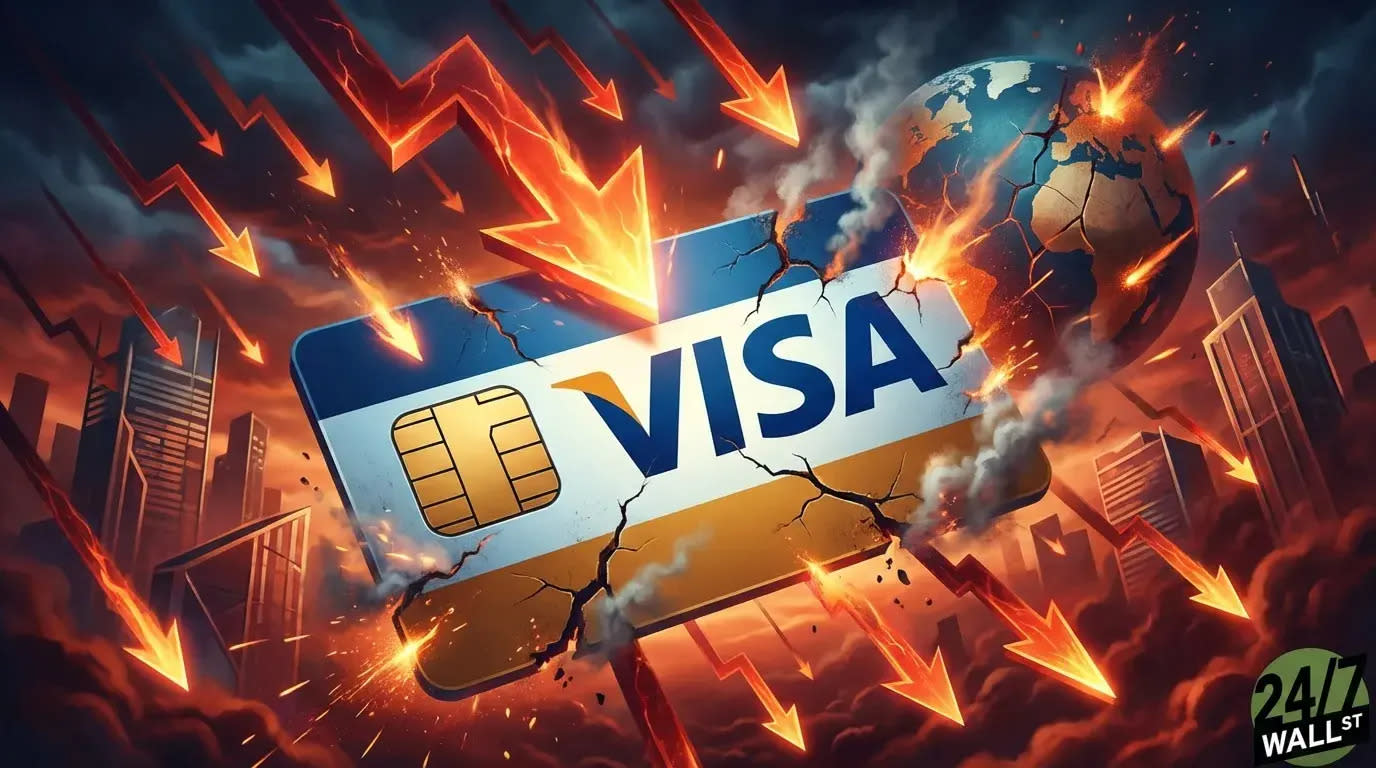
Visa (V) trades at $314.43, down 10.3% YTD, with Q1 revenue $10.90B up 14.6% YoY but net income up only 1.6% in FY2025 due to $3.213B in litigation provisions.

Europe is building a payment network covering 130M users across 13 countries to bypass Visa and Mastercard, with the digital euro targeting 2026 adoption.

The analyst who called NVIDIA in 2010 just named his top 10 AI stocks. Get them here FREE.

Visa (NYSE: V) is one of the market's most reliable compounders: dominant network, consistent earnings beats, and a business model that prints cash in nearly any economic environment. It's a retirement portfolio staple. But Visa ranks among the most shorted stocks in the Dow Jones Industrial Average, according to just-released data. And the bears are onto something that the consensus "Buy" crowd is underweighting.

The stock closed at $314.43 on Tuesday, down 10.3% year-to-date, while the broader Dow is essentially flat, off just 0.7% YTD. That's meaningful underperformance from a blue chip supposed to be a safe harbor.

Visa's fundamentals are genuinely strong. Q1 FY2026 revenue came in at $10.90 billion, up 15% year-over-year, with processed transactions rising 9% to 69.4 billion. The company has beaten earnings estimates every quarter of the past year. Analyst consensus sits at a "Buy" with an average price target of $400.47. The bull case writes itself.

READ: The analyst who called NVIDIA in 2010 just named his top 10 AI stocks

The problem hides beneath the non-GAAP headline numbers. Over the past four quarters, Visa has recorded cumulative litigation provisions of $3.213 billion tied to the interchange multidistrict litigation settlement. That's a recurring drag crushing GAAP profitability. Despite revenue growing 11.3% in FY2025, net income rose only 1.6% and operating income grew just 1.69%. Revenue is surging; actual profit is barely moving.

Then there's Europe. A viral Reddit post titled "Europe's $24 Trillion Breakup With Visa and Mastercard Has Begun" accumulated nearly 8,000 upvotes on r/investing, and the underlying story is real: the European Payments Initiative and EuroPA Alliance signed an agreement to build a pan-European payment network covering 130 million users across 13 countries, built around the digital wallet Wero, explicitly designed to bypass American payment networks. With the digital euro targeting 2026 for legislative finalization and the launch of technical pilots, this isn't a distant threat.

Stablecoins and real-time payment alternatives add structural pressure. CEO Ryan McInerney acknowledged it: "As technologies like AI-driven commerce, real-time money movement, tokenization and stablecoins converge to reshape commerce..." It is framed as opportunity but is equally a threat map.

Squeeze risk is real. Visa's operating margin is 68.3%, and the company repurchased approximately 54 million shares for $18.2 billion in FY2025 alone, with a new $30 billion repurchase program authorized in April 2025. That's a powerful floor. A litigation settlement resolution or regulatory clarity in Europe could send shorts scrambling.

Conviction here is moderate: 6 out of 10. It might not be worth shorting, but investors may not want to add Visa at current levels. The litigation overhang is quantifiable but unresolved, the European breakup narrative is accelerating, and the stock is already underperforming the Dow by a wide margin in 2026. Investors reallocating within payments might find Mastercard (NYSE: MA) worth comparing. It faces similar headwinds but has been flagged as a relatively safer near-term play. Watch the interchange multidistrict litigation resolution timeline and EU digital payments regulatory updates as the key catalysts determining whether bears or bulls win this one.


Wall Street is pouring billions into AI, but most investors are buying the wrong stocks. The analyst who first identified NVIDIA as a buy back in 2010 — before its 28,000% run — has just pinpointed 10 new AI companies he believes could deliver outsized returns from here. One dominates a $100 billion equipment market. Another is solving the single biggest bottleneck holding back AI data centers. A third is a pure-play on an optical networking market set to quadruple. Most investors haven't heard of half these names. Get the free list of all 10 stocks here.