yahoo Press
Iran Oil Hub Strike Raises Fears of Further Supply Upheaval
Images
1 / 6
2 / 6

3 / 6

4 / 6
5 / 6

6 / 6
(Bloomberg) -- A major US attack on the island that exports the bulk of Iran’s crude is raising fears of more widespread supply disruptions in the region, further straining oil and gas markets already in upheaval after two weeks of war in the Middle East.

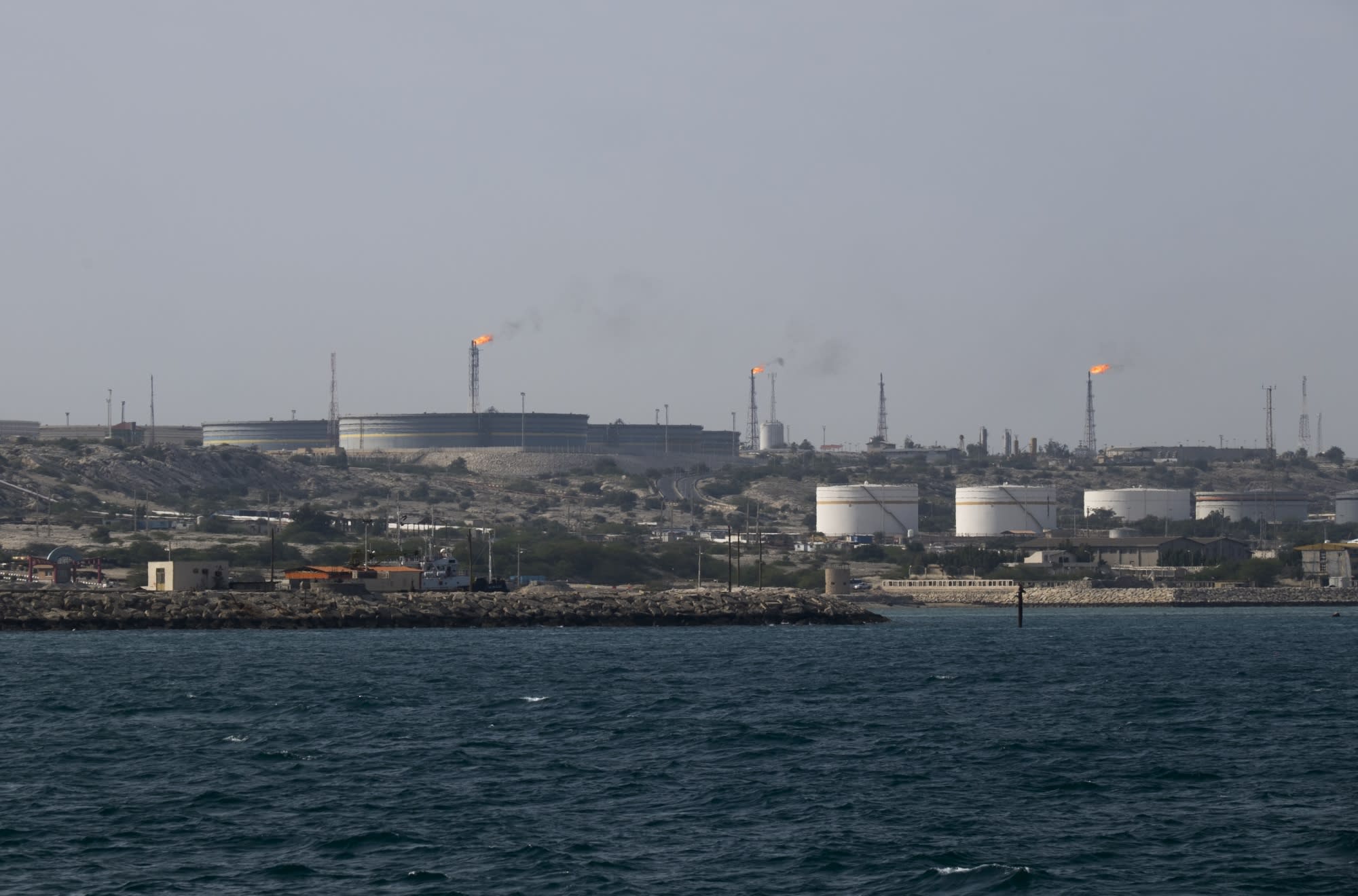
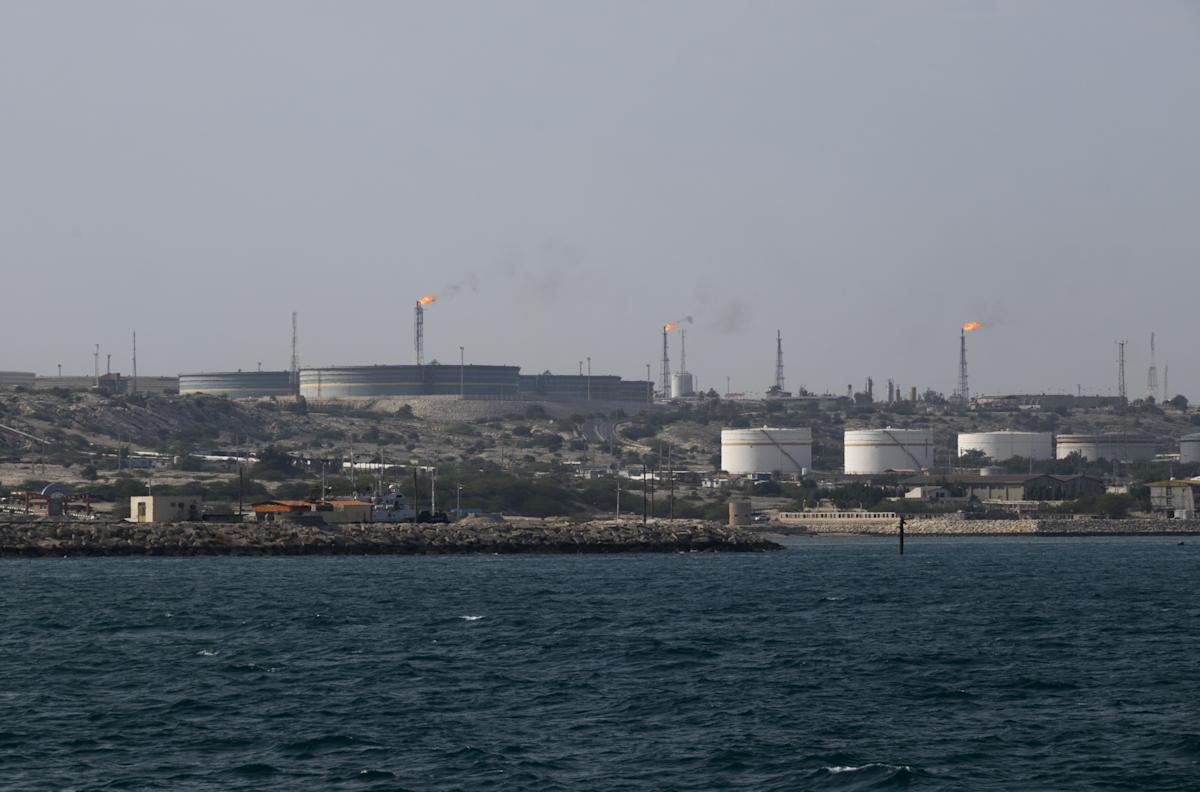
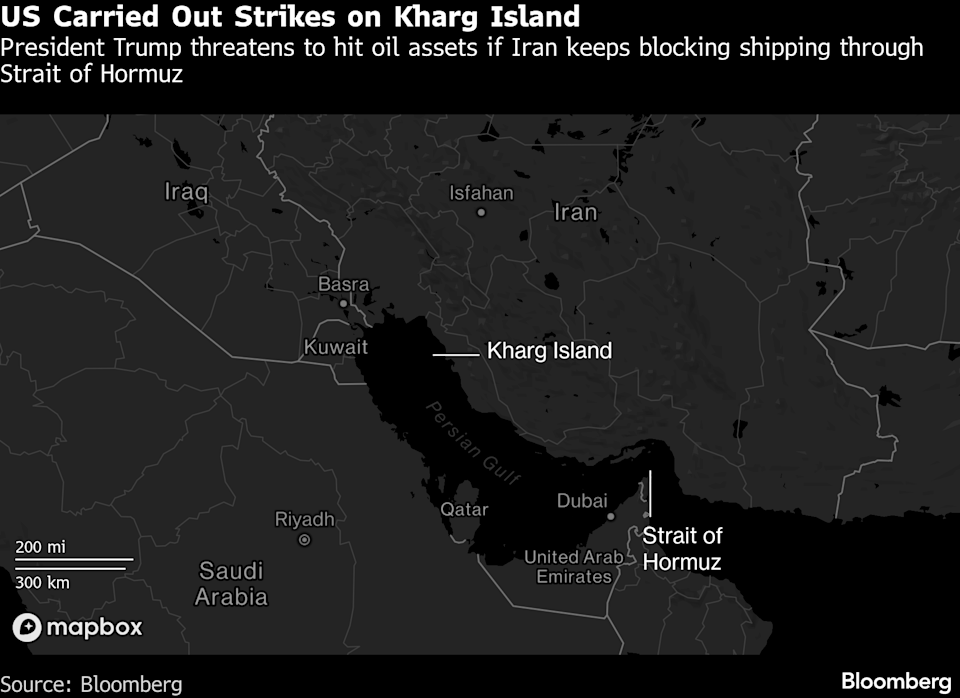
President Donald Trump said in a post on his Truth Social account on Friday that the US had bombed military targets on Kharg Island in the Persian Gulf, but spared oil infrastructure. He warned Iran’s leaders that he would immediately reconsider that decision if they interfered with ships transiting the Strait of Hormuz.

Most Read from Bloomberg

Two LPG Ships Sail Through Hormuz to Shortage-Hit India

Second Dynacom Oil Tanker Passes Hormuz as Other Owners Hold Back

Mamdani Wants New York Estate Tax Threshold Cut 90% to $750,000

Key UAE Port Suspends Oil Loadings After Drone Attack, Fire

Venezuela Officials in Talks to Send Detained Maduro Ally to US

Iran said in response that any strike on oil and energy infrastructure would lead to retailiation against US-linked energy facilities in the region. An intercepted drone strike caused a fire at the key United Arab Emirates export terminal at Fujairah on Saturday, forcing all crude and refined product loading to be halted earlier in the day.

While neither side has reported evidence of damage to energy infrastructure at Kharg, the attacks ratchet up oil risks in a conflict that has already hit production and all but closed the Strait of Hormuz, sending crude prices soaring more than 40%. The International Energy Agency said this week the war had created the largest supply disruption in the history of the oil market.

Iran is heavily reliant on Kharg, which ships about nine out of every 10 barrels of its crude exports — the vast majority of which end up in China. Ships were berthed there on Saturday, according to an oil tanker industry-watcher, while Iranian media said exports were continuing normally.

Two oil tankers, one with a capacity of about 2 million barrels, were berthed at Kharg hours after the US attack, according to Tankertrackers.com, a firm that specializes in studying satellite imagery to follow ship movements.

Still, the strike marks a step-up in US targeting of critical infrastructure and the defensive capabilities around the key oil island.

“It’s Trump trying to escalate in order to de-escalate,” said Rachel Ziemba, a senior fellow at the Center for a New American Security. “The biggest risk to oil markets, and the war, is whether Iran retaliates.”

Absent further strikes, the impact on oil supply may well be limited if the island’s loading jetties, storage tanks and pipelines remain intact, JPMorgan Chase & Co. analysts including Natasha Kaneva said in a note published after the attack. That would leave the nation’s export capacity at about 1.5 million to 1.7 million barrels a day.

However, it raises the stakes in a conflict that has so far largely spared oil infrastructure in the region. The Ras Tanura export terminal and the Abqaiq processing hub in Saudi Arabia, as well as the Fujairah oil hub in the United Arab Emirates, are seen as “critical, highly vulnerable energy nodes,” the JPMorgan analysts said.

If Kharg Island were to be taken offline, it would rapidly trigger upstream production cuts and put as much as half of Iran’s oil output at risk, JPMorgan said in an earlier note dated March 8. Iran, which had previously been expected to be among the last of the Persian Gulf producers to shut in, could move ahead of Kuwait and the UAE, the bank said.

“I suspect cargo ships will be hesitant to load cargoes when the island is under such a direct threat of military attack from the US,” said Bob McNally, president of Rapidan Energy Group, a Washington-based consulting firm. “That is especially the case if Iran is still disrupting Strait of Hormuz traffic.”

Traffic through the Strait of Hormuz has been at a virtual standstill for two weeks, with no confirmed transits in either direction as of Friday, according to vessel-tracking data compiled by Bloomberg.

--With assistance from Weilun Soon, Ari Natter, Yongchang Chin and Anthony Di Paola.

(Updates with attack on UAE port in third paragraph, continued Kharg activity in fifth and sixth.)

Most Read from Bloomberg Businessweek

‘God, It’s Terrifying’: How the Pentagon Got Hooked on AI War Machines

Let’s Talk About Trump’s Shoe Thing

Why Gas Prices Will Stay High After the War Is Over

Fake Police Stations and Prisonlike Cells: Inside a Cambodian Scam Complex

Tequila Is Out. Celebrities Are Creating Sober Drink Brands Now

©2026 Bloomberg L.P.