yahoo Press
Up 271% in 3 Years — Is Antero Midstream Still the Energy Stock to Own?
Images
1 / 4

2 / 4

3 / 4

4 / 4
Antero Midstream (AM) delivered 271% total returns over three years and completed a transformative $1.1B acquisition of Marcellus midstream assets that will boost 2026 adjusted EBITDA by roughly 8% and free cash flow after dividends by 11%, while the company currently yields 3.9% backed by take-or-pay contracts with upstream affiliate Antero Resources (AR). Antero Midstream’s fixed-fee, take-or-pay business model shields it from commodity price volatility and allows it to benefit from geopolitical energy shocks through higher natural gas and NGL demand without bearing Middle East risks.

The Iran conflict and Strait of Hormuz disruptions are creating strong tailwinds for U.S. LNG exports and domestic natural gas demand, lifting economics for Antero Resources and translating into higher gathering and processing fees for the midstream operator despite broader recession risks from elevated gasoline prices.

A recent study identified one single habit that doubled Americans’ retirement savings and moved retirement from dream, to reality. Read more here.

The war in Iran has thrust the energy sector into extreme volatility once again. Oil prices have surged to around $100 per barrel, while average U.S. gasoline prices at the pump have soared to $3.67 a gallon  -- up 25% in just one month. Escalating tensions around the Strait of Hormuz, a vital chokepoint for roughly 20% of global oil and LNG shipments, have disrupted operations and sent international natural gas prices spiking.

Most energy stocks have ridden the 2026 rally higher amid these shocks. Yet some companies stand to benefit whether the conflict drags on for months or resolves quickly. Antero Midstream (NYSE:AM) is one of them. It has delivered eye-popping total returns of 271% over the last three years, and while Antero can still deliver gains, has all the easy money already been made?

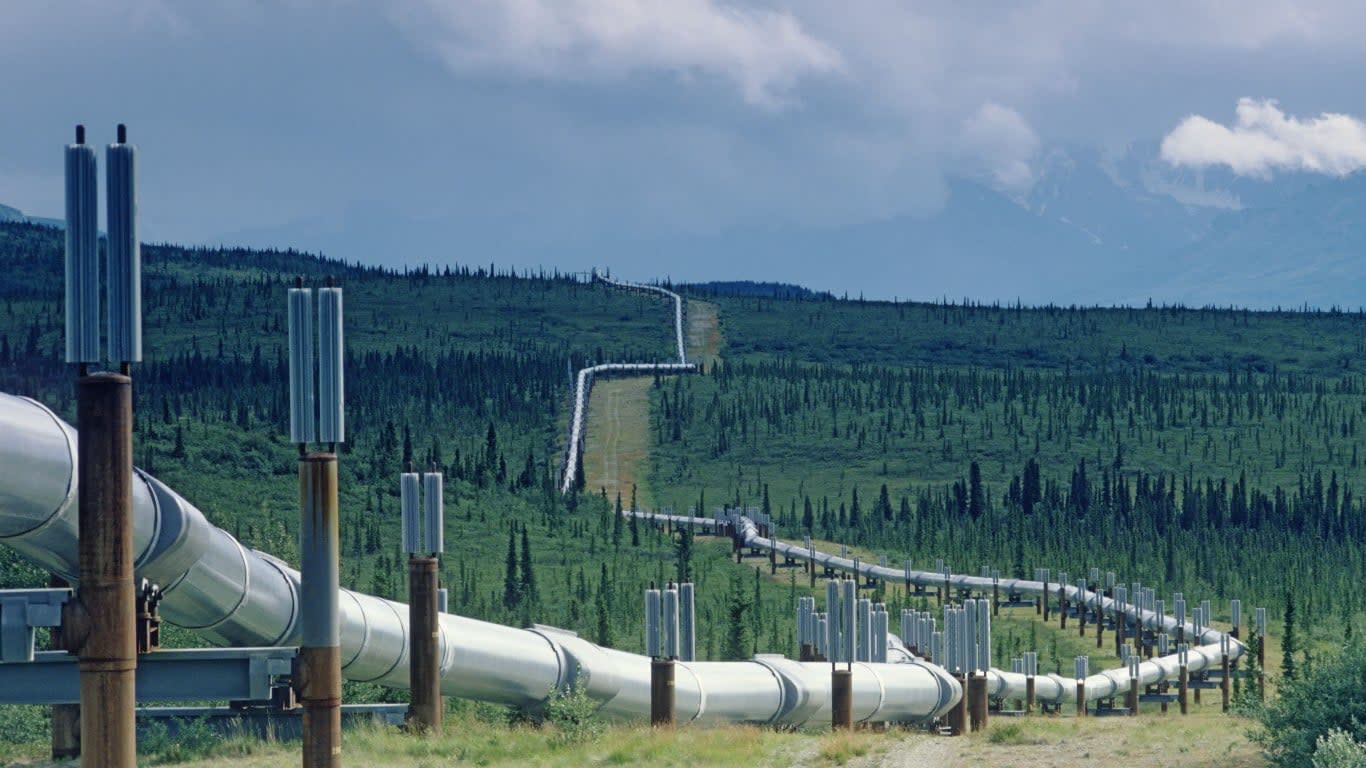
Antero Midstream owns and operates an extensive network of gathering pipelines, compression stations, processing plants, and water-handling infrastructure in the Marcellus and Utica shale plays of West Virginia and Ohio. It moves roughly 3 billion cubic feet equivalent per day of natural gas and natural gas liquids for its primary customer, Antero Resources (NYSE:AR).

Read: Data Shows One Habit Doubles American’s Savings And Boosts Retirement

Most Americans drastically underestimate how much they need to retire and overestimate how prepared they are. But data shows that people with one habit have more than double the savings of those who don’t.

Antero Midstream is tied at the hip to Antero Resources -- substantially all of its revenue comes from long-term, fixed-fee contracts with its upstream affiliate. Those contracts are largely take-or-pay, meaning the midstream operator gets paid regardless of commodity price swings. That structure delivers rock-solid revenue visibility and shields the company from the wild price volatility now roiling global markets.

In December, Antero Midstream announced a transformative $1.1 billion acquisition of Marcellus-focused midstream assets from HG Midstream. The deal closed in early 2026 and was partly funded by selling non-core Utica assets. The result is a sharper focus on the prolific Marcellus basin, higher throughput capacity, and meaningful cost synergies.

Management’s 2026 guidance reflects the boost  -- adjusted EBITDA rising roughly 8% and free cash flow after dividends up 11%. With low leverage and strong coverage ratios, Antero Midstream enters this uncertain period in excellent financial shape.

Neither Antero company has operations in the Middle East. Iranian missiles, tanker attacks, and the partial closure of the Strait of Hormuz cannot touch their Appalachian wells or pipelines. Yet the conflict is still a net tailwind.

Global LNG buyers in Europe and Asia are scrambling for U.S. cargoes after Qatari production disruptions. That extra export pull supports higher domestic natural gas demand and modestly firmer prices. NGL prices (propane, butane) have also strengthened. For Antero Resources, stronger economics encourage more drilling and higher volumes. For Antero Midstream, that translates directly into more gathering and processing fees -- all under those ironclad contracts. In short, the pipeline operator benefits from the upward pressure on energy prices without bearing any of the geopolitical risk.

However, gasoline at $3.67 a gallon is pinching household budgets and threatening consumer spending. Economists warn that sustained high fuel costs could slow GDP growth and curb industrial energy demand. If a broader recession takes hold, natural gas consumption might soften.

Here again, though, Antero Midstream's business model shines. Because its contracts are fixed-fee and take-or-pay, the company still collects its revenue even if its upstream partner's production volumes dip slightly or end-users cut back. The stability that once looked boring now looks like a fortress.

Yes, the easy money in Antero Midstream has largely been made. The stock’s 271% three-year run and the post-acquisition re-rating have priced in much of the obvious upside. Prospects for continued share-price appreciation remain solid thanks to volume growth, integration benefits, and supportive LNG tailwinds from the Iran conflict. But the blistering pace of recent years is unlikely to repeat.

That said, income investors should take notice. Antero Midstream currently yields about 3.9% and has a history of fairly reliable quarterly payouts backed by visible cash flows. In a world of geopolitical shocks and volatile energy prices, the stock offers something increasingly rare: defensive growth plus a healthy dividend.

Whether you missed the 271% run or not, the stock still deserves a close look for portfolios seeking both income and resilience.

Most Americans drastically underestimate how much they need to retire and overestimate how prepared they are. But data shows that people with one habit have more than double the savings of those who don’t.

And no, it’s got nothing to do with increasing your income, savings, clipping coupons, or even cutting back on your lifestyle. It’s much more straightforward (and powerful) than any of that. Frankly, it’s shocking more people don’t adopt the habit given how easy it is.