Press
Strait of Hormuz: India hopes talks with Iran will ease route for ships
Images
1 / 9

2 / 9
3 / 9
4 / 9
5 / 9
6 / 9
7 / 9

8 / 9

9 / 9
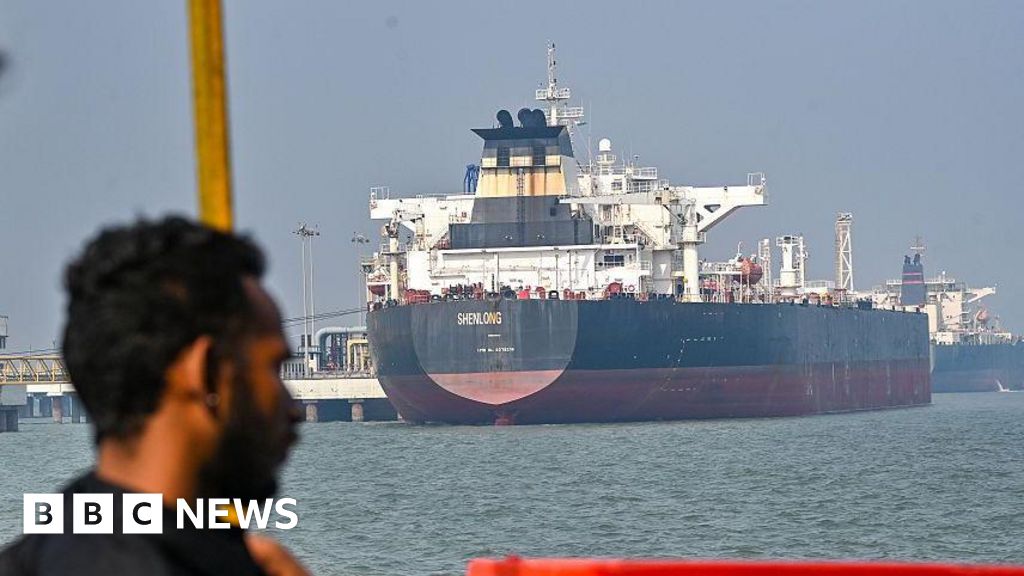
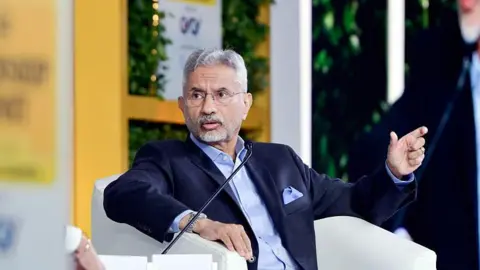
Indian Foreign Minister S Jaishankar has said he is hopeful that talks with Iran will begin to ease shipping disruptions for the country's vessels in the Strait of Hormuz.

"I am at the moment engaged in talking to them and my talking has yielded some results," he told the Financial Times.

He added, however, that there was no "blanket arrangement" for all Indian ships to pass through the narrow waterway, a vital oil shipping channel.

Two Indian-flagged gas tankers passed through the strait on Saturday after discussions progressed between Delhi and Tehran. Twenty-two Indian-flagged vessels are still waiting for clearance to pass through the channel.

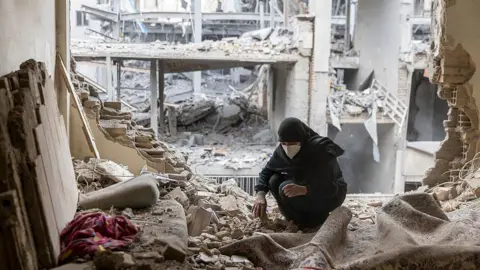
The war in the Middle East - which began after US and Israel launched wide-ranging strikes on Iran on 28 February - has led to Iran almost completely blocking ship movements through the channel. Iran has also launched attacks on Israel and US-allied states in the Gulf, which have extended to non-military targets.

The Strait of Hormuz is a narrow waterway between Iran and Oman linking the Persian Gulf with the Arabian Sea - about one-fifth of the world's oil and gas passes through the route.

The channel is crucial for India as roughly 40-50% of its crude oil imports come through the strait. It also carries around half of the country's liquefied natural gas imports and most of its liquefied petroleum gas shipments.

India has been dealing with a squeeze in cooking-gas supplies over the past few days, leading to panic-buying by domestic users and also forcing some restaurants to shut down temporarily.

A few ships have managed to pass through the strait in recent days, often after diplomatic engagement with Tehran. Reports say vessels linked to China have been allowed to pass. Turkey has said one of its vessels crossed the strait following discussions with Iranian authorities.

European governments including France and Italy are also exploring diplomatic options.

Jaishankar told the Financial Times that India's discussions with Tehran were continuing. "This is ongoing. If it is yielding results for me, I would naturally continue to look at it," he said.

Analysts say India is navigating a delicate diplomatic position as the crisis unfolds. Delhi maintains close ties with Israel and has growing strategic cooperation with the US, but also has longstanding political and economic links with Iran.

India has called for dialogue and for the safety of commercial shipping in the region - reflecting both its reliance on Gulf energy supplies and its interest in keeping shipping routes open.

Jaishankar told the Financial Times that India believed dialogue offered a better path than escalation.

"Certainly, from India's perspective, it is better that we reason and we co-ordinate and we get a solution than we don't," he said. "So, if that sort of allows other people to engage, I think the world is better off for it."

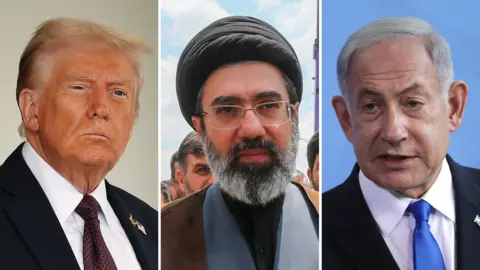
The comments come as US President Donald Trump urged countries including the UK and China to send warships to the Strait of Hormuz to help reopen the route.

The tensions have already pushed energy prices higher. Brent crude - the international benchmark used to price much of the world's oil trade - rose close to $106 a barrel on Monday.

Jaishankar told FT that India's engagement with Iran was based on its own bilateral relationship and might not apply to other countries. "Each relationship frankly, in a way, stands on its own merits," he said.

He denied that India had offered anything to Iran in return for the passage of the two Indian tankers. "It's not an exchange issue," he said, adding that India and Iran had a longstanding relationship.

He cautioned that the situation remained uncertain, with several Indian ships still waiting in the region.

"These are still early days," he said. "We have many more ships there."

Follow BBC News India on Instagram, YouTube, Twitter and Facebook.

Citizens of the most violent-wracked provinces have been warned the government is "at war" with the gangs.

Most people, although not everybody, want this war to end as quickly as possible. But on what terms?

A West Midlands woman tells of fear for friends and family as a third week of war in Iran begins.

Here's what happened inside the winners room and other insights from the biggest night in Hollywood.

The Oscars are the latest in a string of accolades for the film, which include Golden Globe and Grammy awards.