yahoo Press
US oil prices could see another day of wild fluctuation as Iran war drags on
Images
1 / 5
2 / 5

3 / 5

4 / 5
5 / 5
US oil prices could see another day of wild fluctuation as the US-Israel campaign against Iran extends into a third week, with one analyst predicting that prices at the pump might hit $3.85 per gallon on Monday.

Petroleum prices have spiraled upward as the broadening conflict has imperiled oil and gas production infrastructure in the region. On Friday, the US conducted strikes on Kharg Island, an essential oil processing hub in Iran. Tehran, meanwhile, continues to block ships from passing through the strait of Hormuz, where a fifth of the international oil supply typically passes through.

Related: Oil prices rise after Trump claims US ‘totally demolished’ Iran’s Kharg Island export hub

Brent crude, the international benchmark, increased to $106 per barrel early Monday but soon dipped to $103 a barrel. After briefly hitting $100 per barrel on Sunday, US crude was down to $94 by mid morning.

Patrick De Haan, a leading petroleum analyst, said on Monday that the average US cost of gasoline could reach $3.80 to $3.85 per gallon and that “$4 is still possible, but not just yet”. Diesel, a heavier gas used by trucks and trains, could reach from around $5.05 to $5.15 per gallon countrywide.

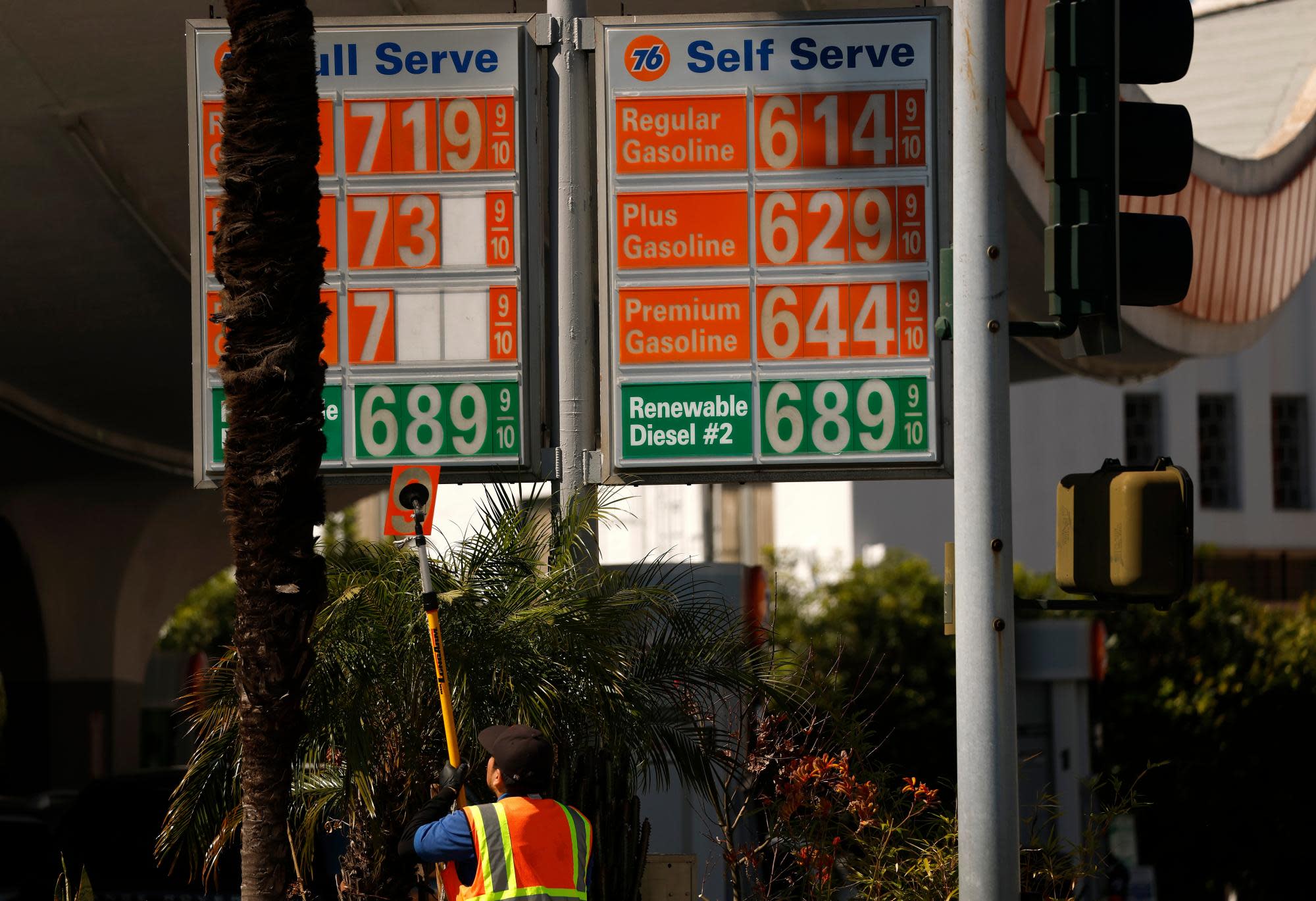
The average cost of regular gasoline in the US sat below $3 per gallon on 28 February, when the US and Israel first conducted strikes on Iran. Since then, the average now sits at $3.70 – marking a 23% increase in just under three weeks, Consumer Reports notes.

But some US regions have seen far more dramatic upticks. In California, averages exceeded more than $5 per gallon, according to Consumer Reports, while some Los Angeles gas stations were charging in excess of $8 per gallon.

Fluctuating oil prices continued to shake a jittery Wall Street on Monday. Stocks opened higher after news on lower oil prices, with the S&P 500 up around 1% at 11am ET.

Top oil companies stocks are seeing minor fluctuations this morning, according to the Wall Street Journal, though shares in top petroleum outfits have reached all-time highs overall since the conflict started.

Executives from several oil companies reportedly warned White House officials that the strait of Hormuz logjam could worsen conditions.

Darren Woods, Exxon’s CEO, told officials that prices could continue to increase if there are supply issues with refined oil and gas, the Wall Street Journal reported. He also warned that speculators could drive up prices.

Conoco and Chevron’s top executives also voiced worry about the broadening interruption, the newspaper said.