Press
Wary allies show there's no quick fix to Trump's Iran crisis
Images
1 / 9

2 / 9
3 / 9
4 / 9
5 / 9
6 / 9

7 / 9

8 / 9

9 / 9
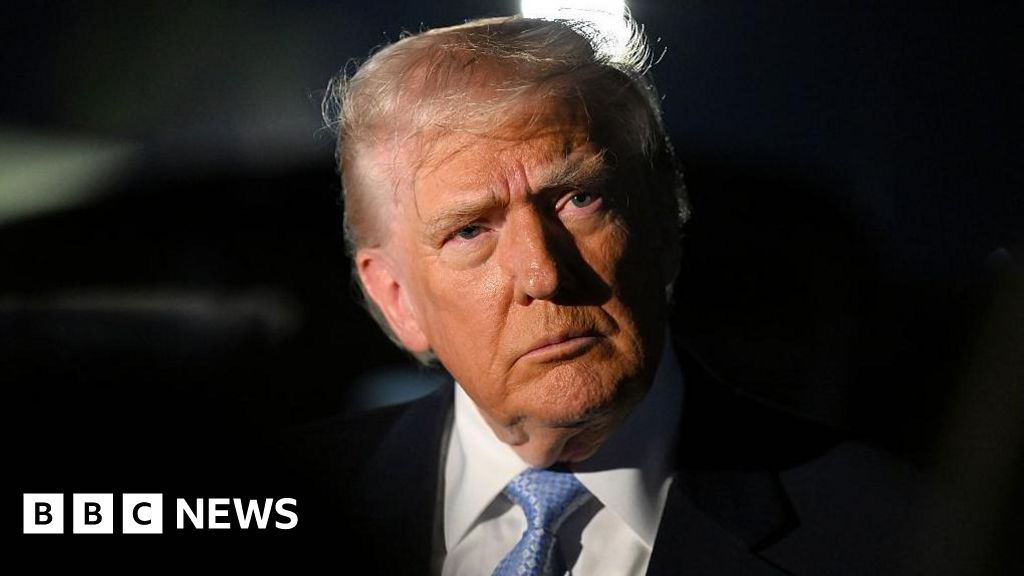
Throughout his two terms in office, Donald Trump hasn't been shy to criticise – even to attack – Washington's Nato allies.

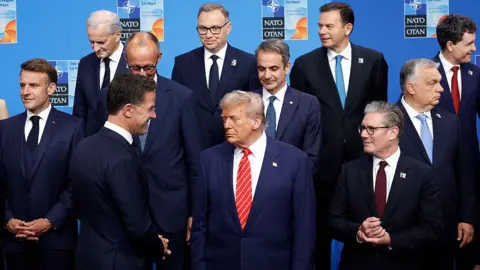
But his latest suggestion – that failing to secure the Strait of Hormuz would be "very bad for the future of Nato" – implies an understanding of the alliance's purpose that has already raised eyebrows.

"Nato was created as a…defensive alliance," Gen Sir Nick Carter, former Chief of the Defence Staff, told the BBC on Monday.

"It was not an alliance that was designed for one of the allies to go on a war of choice and then oblige everybody else to follow," he said. "I'm not sure that's the sort of Nato that any of us wanted to belong to."

Coming from a president who only two months ago was making strident claims to Greenland, the sovereign territory of a fellow Nato member, there's more than a little irony in his latest remarks.

This perhaps helps to explain why some responses have been fairly blunt.

In Germany, a government spokesman said the war with Iran "has nothing to do with Nato", while the Defence Minister Boris Pistorius seemed to pour scorn on the idea that Europe's modest navies could make a difference.

"What does Trump expect from a handful of European frigates that the powerful US navy cannot do?" he asked.

"This is not our war. We have not started it."

But none of this should hide the fact that there's now an urgent, and growing, need for a solution to the crisis in the Gulf. Iran's effective blocking of the Strait of Hormuz – except for a handful of vessels carrying its own oil to allies like India and China – has left western governments scrambling to find a solution.

It may be a crisis triggered by Donald Trump's decision to go to war, but it's one that needs to be fixed quickly, before the impacts on the global economy get any worse.

But it's already clear that there is no quick fix.

At his news conference on Monday, Sir Keir Starmer said conversations aimed at working out a "viable plan" were ongoing with the US, European and Gulf partners, but that we're "not at the point of decisions yet."

The prime minister referred to autonomous mine hunting systems which he said were already in the region.

With HMS Middleton, a mine countermeasures vessel (MCMV) back in Portsmouth for major maintenance, this is the first time in decades when no British mine-clearing ship is in the region.

Instead, the Royal Navy is expected to offer newly developed seaborne drones, designed to detect and neutralise mines without putting crews at risk.

But one of the problems Donald Trump is wrestling with is that minesweeping, once a core function of almost all navies, has long since ceased to be a top priority.

Tom Sharpe, a former Royal Navy commander, said the latest British technologies had yet to be tested in combat.

"We're probably going to find out in the next few weeks whether or not it works," he told the BBC.

Gen Carter said the last time western nations carried out a major de-mining operation at sea was in 1991, after Iraq mined the waters off Kuwait to prevent an amphibious landing in the first Gulf War.

"It took us fifty-one days to clear the mines", he told the BBC.

"No navy has invested in this at the scale that they should have done, least of all the Americans," he added.

The US navy's own Avenger-class specialised minesweepers, built with wooden hulls to avoid triggering magnetic naval mines, are all being withdrawn from service, replaced by Independence-class littoral combat ships which also use a variety of unmanned systems.

But it's not just about minesweeping. Iran's Revolutionary Guard is also capable of using armed fast boats, naval "suicide" drones and shore-based missiles to disrupt shipping.

Recent pictures, released by Iran's Fars News Agency, appeared to show large numbers of boats and drones being stored in underground tunnels, suggesting that Tehran has long been preparing for just such a moment.

President Trump has suggested that keeping the Strait of Hormuz open – which he last night described as "a very small endeavour" – might involve attacks on the Iranian coastline.

He said he was looking for "people who are going to knock out some bad actors that are along the shore."

The US has already targeted mine-laying boats at berth in Iranian ports, but it's hard to see many of Washington's allies being willing to follow suit, especially if this involves putting boots on the ground.

In an environment so full of possible dangers, it's not surprising that countries are hesitating to get involved, preferring instead to call, as the UK government has, for de-escalation as the surest way of unlocking the Strait of Hormuz.

But with American and Israeli officials talking about a campaign that could last several more weeks, that doesn't look like an immediate prospect.

In the meantime, could allies be persuaded to send ships to escort merchant vessels through the vital waterway?

"Germany will not participate with its military in securing the Strait of Hormuz," Pistorius said on Monday.

EU foreign ministers are meeting on Monday, with a proposal to extend an existing EU naval mission in the Red Sea on the table.

EU foreign policy chief Kaja Kallas says changing the mandate of Operation Aspides would be the "fastest" for the EU to improve security in the Gulf.

The operation was launched in 2024 to help meet the threats to shipping posed by the Iranian-backed Houthi rebels in Yemen.

It's a modest mission, currently involving just three warships, and there does not appear to be a huge appetite among EU members to expand it. The Spanish and Italian foreign ministers have both expressed doubts.

Germany's foreign minister, Johann Wadephul, said his government wanted to hear from Israel and the United States "when they believe they will have achieved their military objectives in Iran," before discussing new security arrangements.

Of the major European allies, France's Emmanuel Macron is perhaps the keenest to get involved, saying a week ago that he was trying to put together a coalition to escort vessels and guarantee freedom of navigation.

But he said this could only happen once the "hottest phase" of the conflict was over and a few days later, his defence minister, Catherine Vautrin said there were no immediate plans to send vessels into the Strait of Hormuz.

Former Royal Navy Commander Tom Sharpe said a potential escort operation would be much more complex than Operation Aspides, with threats coming from three directions: the air, surface and underwater.

"Unlike with the Houthis, where it was only an air threat, with Iran, you have all three and you want to try and shoot these things before they're fired," he said. "That's not always possible."

At the moment, President Trump's somewhat shellshocked allies are hesitating outside the door marked "Iran involvement," looking nervously at each other but conscious that inaction is not really an option.

Sir Keir Starmer said the solution needed to involve "as many partners as possible", but said British military personnel needed important reassurances before being deployed on a potentially dangerous mission.

"The very least they deserve is to know that they do so on a legal basis and with a proper thought through plan."

As things stand, that plan does not exist.

The man was one of four arrested as part of a counter-terror investigation relating to Iran.

The funding is part of a £53m UK-wide support package for households "most exposed" to rising prices.

Millions are under weather warnings as mix of snow, thunderstorms, and high winds hit parts of the eastern US, while the west coast faces extreme heat.

The conflict in the Middle East could raise the cost of petrol, household energy bills and even food.

The footballers were given visas to stay in Australia after concerns the team would face repercussions at home.