yahoo Press
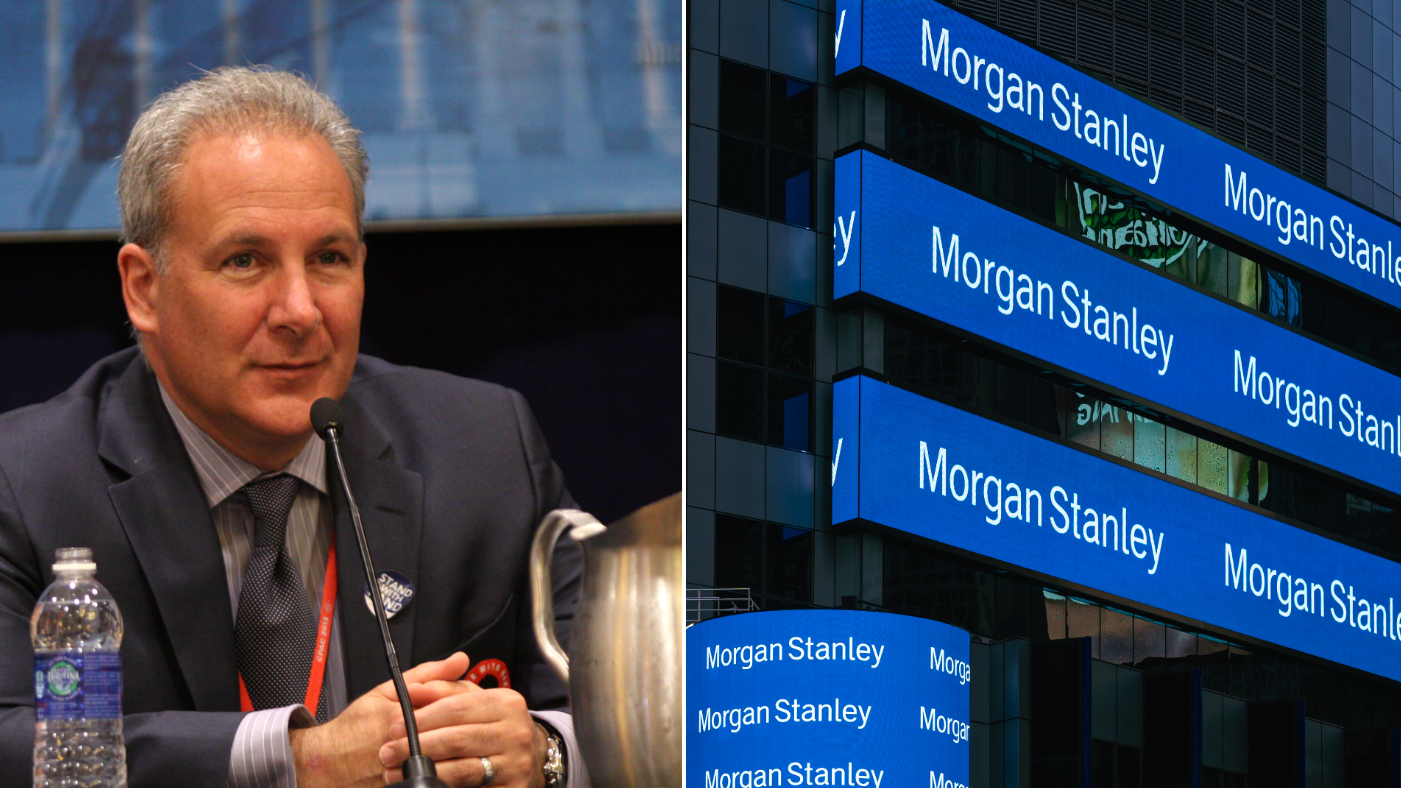
Peter Schiff warns investors will be ‘killed’ if they hold bonds — Morgan Stanley agrees. How to protect your retirement
Images
1 / 4
2 / 4

3 / 4

4 / 4
Moneywise and Yahoo Finance LLC may earn commission or revenue through links in the content below.

For decades, the classic 60/40 portfolio — 60% stocks and 40% bonds — served as the cornerstone of balanced investing. The idea was simple: When stocks stumbled, bonds would steady the ship.

But according to economist Peter Schiff, that old formula no longer holds up. Inflation, he warned, has torn apart one side of the traditional mix — leaving investors exposed to painful consequences that, based on more recent reporting, are only going to intensify in 2026.

Thanks to Jeff Bezos, you can now become a landlord for as little as $100 — and no, you don't have to deal with tenants or fix freezers. Here's how

Dave Ramsey warns nearly 50% of Americans are making 1 big Social Security mistake — here’s what it is and the simple steps to fix it ASAP

Vanguard reveals what could be coming for U.S. stocks, and it’s raising alarm bells for retirees. Here’s why and how to protect yourself

“Bonds are clearly the biggest victim of inflation. If you own bonds, inflation kills you. There is no hedge,” Schiff said in a YouTube video (1).

And now, the bond market is in deepening trouble.

Reuters reports that, due to the war with Iran, bonds have recently lost value across the globe. The jump in oil prices is also leading many experts to predict high inflation and the chance for central banks to hike rates in 2026 (2).

Bloomberg also reports that while bond options traders had previously expected a rate cut this summer, some are now predicting that the Federal Reserve will not cut rates at any point this year (3). This could mean an even gloomier outlook for bonds for the rest of 2026.

For context, bonds are particularly vulnerable when price levels rise. Their fixed payments don’t adjust for inflation, meaning investors are repaid in dollars that buy less and less over time.

Meanwhile, higher inflation often pushes interest rates up — and as rates rise, the market value of existing bonds falls because new issues offer better yields. That double blow — shrinking purchasing power and falling prices — can leave existing bondholders with real losses even as they keep collecting “safe” interest payments.

That’s a serious concern because bonds remain a core holding in many Americans’ portfolios, especially retirement accounts using the 60/40 split. For retirees and near-retirees counting on those holdings to preserve purchasing power, inflation can quietly erode wealth — even when markets appear calm.

To address that problem, a major Wall Street firm is giving the traditional 60/40 mix a modern upgrade.

Schiff pointed out that Morgan Stanley is leading the rethink. Instead of 60% stocks and 40% bonds, Morgan Stanley chief investment officer Mike Wilson now favors 60% stocks, 20% fixed income and 20% gold.

“Gold is now the anti-fragile asset to own, rather than Treasuries. High-quality equities and gold are the best hedges,” Wilson told Reuters (4).

Gold has helped investors preserve wealth for thousands of years. It’s a natural inflation hedge — unlike fiat currencies, it can’t be printed at will by central banks. It’s also considered by some to be the ultimate safe haven — not tied to any single country, currency or economy.

When markets wobble, or geopolitical tensions flare, investors often rush into gold, driving prices higher.

That was evidenced in 2025, as gold prices surged more than 50%. Schiff noted that Morgan Stanley’s suggested 20% allocation is “not chump change” — calling it “a lot of money coming into gold (5).”

At the time, he believed it might mark the start of a major shift, as “a huge wave of Wall Street money” flows out of bonds and into gold. However, the recent tumble of gold prices has some experts predicting that its reign as king of the markets is over.

“The biggest driver of gold prices has been central banks,” according to Kriti Gupta, Executive Director of J.P. Morgan Private Bank, and Justin Biemann, Global Investment Strategist, as quoted by Kitco (6). “Net purchases of gold have doubled since Russia’s war on Ukraine began in 2022. Central banks have fueled demand for the precious metal in efforts to diversify reserves away from the U.S. dollar after the United States froze Russian assets.”

“What if that structural demand from global central banks waned?” they wrote, referring to the major assets held by the U.S., Germany, Italy, France and Russia.

“Or worse, what if they wanted to outright sell the commodity?”

Whether their predictions are accurate or not, gold remains a popular store of value and could easily recover in the long run even if its current price is overvalued. After all, even with 2026’s early pullback, the precious yellow metal’s spot price is still up over 65% compared to March of last year.

Read More: I’m almost 50 years old and don’t have retirement savings. Is it too late to catch up?

Read More: Non-millionaires can now invest in this $1B private real estate fund starting at just $10

For those looking to capitalize on gold’s potential while also securing tax advantages, one option is to open a gold IRA with the help of Goldco.

Gold IRAs allow investors to hold physical gold or gold-related assets within a retirement account, which combines the tax advantages of an IRA with the protective benefits of investing in gold, making it an attractive option for those looking to potentially hedge their retirement funds against economic uncertainties.

With a minimum purchase of $10,000, Goldco offers free shipping and access to a library of retirement resources. Plus, the company will match up to 10% of qualified purchases in free silver. Just keep in mind that gold is often best used as one part of a portfolio — 20% if you’re following Morgan Stanley’s advice.

If you’re not sure if this is the right investment to diversify your portfolio, you could instead download your free gold and silver information guide today to find out if gold is right for you.

Wilson also highlighted high-quality equities — alongside gold — as “the best hedges” against inflation. Schiff expanded on that point, saying “stocks can also be viewed as an inflation hedge, although not all stocks are the same in that respect.”

Stocks can serve as a hedge against inflation when companies are able to raise prices to offset rising costs, allowing their revenues and earnings to grow alongside inflation.

Over time, that ability to pass on higher costs allows corporate profits — and ideally, share prices — to adjust upward. While not every stock offers protection, businesses with strong pricing power, essential products and healthy balance sheets tend to hold up better when inflation eats away at purchasing power.

For investors who don’t want the pressure of correctly picking winners and losers, there’s a simpler way to gain exposure to high-quality companies — one endorsed by legendary investor Warren Buffett.

“In my view, for most people, the best thing to do is own the S&P 500 index fund,” Buffett has famously stated (7).

This approach gives investors exposure to 500 of America’s largest companies across a wide range of industries, providing instant diversification without the need for constant monitoring or active management.

The beauty of this approach is its accessibility — anyone, regardless of wealth, can take advantage of it. Even small amounts can grow over time with tools like Acorns, a popular app that automatically invests your spare change.

Signing up for Acorns takes just minutes: Link your cards, and Acorns will round up each purchase to the nearest dollar, investing the difference — your spare change — into a diversified portfolio.

With Acorns, you can invest in an S&P 500 ETF with as little as $5 — and, if you sign up today with a recurring monthly deposit, Acorns will add a $20 bonus to help you begin your investment journey.

Beyond gold and equities, real estate remains one of the most powerful ways investors have sought to protect their wealth from inflation.

When inflation rises, property values often increase as well, reflecting the higher costs of materials, labor and land. At the same time, rental income tends to go up, providing landlords with a revenue stream that adjusts for inflation.

Over the past five years, the S&P Cotality Case-Shiller U.S. National Home Price NSA Index has jumped by 49%, reflecting strong demand and limited housing supply (8). This can make real estate both a good diversifier and a potential source of passive income.

Of course, high home prices can make buying a home more challenging, especially with mortgage rates still elevated. And being a landlord isn’t exactly hands-off work — managing tenants, maintenance and repairs can quickly eat into your time (and returns).

The good news? You don’t need to buy a property outright — or deal with leaky faucets — to invest in real estate today. Platforms like Arrived offer an easier way to get exposure to this income-generating asset class.

Backed by world-class investors like Jeff Bezos, Arrived allows you to invest in shares of rental homes with as little as $100, all without the hassle of mowing lawns, fixing leaky faucets or handling difficult tenants.

The process is simple: Browse a curated selection of homes that have been vetted for their appreciation and income potential. Once you find a property you like, select the number of shares you want to purchase and then sit back as you start receiving any positive rental income distributions from your investment.

However, short-term rentals are not the only way to tap into the real estate market without owning a property outright.

If diversifying into multifamily and industrial rentals appeals to you, you could consider investing with Lightstone DIRECT, a new investing platform from the Lightstone Group, one of the largest private real estate companies in the country with over 25,000 multifamily units in its portfolio.

Since they eliminate intermediaries — brokers and crowdfunding middlemen — accredited investors with a minimum investment of $100,000 can gain direct access to institutional-quality multifamily opportunities. This streamlined model can help reduce fees while enhancing transparency and control.

And with Lightstone DIRECT, you invest in single-asset multifamily deals alongside Lightstone — a true partner — as Lightstone puts at least 20% of its own capital into every offering. All of Lightstone’s investment opportunities undergo a rigorous, multi-stage review before being approved by Lightstone’s Principals, including Founder David Lichtenstein.

How it works is simple: Just sign up with your email, and you can schedule a call with a capital formation expert to assess your investment opportunities. From here, all you have to do is verify your details to begin investing.

Founded in 1986, Lightstone has a proven track record of delivering strong risk-adjusted returns across market cycles with a 27.6% historical net IRR and 2.54x historical net equity multiple on realized investments since 2004. All told, Lightstone has $12 billion in assets under management — including in industrial and commercial real estate.

As such, even if multifamily rentals don’t appeal to you, Lightstone could still serve you well as an investment vehicle for other real estate verticals.

Get started today with Lightstone DIRECT and invest alongside experienced professionals with skin in the game.

Are you overpaying for car insurance? This 2-minute check could lower your rate to $29/month — no phone calls required

Robert Kiyosaki begs investors not to miss this ‘explosion’ — says this 1 asset will surge 400% in a year

This 20-year-old lotto winner refused $1M in cash and chose $1,000/week for life. Now she’s getting slammed for it. Which option would you pick?

Warren Buffett used these 8 repeatable money rules to turn $9,800 into a $150B fortune. Start using them today to get rich (and stay rich)

Join 250,000+ readers and get Moneywise’s best stories and exclusive interviews first — clear insights curated and delivered weekly. Subscribe now.

We rely only on vetted sources and credible third-party reporting. For details, see our editorial ethics and guidelines.

@peterschiff (1); Kitco (2), (6); Bloomberg (3); Reuters (4); @Schiffgold (5); CNBC (7); S&P Global (8)

This article provides information only and should not be construed as advice. It is provided without warranty of any kind.