huffpost Press
Trump’s War With Iran Causes Gas Price Surge: ‘Enough Is Enough’
Images
1 / 8

2 / 8
3 / 8
4 / 8

5 / 8

6 / 8

7 / 8

8 / 8
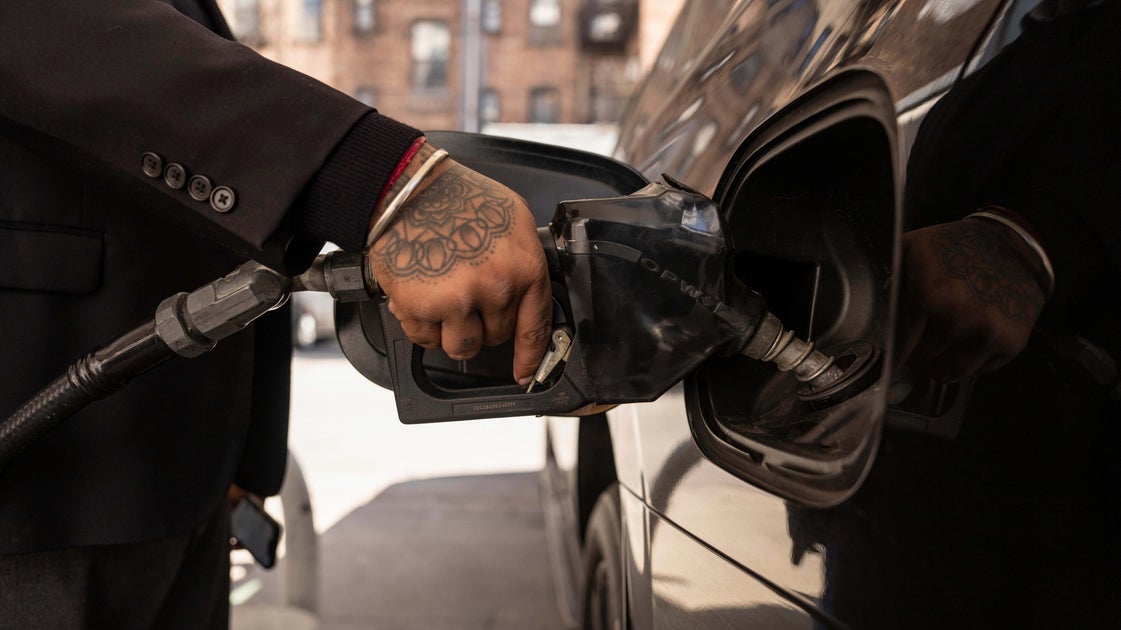
In less than a month, gas prices have climbed more than $1 per gallon in suburban Atlanta, where Joshua Elliott delivers meals every morning for DoorDash before clocking in at his full-time job. The higher fuel costs have added about $15 a week to his driving expenses, nearly equal to an hour’s take-home pay from food delivery.

“It’s not life-changing, but it’s probably about an extra hour or hour and a half of working,” said the 33-year-old, who’s trying to save up for an engagement ring for his girlfriend. “That’s time I was going to relax. Now I’ve got to go out and work instead. I feel the grind more.”

Gasoline prices have shot up about 30% nationally in the three weeks since the U.S. and Israel launched surprise attacks on Iran. The cost of crude oil, which largely determines what drivers pay at the pump, has soared above $100 per barrel as Iran throttles the vital shipping corridor known as the Strait of Hormuz. Israel’s attacks on Iranian oil and gas fields Wednesday increased the possibility of long-term disruptions to fuel production.

President Donald Trump hasn’t indicated when the war might end, or even what would constitute a U.S. victory. In the meantime, what Elliott has witnessed in Georgia — a jump from roughly $2.71 to $3.77 per gallon, according to AAA — is comparable to the average fuel cost increase for the country as a whole. It makes for the second-largest one-month gas price increase in three decades, behind only the supply shock created by Hurricane Katrina in 2005.

“It’s a big hit to people’s pocketbooks.”

As with his unpopular tariffs, Trump is betting Americans are willing to pay more at the pump in service to his foreign policy agenda. But if his administration doesn’t find an off-ramp from the war to stabilize the oil market, the higher fuel costs will ripple into the broader economy in the form of higher consumer prices, weaker job growth and greater sacrifice on the part of working-class people.

“I think we’re likely to see it fairly quickly. It’s a big hit to people’s pocketbooks,” said Dean Baker, an economist at the Center for Economic and Policy Research, a think tank. “Maybe something will happen with the war and prices will plummet back down and this will prove to be a temporary thing. But I don’t think it’s likely.”

Workers who have long commutes or who cover their own fuel costs as part of their job, like Elliott, are the first to feel the squeeze. But the higher gas prices will push up costs for anything that requires transport, Baker said, putting a dent in discretionary spending as people cut back on non-necessities — like bagging a vacation due to higher airfares, or skipping DoorDash orders in favor of cooking at home.

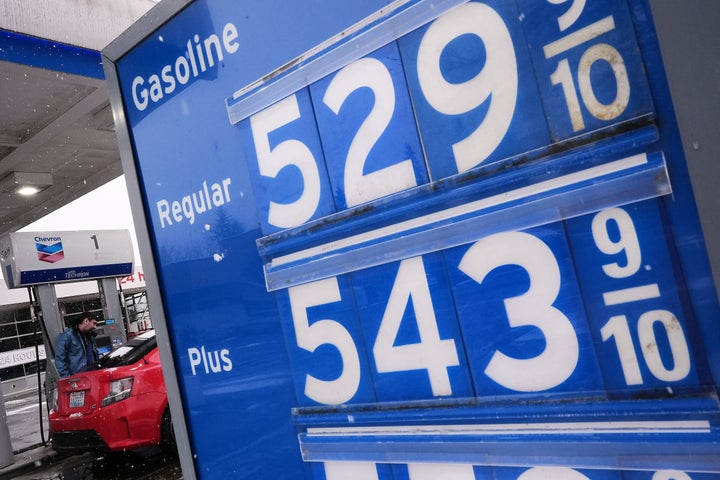
Ashley Brown, a hairstylist based in Seattle, said the rising cost of fuel has prompted her to reimagine her commute. Washington state has some of the highest gas prices in the country — currently around $5.15 a gallon, up from $4.18 a month ago — and she drives her Mazda 15 miles each way to and from the workspace she rents in the Seattle suburbs. She’s decided to switch to the light rail, which costs $3 a ride. It will double her commute time, but she figures she’ll help the environment and save money on gas and on wear and tear.

“I feel like we’re being squeezed everywhere else,” the 39-year-old said. “The cost of doing business, the cost of groceries, the cost of living. And now with gas going up, there’s just no room.”

Brown said she’s already felt shrinking profit margins as a self-employed stylist. The Trump administration’s tariffs have raised prices on foreign-made hair products, including coloring, and Brown has tried to resist passing those increases along to her clients. The added fuel costs came as an unpleasant surprise.

“This feels like enough is enough,” Brown said.

“I feel like we’re being squeezed everywhere else.... And now with gas going up, there’s just no room.””

The war has made inflation much harder for policymakers to predict. The producer price index, which measures wholesale prices, rose to its highest level in a year last month, according to data released Wednesday by the Bureau of Labor Statistics. The increase was driven mostly by higher food and energy prices, including a 14% hike in the cost of diesel fuel, which powers trucks, barges and farm equipment.

“The rise in energy prices in February is just the beginning,” Oxford Economics warned in a memo Wednesday, noting those figures would not reflect diesel’s increase in March since the war began.

Elliott said he’ll keep driving for DoorDash despite the added fuel costs, though he doesn’t expect customers to increase their tips because of it — after all, everyone is paying more to get around. His girlfriend, for example, commutes 44 miles round trip each day and has already felt the impact on her budget.

One of the more aggravating factors for Elliott is how the rise in prices was avoidable. He doesn’t support what he calls “a pointless war that we never should have gotten into.”

“It’s one of many things where I’m like, ‘Why are we doing this?’” he said.

By entering your email and clicking Sign Up, you're agreeing to let us send you customized marketing messages about us and our advertising partners. You are also agreeing to our Terms of Service and Privacy Policy.