huffpost Press
‘Everything Is On The Table’: Officials Prepare For Trump To Try To Steal The 2026 Election
Images
1 / 9

2 / 9
3 / 9
4 / 9
5 / 9
6 / 9
7 / 9

8 / 9

9 / 9
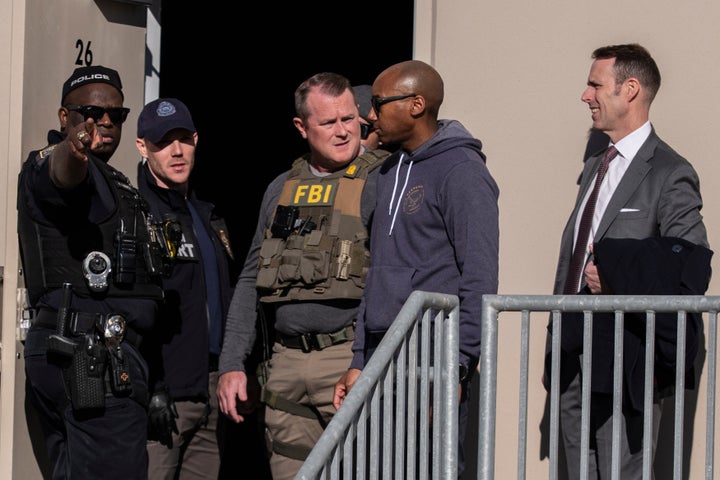
When the Department of Justice raided the election offices in Fulton County, Georgia, to seize ballots, tabulations and other materials related to the 2020 election on Jan. 28, it signaled a new phase in President Donald Trump’s efforts to prove his conspiracy theory about election fraud. It also raised a new fear that this president, who already tried to steal one election, may be setting the stage to try to steal another.

That raid wasn’t just about settling Trump’s old scores, but it also looked like “a test run for messing with election administrators and the counting of ballots in the midterm elections in 2026,” Richard Hasen, an election expert at UCLA Law School, wrote in Slate in January.

Since entering politics in 2015, Trump has claimed, falsely, that every election he has taken part in was marred by fraud. In his second term in office, he has moved to weaponize the federal government against this imaginary fraud by seeking to restrict voting and seize control of the electoral process from the states. This has led to mounting fears that he will seek to interfere in the 2026 midterms in various ways, including deploying the National Guard, surrounding the polls with immigration enforcement officers, declaring a national security emergency — and, following the raid in Fulton County, seizing ballots and voting machines.

This is easier said than done. First off, any effort to seize ballots on or after Election Day would be wildly illegal.

“There is almost no circumstance in which it would be appropriate or legal to seize ballots or election equipment,” said Wendy Weiser, vice president of democracy at the Brennan Center for Justice, a progressive voting rights nonprofit organization.

But observers are deeply wary. And importantly, there are myriad ways that state election officials and candidates themselves can counter this threat before or after any action by the administration.

Democratic secretaries of state say they are getting ready for all possible forms of midterm election interference from the Trump administration such as seizing ballots like it did in Fulton County.

“If anything like that happened in Colorado, the first thing that we would do is immediately go to court to try to quash the effort,” said Colorado Secretary of State Jena Griswold. “We’ve been preparing for this event and many other scenarios of federal disruption in our election.”

In Minnesota, Secretary of State Steve Simon said his office is working with national groups and other secretaries of state to plan how to respond if the federal government interferes in the election by attempting to seize ballots or in any other fashion.

“We are actively gaming out what these scenarios could be,” Simon said. “It’s a sad thing that in 2026 we have to treat this like a bomb threat.”

Griswold said her office has hired an additional attorney to prepare for potential post-election litigation and trained staff to respond to a search warrant seeking to seize ballots or other election infrastructure.

There are two legitimate ways that the administration could seize ballots in the aftermath of an election: issuing a warrant or a subpoena for them. Both must be approved by the courts.

“With a warrant, there is a judicial check in advance,” Weiser said.

The raid in Fulton County, however, raises the specter that a judge may approve a warrant based on false information. The legality of that warrant — which was riddled with disproven conspiracies while omitting key facts — is now being challenged in court by Fulton County election officials seeking the seized records be returned. The challenge specifically cites “Material Omissions and Misstatements” in the affidavit the government used as the basis for requesting the warrant. That may put judges on alert for misrepresentations from the administration in judicial warrants going forward.

“Because of the actions in Fulton County, election officials, law enforcement officials and magistrate judges are very well aware of the threat and are now able to prepare in advance for this potential abuse and to make sure that it is not disruptive,” Weiser said. “I would be very surprised if another judge approved a warrant like the one in Fulton County.”

Another potential line of defense, ironically, comes thanks to Trump’s own allies.

It stems from a Supreme Court ruling that only came down a few months ago. In Bost v. Illinois State Board of Elections, the court, in an opinion written by Chief Justice John Roberts, ruled that Rep. Mike Bost (R-Ill.), who backed Trump’s election fraud lies in 2020, had standing to challenge election rules — the timing of counting late mail-in ballots, in this case — before suffering any potential harm.

It’s a crucial distinction when it comes to potential election chicanery. Normally, those bringing suit have to be harmed first to have standing to sue. In election cases, that usually means that candidates cannot challenge new election rules until after the election has concluded and they perceive that the rules harmed the outcome of their race. But the justices ruled 7-2 that, even if they still win, “candidates suffer when the process departs from the law,” and that departure can “deprive the candidate of a fair process and an accurate result.”

It puts a potential new tool in the arsenal of those watching for election denial in 2026 and beyond.

“By this standard, a candidate undoubtedly has an interest in stopping the FBI from taking steps that would (in the chief justice’s words) ‘deprive the candidate of a fair process and an accurate result,’” Ohio State Moritz College of Law election law director Edward Foley wrote in a post for SCOTUSblog.

Seizing ballots, voting machines, tabulators or any other piece of election infrastructure directly threatens a “fair process” and an “accurate result” because it breaks the chain of custody that is required by state and federal law. Under Foley’s theory of Bost, a candidate could then file suit in advance of the election to seek an injunction barring any executive branch agency from seizing election materials.

But even if candidates choose not to test out the court’s Bost decision on the theory that it applies to threatened executive actions, states and election administrators can also step in.

Asked about using the Bost precedent to get a court order preventing federal interference in advance, Griswold noted that, while she wouldn’t divulge her litigation strategy, states have used preemptive action before: She pointed to Oregon and Illinois, which went to court to block National Guard deployments in 2025.

“So, absolutely, everything is on the table,” Griswold said.

Courts could also halt interference ahead of time by simply not approving DOJ warrants seeking ballots or other materials. The warrant in Fulton County also targeted materials from a now-six-year-old election, not an election that is underway or just completed. Any judge would be far more skeptical about a similar warrant for an ongoing election, Weiser said.

Similarly, a subpoena provides an opportunity to counter it: States and election officials may be able to step in and sue for an injunction before any materials are seized. And state election officials are already on high alert to the administration’s efforts to interfere in elections, having worked successfully to defeat Trump’s executive order on elections and lawsuits to seize sensitive voter roll records by getting judges to block the effort repeatedly in court.

“They are trying very aggressively to meddle in elections and expand inappropriate powers, but there’s been a lot of success in reining that in,” Weiser said of the administration. “These are not paths that are viable for them.”

By entering your email and clicking Sign Up, you're agreeing to let us send you customized marketing messages about us and our advertising partners. You are also agreeing to our Terms of Service and Privacy Policy.