yahoo Press
The Only S&P 500 ETF You Need in 2026 and It’s Not the One You Think
Images
1 / 4
2 / 4

3 / 4

4 / 4
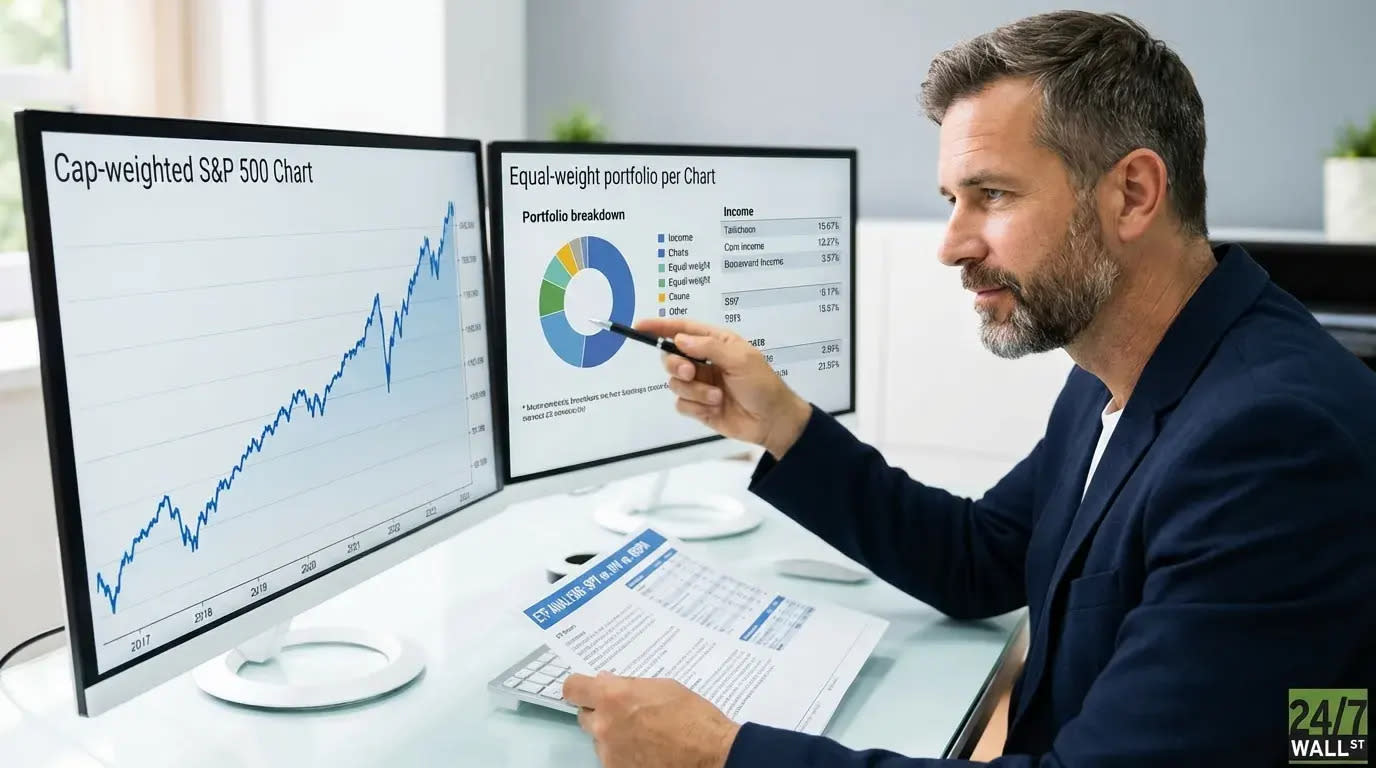
iShares Core S&P 500 ETF (IVV) charges 3 basis points annually versus SPDR S&P 500 ETF (SPY)’s 9.45 basis points, creating a structural cost advantage that compounds over decades and produces trailing outperformance. Invesco S&P 500 Equal Weight Income Advantage ETF (RSPA) uses equal weighting instead of market cap weighting and layers an options-based income strategy generating 8.86% yield, reducing tech concentration from 33% to 15% while charging 0.29% in fees.

IVV delivers superior long-term returns for buy-and-hold investors through lower costs, while RSPA offers income and reduced mega-cap concentration for those betting the market will eventually rebalance away from trillion-dollar tech companies.

A recent study identified one single habit that doubled Americans’ retirement savings and moved retirement from dream, to reality. Read more here.

SPDR S&P 500 ETF Trust (NYSEARCA:SPY) out of habit. It was the first U.S. ETF, it dominates options trading, and its name recognition is unmatched. But for investors simply buying and holding the S&P 500, that habit is quietly costing them money every year.

iShares Core S&P 500 ETF (NYSEARCA:IVV) tracks the exact same index as SPY but charges 3 basis points annually compared to SPY's 9.45 basis points. That gap sounds trivial, but the compounding cost difference over decades is real money. IVV also manages $750.7 billion in assets, making it one of the largest funds on earth with no meaningful liquidity concerns for retail investors.

Because IVV charges less than a third of what SPY does annually, more of the index's gains compound in investors' accounts over time. That structural advantage shows up in trailing returns, with IVV ahead of SPY over the past year. For a buy-and-hold investor, SPY's one genuine edge, its deep options market, is simply irrelevant.

Read: Data Shows One Habit Doubles American’s Savings And Boosts Retirement

Most Americans drastically underestimate how much they need to retire and overestimate how prepared they are. But data shows that people with one habit have more than double the savings of those who don’t.

Both funds are heavily tilted toward the same mega-cap names. Information Technology alone accounts for Information Technology at 33.1% of the portfolio. For investors comfortable with that concentration, this is fine; for those who are not, it is the core argument for looking elsewhere.

Invesco S&P 500 Equal Weight Income Advantage ETF (NYSEARCA:RSPA) offers a structurally different approach to the same 500 companies. Instead of weighting by market cap, every stock gets roughly equal treatment, which dramatically reduces the mega-cap tech concentration embedded in IVV and SPY.

RSPA layers an options-based income strategy on top, using equity-linked notes to generate a current yield of 8.86%. The expense ratio is 0.29%, higher than IVV's near-zero cost, but that income generation is what investors are paying for.

The equal-weight approach produces a dramatically different sector profile than IVV or SPY. Rather than concentrating a third of the portfolio in tech, RSPA spreads exposure more evenly. Industrials and Technology each sit near 15%, with Financial Services close behind at 13%. No single sector dominates, which is the structural point of the fund.

Over the past year, RSPA returned roughly 13% compared to IVV's 20%. The gap reflects one dynamic: mega-cap tech has dominated S&P 500 returns, and equal-weight strategies structurally underweight those names. From 2003 through 2022, the equal-weighted index outperformed the cap-weighted index by roughly 1.5% per year, driven by the small-size premium embedded in equal weighting. That edge disappears when a handful of trillion-dollar companies dominate returns, as they have recently.

The income component also changes the comparison. RSPA's options overlay caps some upside in exchange for that 8.86% yield. An investor collecting and reinvesting that income sees a materially different total return picture than a price-only comparison suggests.

IVV offers the lowest cost exposure to the S&P 500 with full cap-weighted concentration. SPY's primary distinguishing feature is its options market liquidity. RSPA's equal-weight structure and options overlay produce a different return and income profile than either cap-weighted fund, with reduced concentration risk and meaningful income generation in exchange for a higher expense ratio and the potential to trail the headline index in periods when mega-cap tech leads.

Investors who want income and believe the market's concentration in a handful of tech giants will eventually normalize may find RSPA's structure worth examining alongside the lower-cost cap-weighted alternatives.

IVV and SPY ETF profile data including expense ratios, sector allocations, and top holdings sourced from Alpha Vantage ETF Profile endpoint.

IVV and SPY price performance (1-year return) sourced from Fuse API price performance endpoint.

RSPA yield, expense ratio, sector weightings, and 1-year performance sourced from Yahoo Finance RSPA quote page and Morningstar ETF data provided in user-uploaded documents.

Most Americans drastically underestimate how much they need to retire and overestimate how prepared they are. But data shows that people with one habit have more than double the savings of those who don’t.

And no, it’s got nothing to do with increasing your income, savings, clipping coupons, or even cutting back on your lifestyle. It’s much more straightforward (and powerful) than any of that. Frankly, it’s shocking more people don’t adopt the habit given how easy it is.