yahoo Press
The push to end animal testing is gaining steam, but technology can’t fill the gap yet
Images
1 / 12
2 / 12

3 / 12

4 / 12

5 / 12

6 / 12
7 / 12
8 / 12
9 / 12

10 / 12

11 / 12

12 / 12
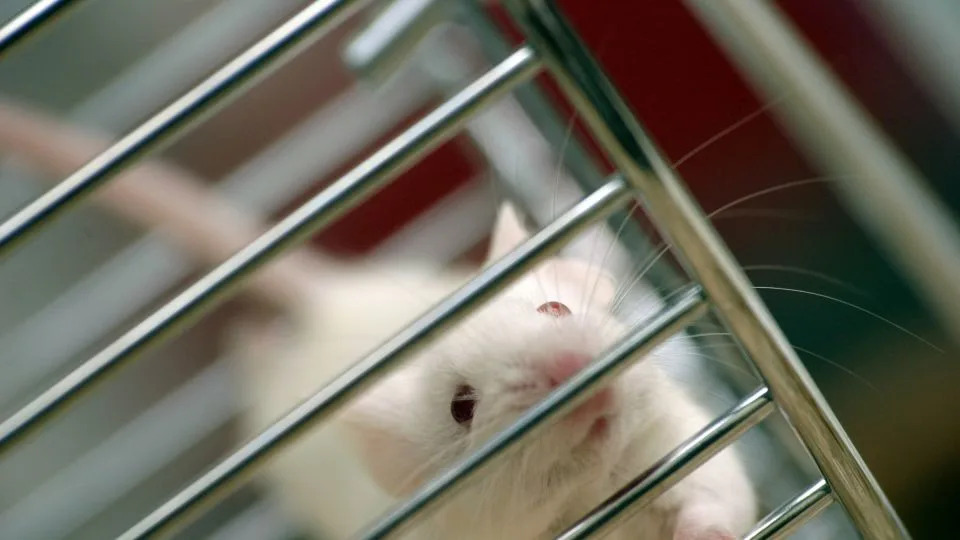
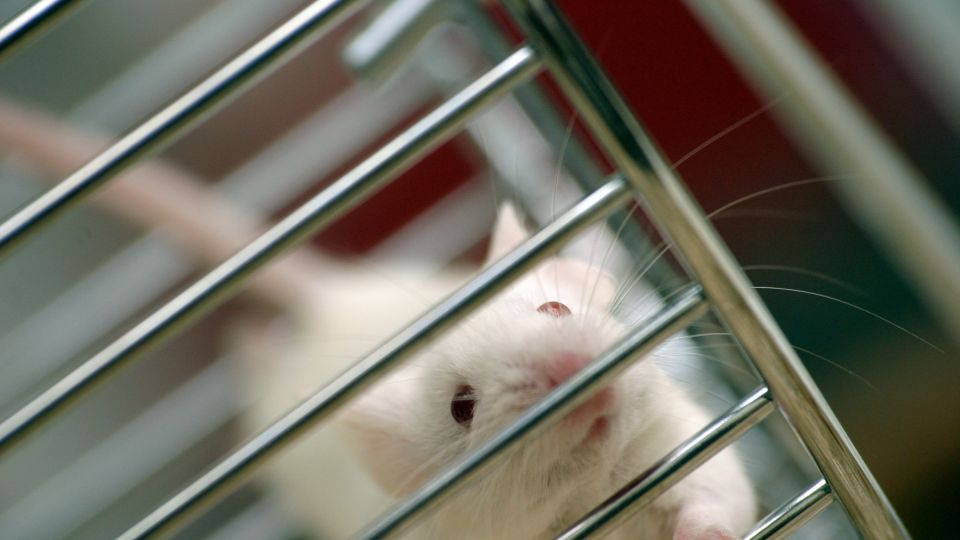
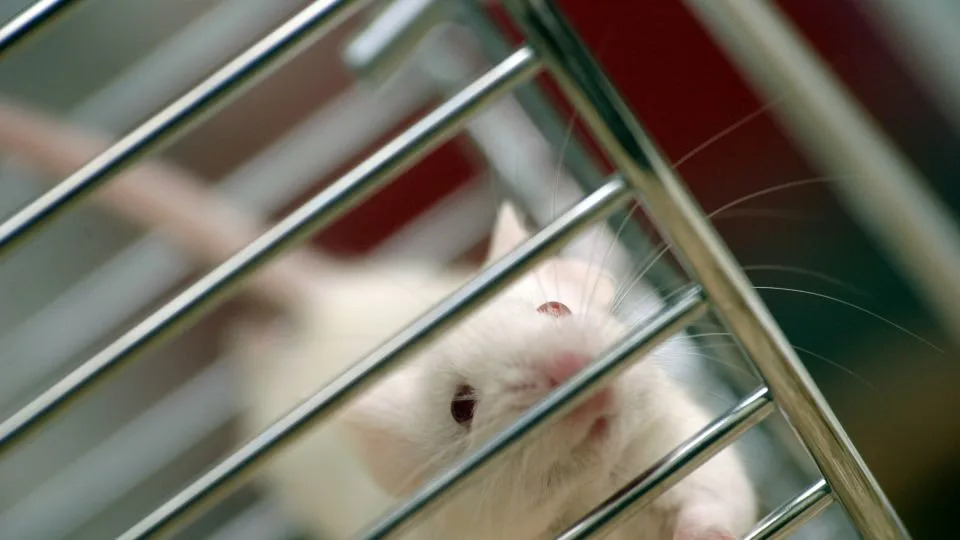
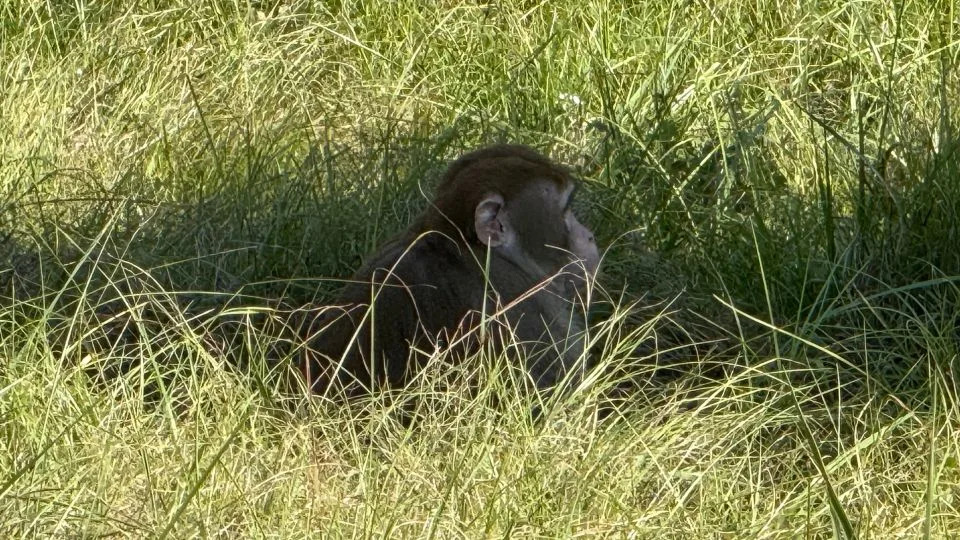
A social media post from the US Food and Drug Administration this week shows a big-eyed macaque staring out from behind bars.

“Some drugs use 144 monkeys on average for preclinical testing,” the post says. “We’re changing that.”

Animal testing has been a target of the Trump administration’s Make America Healthy Again movement, and on Wednesday, the FDA released draft guidance that aims to clear up how drug developers can use alternative testing when seeking approvals from regulators.The National Institutes of Health also announced that it’s investing $150 million to develop animal model alternatives.

“This draft guidance advances our commitment to replace animal testing with human-relevant, scientifically rigorous methods,” US Secretary of Health and Human Services Robert F. Kennedy Jr. said in a statement.

The guidance is not final, but it’s meant to steer drugmakers toward what the industry calls New Approach Methodologies instead of the animal research that “historically, sponsors have defaulted to,” an FDA official said Tuesday. Changing the approach could even speed drug development, the official said.

“These data can be much more predictive and also a more ethical option,” the official said during a briefing with reporters.

That doesn’t mean animal testing in the United States is over.

New technologies can’t handle all the questions scientists rely on animals to answer, experts said. The new guidance also doesn’t address how animals are used in the federal government’s own research or shed more light on how many animals are currently used for testing.

“There’s a huge amount of work to be done. We do so many different types of animal experiments on so many different types of animals, and the numbers are just staggering. But we already have seen some progress, and I’m optimistic we will see some more,” said Delcianna Winders, director of the Animal Law and Policy Institute and an associate professor of law at Vermont Law and Graduate School. “We are in a moment of opportunity that we’ve never seen before.”

Animals have played a key role in some of the most important lifesaving scientific discoveries in history. They are biologically similar to humans and often get the same diseases, but their environment is easier to control. They also generally have shorter lives than humans, so a therapy can be studied over an animal’s entire lifetime.

All three 2025 Nobel Prize winners in medicine used mice to help develop breakthrough theories about the immune system that led to new cancer treatments and advances in organ transplants. Hundreds of clinical trials underway build on this work, according to the Foundation for Biomedical Research.

Although much of the public believes that such research is helpful, Americans are becoming less tolerant of animal testing. In 2001, 65% of Americans polled said they found testing on animals morally acceptable. In a September Gallup poll, support had slipped to 47%, with another 47% calling such research morally wrong. The rest polled had no opinion or said it “depends.”

The bulk of animal testing is for experimental procedures for purposes like basic research, to develop treatments for health problems in animals and humans, regulatory research, and in safety testing for pharmaceuticals and other substances.

Others are used for breeding experiments. Animals are also used to find better ways to protect the natural environment and preserve species.

While parts of the US government have pledged for years to reduce animal testing, experts say the FDA especially has been slow to respond, implement and permit the use of nonanimal alternatives. Until 2022, animal studies were required for a therapy to be licensed. The FDA Modernization Act 2.0 removed the mandate and allowed alternatives.

Animal research remains important for the foreseeable future because the alternatives cannot yet answer important questions about integrated systems, said Dr. Emma Robinson, a professor of psychopharmacology in the School of Physiology, Pharmacology and Neuroscience at the University of Bristol. Robinson uses rats in her research to understand how the brain adapts to emotions and how that affects behavior.

“It’s hard to do this in a model system, like an organoid,” Robinson said. “We ask questions about how we can manage these animals better and improve their day-to-day life in the lab, but we recognize that they’re an important part of understanding disease mechanisms.”

The federal government has already shifted some of its approaches to animal testing.

Last year, the FDA announced plans to phase out animal testing with alternative models when companies develop monoclonal antibodies, and the NIH launched an initiative to reduce the use of animals in NIH-funded research.

Scientists at the US Centers for Disease Control and Prevention have reportedly been directed by the Trump administration to phase out all testing involving monkeys. The CDC said it is “long-standing agency practice” that it “regularly evaluates its research project portfolio including non-human primate studies and strives to use non-animal research methods whenever feasible, while ensuring the integrity of research that protects public health and safety.”

In July, the NIH said it would no longer develop new funding opportunities focused exclusively on animal models and promised to more broadly encourage various approaches to research. In this week’s announcement, the agency also said it would create seven technology development centers to facilitate new approaches and share data and will work with industry to create these animal testing alternatives.

NIH Director Dr. Jay Bhattacharya testified before a House Appropriations subcommittee this week that the agency’s research will use human-based models and emerging technology to “responsibly reduce animal research where scientifically appropriate.”

These efforts are important steps that signal the Trump administration, at the highest levels, is serious about limiting animal testing, Winders said. But the government has invested heavily in animal research for “many, many years,” and significant change will take time and several initiatives, she said.

In the past four years alone, more than 3.18 million animals have been used in research in facilities licensed by the US Department of Agriculture, according to data that labs are required to report to the agency. But that number doesn’t include the animals used in most experiments — rats, mice, birds and fish — since none are protected under the Animal Welfare Act. If those numbers were included, Winders said, the total would be at least 111 million more.

“We need to be very clear that while the NIH is saying that they’re committed to moving away from animal experiments, they’re also continuing to fund billions and billions of dollars of animal experiments, including at seven Primate Research Facilities at universities across the US,” Winders said.

The NIH provided $2.2 billion in contracts or grants to foreign organizations for research involving animals alone for fiscal year 2011 through fiscal year 2021, according to the US Government Accountability Office.

The $150 million the NIH is putting toward animal research alternatives, Winders said, is less than 1% of what the agency spends every year on animal testing.

The NIH did not respond to CNN’s request for comment.

Animals are used in scientific research in several basic and – for now – still necessary areas, according to Chris Magee, head of policy and media with Understanding Animal Research, a UK-based nonprofit that provides public information about animal research. But there have been notable developments creating viable alternatives to lab animals in recent years.

Not every nonanimal option works for every experimental need, though.

“It’s like trying to compare a butter knife to a screwdriver,” Magee said. “But these tend to be very neat where you can apply them.”

Technology officially called microphysiological systems but better known as organs-on-a-chip – microfluidic devices that mimic the structure and function of an organ like a liver, lungs or heart – can allow for early-stage screening, as well as providing a good platform for basic research and preclinical safety testing, reducing the need for animals, according to Understanding Animal Research.

Although organ-on-a-chip technology is improving and can perform functions like predicting human liver toxicity with accuracy comparable to animal tests, Understanding Animal Research says it cannot yet capture full-body complexity: It can’t anticipate how a human’s immune or endocrine system would work or determine multiple-organ interactions or long-term effects.

Biometric materials like reconstructed human skin and corneas can be used for skin and eye irritation and corrosion tests, but these are valid only for local effects and cannot model systemic toxicity or metabolism. They also can’t predict harm from compounds that, while safe on skin, are toxic after absorption.

Organoids, three-dimensional miniature versions of human organs grown from stem cells in a lab, can model human-specific disease mechanisms and enable patient-specific testing. They’re also good for studying infection, neurodegeneration and cancer research, but the mini organs lack immune components and full organ interactions and are, at least at this point, less reliable for systemic safety assessments, Magee said.

Some computer simulations can be used to study biological systems and make predictions. The FDA has said it plans to use more AI-based computational models for some toxicity experiments. Models can predict some things involving toxicity, but this requires large datasets that are still limited, Magee said, and it’s unclear how well algorithms capture true biological variability.

There’s promise here, Magee said, but there’s still a need for extensive testing to make sure that it really works and that regulators will accept the research.

Dr. Fiona Sewell, head of toxicology with the UK-based National Centre for the Replacement, Refinement and Reduction of Animals in Research, said her organization has worked with pharmaceutical and chemical companies that are deeply interested in finding alternatives to animals.

In most countries, drugs are typically tested in rodents and nonrodent species like monkeys or dogs. The UK group is working with industry to fund the creation of a virtual dog for regulatory testing of pharmaceuticals. Using machine learning to simulate key organs, “we are moving in the right direction, and it’s very exciting,” Sewell said.

She hopes regulations can keep pace with scientific advances and says regulators need to remain flexible. Officials in the UK proposed new ways to reduce animal testing, as the Labour government, like the Trump administration, has said it wants to phase out the practice.

While there are still legal and regulatory needs for animal experiments, there are also ways to use fewer animals and push for better care for them.

“There are still opportunities to ensure that they only use them when entirely necessary and, when they are used, that the minimum numbers of animals are used and that the animals are looked after in the best possible way to ensure high levels of animal welfare and to avoid unnecessary suffering,” Sewell said.

For more CNN news and newsletters create an account at CNN.com