Press
Asia stocks slide as US and Iran threaten to intensify war
Images
1 / 9

2 / 9
3 / 9
4 / 9

5 / 9
6 / 9
7 / 9
8 / 9
9 / 9
Major stock markets in Asia slumped on Monday after Washington and Tehran threatened to intensify hostilities, as the Iran war enters its fourth week.

Japan's benchmark Nikkei 225 index was 3.4% lower in morning trade, while South Korea's Kospi fell by almost 5%.

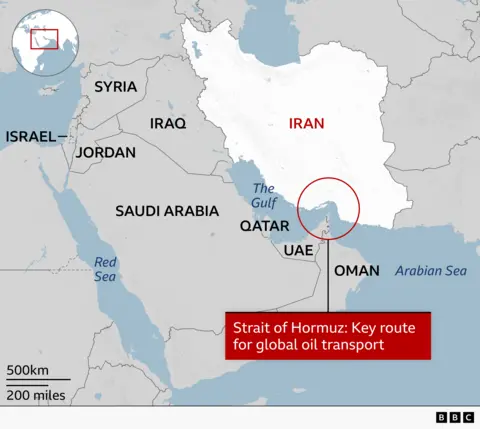
US President Donald Trump warned on Saturday that he would "obliterate" Iranian power plants if Iran did not open the key Strait of Hormuz shipping route. Iran said it would respond to any such strikes by targeting key infrastructure in the region, including energy facilities.

Japan and South Korea have been particularly impacted by the conflict, as they are heavily dependent on oil and gas that would normally pass through the strait.

Iran has effectively blocked the Strait of Hormuz, one of the world's busiest oil shipping channels, since the US and Israel attacked the country on 28 February.

About 20% of the world's oil and liquefied natural gas (LNG) usually passes through the waterway - and the war has sent global fuel prices soaring.

On Monday, International Energy Agency chief Fatih Birol said that the war could see the world facing its worst energy crisis in decades.

Speaking at the National Press Club in Australia's capital, Birol compared the current energy crisis to those of the 1970s and the impact of Russia's 2022 invasion of Ukraine.

"This crisis as things stand is now two oil crises and one gas crash put all together," he said.

"If Iran doesn't FULLY OPEN, WITHOUT THREAT, the Strait of Hormuz, within 48 HOURS from this exact point in time, the United States of America will hit and obliterate their various POWER PLANTS, STARTING WITH THE BIGGEST ONE FIRST!," Trump said in a social media post published at 23:44 GMT Saturday.

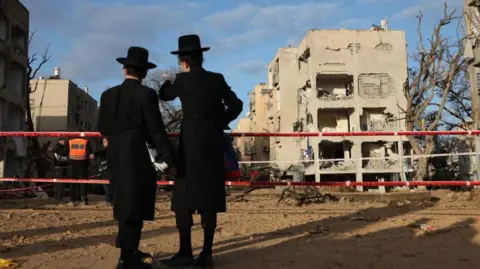
That threat came after Iranian missiles hit the Israeli city of Dimona, and shortly before a second attack on the town of Arad nearby.

Mohammad Bagher Ghalibaf, the speaker of the Iranian parliament, said on Sunday that energy and desalination infrastructure in the region would be "irreversibly destroyed" if his country's power plants were attacked.

Such action would significantly escalate the conflict, which has already disrupted global energy supplies, pushing up prices and causing fuel shortages.

Other markets in the Asia-Pacific region were also lower on Monday.

Hong Kong's Hang was down by 2.5% and the Taiwan Weighted Index lost 2%.

Global oil prices were broadly steady, with Brent crude 0.2% lower at $112 (£84) a barrel and US-traded oil 0.3% higher at $98.57.

No 10 says the leaders agree reopening the shipping lane is key to ensuring energy market stability.

Conflict has spread across the Middle East since the US and Israel launched strikes on Iran on 28 February.

Israel is investigating how ballistic missiles got through the country's sophisticated air defences.

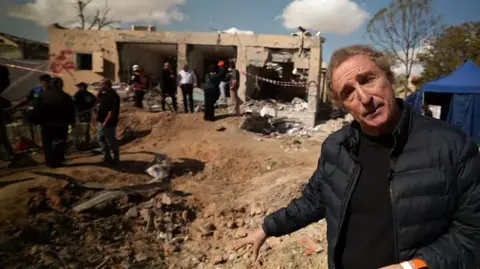
The BBC's Sebastian Usher reports from Dimona in southern Israel, which was hit by an Iranian missile.

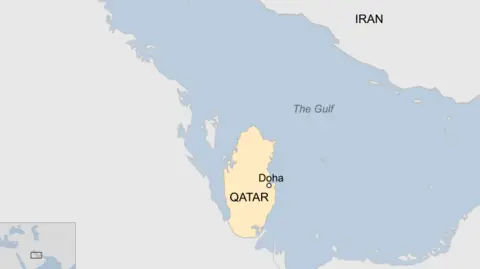
Four Qatari military personnel, one Turkish serviceman and two technicians from a Turkish defence company were on board.