Press
Abersoch residents 'proud' after fighting Gwynedd second home crackdown
Images

1 / 12

2 / 12
3 / 12

4 / 12
5 / 12

6 / 12
7 / 12

8 / 12

9 / 12
10 / 12
11 / 12

12 / 12
A group of villagers who fought to overturn a council's crackdown on second home-ownership say they are "proud" of their "David and Goliath moment".

About 18 months ago, the council of Gwynedd, in north-west Wales, made what it called a "proactive step" to limit the number of second homes in the area.

It hoped that by introducing legislation requiring homeowners in the county to seek planning permission before turning a residential property into a second home, it would help local people who were being priced out of the market.

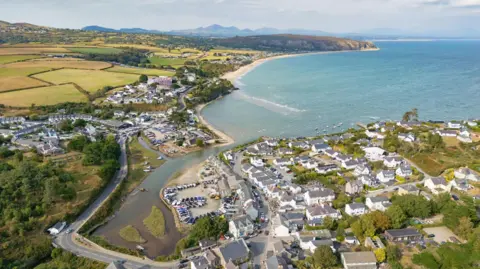
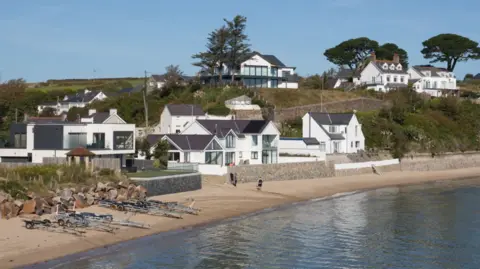
But some residents of Abersoch, a village on the Llŷn Peninsula which sees about 30,000 visitors during peak summer months, said the knock-on effects from the legislation - known as Article 4 - had been tough.

They described tradespeople needing to look for work further afield and long-time visitors feeling unwelcome.

The People of Gwynedd Against Article 4 campaign group took legal action against the council, Cyngor Gwynedd, and in November 2025 Article 4 was quashed.

Cyngor Gwynedd had a request to appeal this decision rejected last month, and said it was "extremely disappointed" and considering its next steps.

"Cyngor Gwynedd is determined to do everything in our power to ensure that the people of Gwynedd have access to suitable homes and to manage the significant number of second homes and short-term holiday lets in our communities," a council spokesperson added.

Jeff Smith, from Cymdeithas yr Iaith, the Welsh language society, said "early signs" suggested house prices had fallen following the introduction of Article 4.

"This is a good thing, as it allows local people to remain in the area, in a county where 65% of the population are priced out of the housing market," he added.

Laura Alliss, 38, who lives in Abersoch, said she initially threw away a council notice about Article 4 before she said she realised it affected everyone in Gwynedd.

"I just threw it in the bin because it just said it only affected you if you were a second homeowner, which we weren't," said Laura, although she did later go on to buy a second home, which she now runs as a holiday let.

Enlli Angharad Williams, 29, who grew up in Abersoch, realised Article 4 "really impacted" her ability to re-mortgage the land she built her home on, when coupled with an existing Section 106 restriction. Enlli does not own a second home.

The two solicitors helped get a judicial review commissioned after £105,000 was raised by a fundraising group.

Enlli said her friends and family were initially "quite angry" after she put her name down as a claimant against the policy, until they came to understand its impact.

Enlli described it as a stressful time, saying she was "ecstatic" at the decision to scrap the policy, adding: "I'm proud of the community, actually.

"I think it's shown how much community there is left here.

"We can't live without the tourism here."

In 2023-2024, Gwynedd had the highest proportion of second homes in Wales at 8.3%, closely followed by Pembrokeshire at 6.5%, according to Welsh government data.

There have been long running concerns that second homes - meaning furnished properties that are not the owner's main residence - price out locals, as well as concerns about the impact on Welsh-language communities.

But the situation is complex.

Llŷr Wyn Williams, 26 and from Abersoch, works for his dad's construction business and said the construction sector had been "hit the hardest" following a decrease in demand for property redevelopment.

He said the sector had previously been supported by a cycle of buyers purchasing homes, renovating or rebuilding them and re-selling quickly.

Now, Llŷr and others from the village claim tradesmen are looking for work in different areas.

In addition to Article 4, Gwynedd is one of a number of Welsh councils which charges a 150% council tax premium on second home properties, having upped this from 100% in 2023.

Figures published in February 2025 showed house prices in Gwynedd had fallen by more than 12% year-on-year.

But average house prices in the county had increased by 0.6% in the 12 months to December 2025, according to the ONS House Price Index.

Llŷr said policymakers misunderstood what kept Welsh‑speaking communities alive.

"If that job wasn't here with a competitive salary, I wouldn't have stayed," he said.

Llŷr said he hoped the council would now implement more "pro-business" policies.

Cyngor Gwynedd said it had provided more than £3m in funding for local companies in the past three years to help them invest for the future.

Robert Middleton, 60, has lived in Abersoch for 25 years and used to visit every summer as a child with his family.

The pub and deli owner claimed there had been a "war against tourism" and work for tradespeople was "slowly starting to dry up" as second home owners "haven't got the money to spend".

"Ultimately it's the jobs that are being hit," he said.

He said it was "becoming tougher" for residents to make a living and believed overturning Article 4 was a "little David and Goliath moment" for campaigners.

Leigh Hookes, 52, has owned Mexican restaurant Mañana in Abersoch for 31 years and his family has lived in the village for generations.

He said second-homeowners "spend thousands and thousands, millions of pounds".

Leigh remembers his grandfather renting his house out to holidaymakers in summer, adding: "He'd live in a little shed in the bottom of the garden with his wife and kids.

"Everyone did that in the village, that's how the village works."

He said Article 4 unfairly gave away control over "what you do with your property" and had devalued his house.

Even though the policy has been reversed, he added: "It still caused a huge effect on the housing market here and that's very, very frustrating for us."

Cyngor Gwynedd said it was "committed to increasing the supply of affordable homes to meet the housing needs of the people of Gwynedd".

The council said more than 4,000 people were on the social housing waiting list in the county due to "the lack of suitable homes for locals".

More than 500 affordable homes have been created by housing associations with a further 600 built, developed or brought back into use through the council's Housing Action Plan, launched in 2021, a spokesperson added.

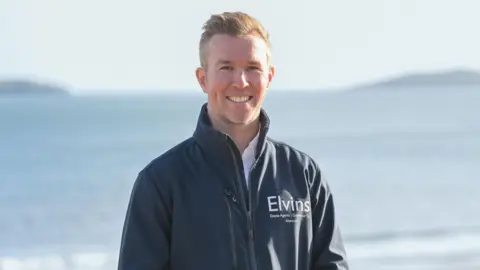
Estate agent Rhys Elvins, 35, said Article 4 restricted the market and saw a "handful" of properties have their prices dropped, but since it was overturned he said there had been "a bit of an uplift".

But Cyngor Gwynedd councillor Craig ab Iago said Article 4 being quashed was "disappointing".

"This isn't an emotional thing, it's just us trying to to home people who don't have homes," he said.

He said Cyngor Gwynedd was working on "changing the narrative around self-empowerment".

"That's what we, in the end, the thing that's going to get us out of all these crises we're in at the moment is resilient, sustainable communities," he said.

"There is a lot of negativity, especially coming from like the people of Gwynedd, which is a shame, because that's not healthy for anybody," he added.

A judge ruled Cyngor Gwynedd's cabinet had not been given the full details before making their decision, and quashed Article 4.

The council's request to appeal was rejected in February of this year.

Cyngor Gwynedd said it was "extremely disappointed" with the recent Court of Appeal ruling, but remained "committed" and was "considering our next steps to achieve this aim".

Research from the council found, on average, 65.5% of Gwynedd households were being priced out of the housing market.

A Cyngor Gwynedd spokesperson said it was "taking action to increase the provision of affordable homes, to mitigate the impact large numbers of second homes and short-term holiday lets in our communities and develop the local economy to boost the livelihoods of local people".

Jeff Smith, from Cymdeithas yr Iaith, the Welsh language society, said he was "pleased that Gwynedd is determined to introduce an Article 4 measure".

"Early signs suggest that house prices have been falling following its introduction," he added.

"This is a good thing, as it allows local people to remain in the area, in a county where 65% of the population are priced out of the housing market.

"It also sends a message to other councils that have been waiting to see the outcome of the judicial review before taking action.

"If Gwynedd proceeds even after the decision, there is no reason for other councils not to start the process of introducing it."

The Welsh government said "everybody should have access to a decent, affordable home to buy or rent in their own communities".

A spokesperson added: "We are taking radical action using the planning, property, and taxation systems to achieve this, as part of a joined-up package of solutions to a complex set of issues."

Plaid Cymru said there was a "housing crisis in Wales" and said it had outlined plans to increase the supply of social and affordable housing.

The Welsh Conservatives said the measures in Gwynedd would "instead hit the very people they should support such as local trades, small businesses and families at the heart of the community".

A Reform UK Wales spokesperson said it was "vital" for people to access housing in their communities and the best way to ensure this is to "expand supply".

The Welsh Liberal Democrats, Welsh Labour and the Welsh Green Party have been approached for comment.

More than 200 first-time buyer deals have disappeared from the market since 6 March, with more upheaval expected.

The seasonal sites operated by Manx National Heritage begin to open for the summer this Friday.

The volunteers will welcome visitors to attractions detailing the maritime heritage of Hull.

The attraction, in vast disused stone mines, would create about 100 year-round jobs.

It is hoped the £450m project in the Borders will be completed by 2029 and create 1,200 jobs.