yahoo Press
Financial institutions face rising IT budgets as they balance innovation, legacy and regulation: Celent
Images
1 / 5

2 / 5

3 / 5

4 / 5
5 / 5
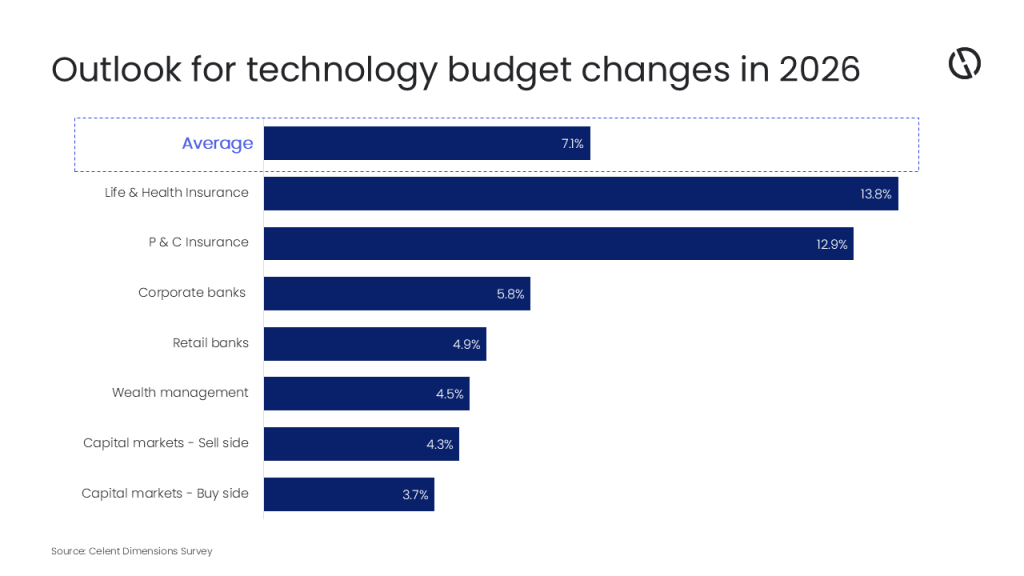
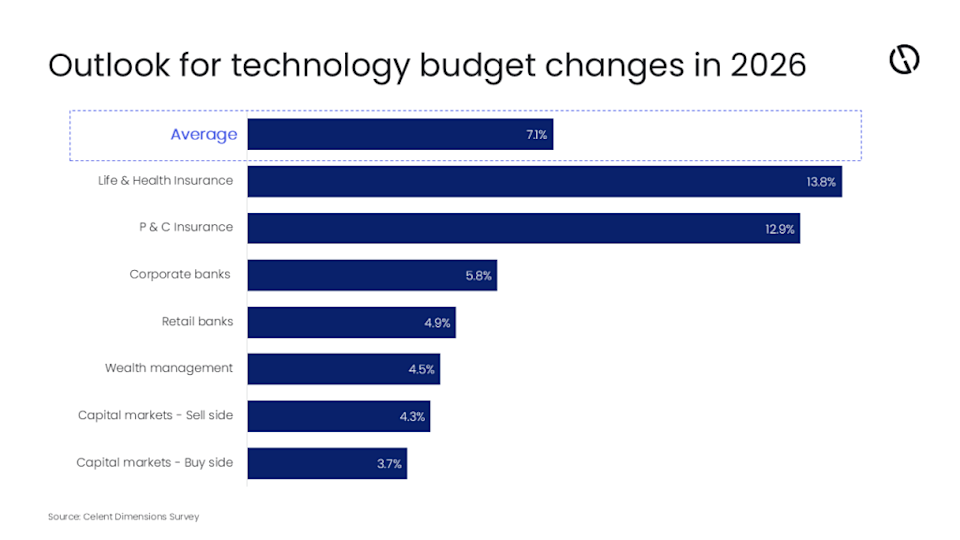
Financial institutions are entering 2026 with competing technology priorities, from scaling artificial intelligence (AI) capabilities and strengthening data governance to modernising legacy systems and managing rising regulatory demands. Celent’s research, based on its comprehensive IT Dimensions survey of more than 1,000 executives at financial institutions, reveals that IT budgets are expected to rise by an average of 7% in 2026 with significant variation across the financial services industry. As a result, institutions across the board are being forced to make tougher decisions about where technology investment will deliver the greatest value.

Tom Scales, Principal Analyst at Celent, said: “Budgets are rising, but so are expectations. Choosing the wrong technology bets can have real competitive consequences. It is great to see life and annuity insurers investing and catching up.”

Insurance is leading the charge in digital transformation. The biggest expected IT budget rises are expected to surge by 13.8% in life insurance and 12.9% in P&C insurance.

Scales added: "Insurers are ramping up their IT spend this year, with many moving from experimenting with innovations to full implementation. Celent expects some real operational impact, with advances in generative and agentic AI, automation, real-time data platforms, and real-time risk monitoring. Not to mention that many insurers are modernising legacy systems."

The lowest expected IT budget increases are seen in the capital markets segments, at only 3.7% on the buy side.

Cubillas Ding, Capital Markets Research Director at Celent, said: “Buyside firms continue to face pressures from margin compression, and achieving scale remains a defining challenge. The industry is consolidating, but technology and AI enablement remain critical for differentiated strategies that protect profitability, sustain relevance, and deliver tailored investment outcomes. Looking ahead to 2026, Celent expects firms to execute parallel initiatives: operationalise AI while pursuing digital and cloud migrations of core systems.”

Closer to the average budgetary increases lie banks, with corporate banks expected to see a 5.8% budget rise. For these companies, there are three factors at play: the very biggest banks are investing huge sums, the vast majority of spend is mandatory (keeping the lights on or regulatory), and the budget available for innovation and change is falling.

Gareth Lodge, Principal Analyst at Celent, commented: “Corporate banking IT budgets will continue to grow through 2027 but so will the pressures on them. Many banks will feel as though discretionary spending has tightened further. While new technologies create opportunities, they also raise expectations of what these budgets must deliver.

“Each innovation, such as GenAI, adds not only ongoing operational costs but also continuous upgrade requirements. Furthermore, banks must also balance investing in advanced capabilities for sophisticated clients while maintaining legacy systems relied on by existing ones.”

"Financial institutions face rising IT budgets as they balance innovation, legacy and regulation: Celent" was originally created and published by Retail Banker International, a GlobalData owned brand.


The information on this site has been included in good faith for general informational purposes only. It is not intended to amount to advice on which you should rely, and we give no representation, warranty or guarantee, whether express or implied as to its accuracy or completeness. You must obtain professional or specialist advice before taking, or refraining from, any action on the basis of the content on our site.