Press
Sexism in football - a problem that isn't going away
Images
1 / 20
2 / 20
3 / 20

4 / 20

5 / 20

6 / 20

7 / 20

8 / 20

9 / 20
10 / 20
11 / 20
12 / 20

13 / 20
14 / 20

15 / 20

16 / 20

17 / 20
18 / 20

19 / 20

20 / 20
This video can not be played

'It shook me to the core' - experiences of sexism in men's football

"Shut up. What do you know about football? You should be in the kitchen getting your husband's tea."

Angela is a 72-year-old Liverpool fan. She's been going to matches for decades.

Yet still her presence is questioned. For one reason: she is a woman.

Anti-discrimination charity Kick It Out received 131 reports of sexist incidents at football matches between the start of the season and the end of February. That's more than double than for the same period last season.

One female fan - who asked not to be named - told BBC Sport that misogyny in the game has stopped her from taking her daughter to men's matches.

"I'll take her to the women's game if that doesn't get ruined, but I won't be taking her to the men's game until she's a lot older," she said.

"I wouldn't feel safe and I certainly wouldn't want to expose my daughter to sexism."

BBC Sport spoke to fans, the police and others to examine how common sexism is in football, why it happens, and what can be done to tackle it.

Zoe Hitchen began photographing men's football while studying at university, and worked as a media-accredited English Football League photographer from 2008 to 2010.

She is a passionate supporter of the men's and women's games.

While working as a photographer, Zoe says she would regularly be targeted with sexist chants, and would be asked: "Do you even know what football is?"

"It felt like if you want to go to the men's game, you have to grin and bear it," she says.

And it wasn't only coming from fans.

"Mascots were there to grab the crowd's attention, but often the mascot would be creeping up behind me as I was sat photographing the game," she says.

"The mascot would come and grope me."

Zoe says she would report the incidents to clubs but nothing was done.

"I was quite outspoken for a woman working in football and I would complain and nothing would get done," she says. "I remember saying to security: 'That's assault, you literally cannot touch me.'"

Another female football fan - who asked not to be named - told us: "How dare they think they can turn around and belittle you or try to demean you and push you out of something that you love and you're passionate about.

"It's not OK."

Another fan shared the experience of using toilets at a stadium - and men being present as "the norm".

"I walked into an open cubicle in the women's toilets to be welcomed by a man about to urinate," she said. "I immediately backtracked and went to the next one to be greeted by the same situation."

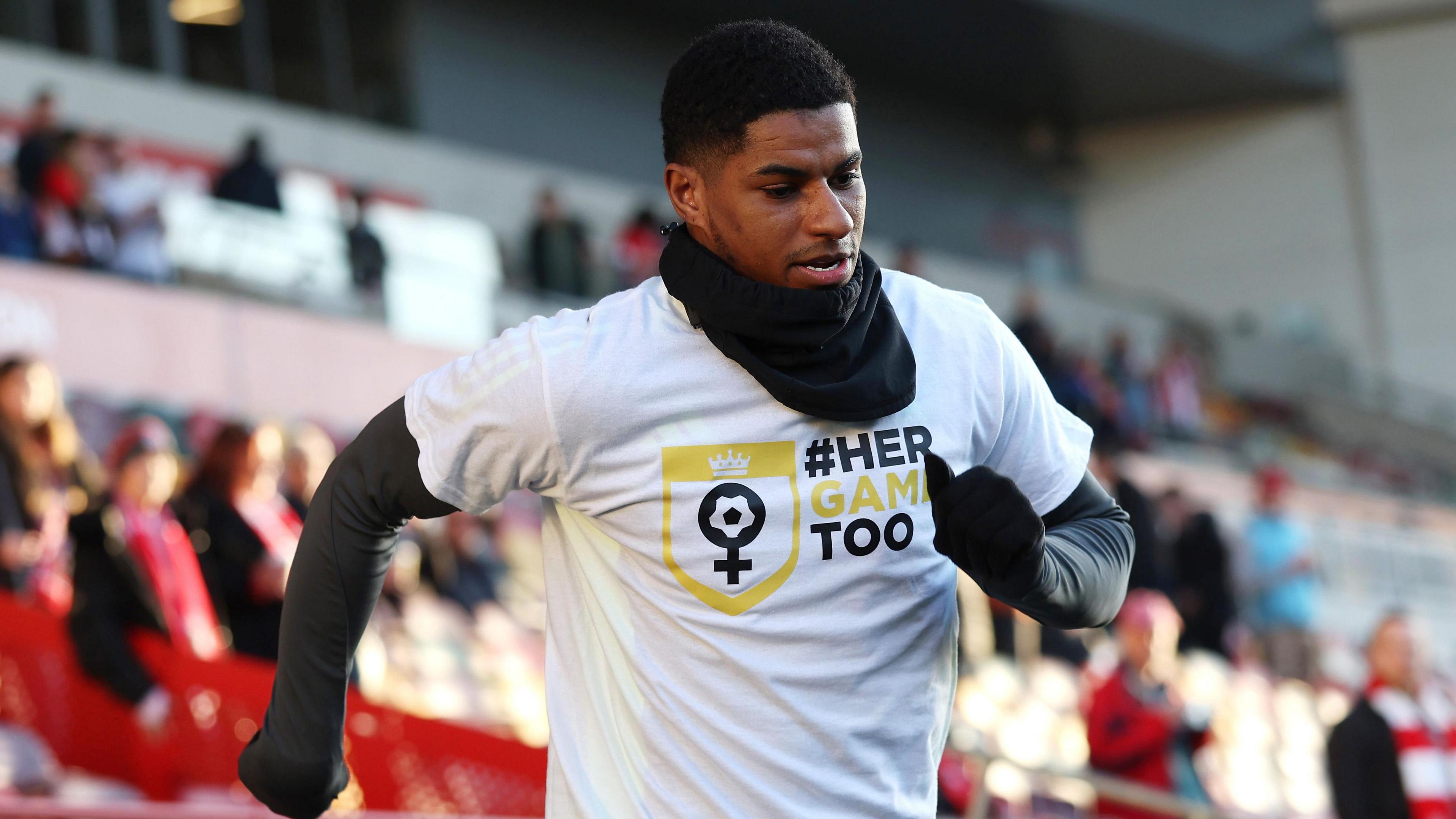
Simran Atwal is a Derby County fan and volunteer at Her Game Too, external - a campaign group that aims to tackle sexism and champion women in sport.

Most of her experience has been of online abuse.

Simran says images she posts online can sometimes end up on other people's social media accounts - and once there, anyone can comment. It happened with a picture showing her and her friends before a Derby game.

"Some of the comments were very sexualised and I had no control over the posts," she says.

"In the online space, this is definitely the norm. I don't know if it's because of who I'm friends with, but I don't know anyone who hasn't experienced it."

It doesn't always end there.

One female fan told BBC Sport that images she featured in had been manipulated using artificial intelligence.

"Someone made it look like my friends and I were wearing bikinis," she said.

This 'nudification' or 'de-clothing' of images - without consent - is illegal in the UK, but the fan says she knows she is not alone in being targeted.

"Some of my friends have seen doctored images of themselves which look really convincing," she said. "They then worry that these images are out there forever."

Her Game Too is a non-profit campaign founded in May 2021 by female football fans to tackle sexism

In the lead-up to the recent men's Manchester derby, officers from Greater Manchester Police (GMP) and partner organisations were deployed across the city to raise awareness of Violence Against Women and Girls (VAWG) and protect vulnerable people.

The United Nations defines VAWG as acts of gender-based violence that cause physical, sexual or psychological harm. While that includes serious crimes such as domestic abuse and sexual violence, experts say casual misogyny and sexist comments can also contribute by reinforcing gender inequality.

Fans in Manchester were encouraged to recognise abuse and challenge it.

Ch Supt Colette Rose - head of specialist operations at GMP - said: "I think VAWG is a societal problem. It's high on the national agenda. It leaks into every aspect of our society, and that includes sports and football.

"What we tend to see at football is predominantly a male-dominated fanbase. If we can work with males around behaviours that may make women feel unsafe or intimidated and educate people, that will have an impact on wider society."

Figures released by GMP show the number of reported incidents of VAWG at football matches increased from 18 in the 2023-24 season to 28 last season - and that is expected to rise again.

Her Game Too, meanwhile, told us they receive at least one report every matchday.

But Rose does not think that necessarily shows the issue is getting worse.

"I think what is actually happening is we're calling it out," she said. "And I think society is starting to see that these behaviours are unacceptable and our partners are really engaged in working with us on this.

"People are reporting it more because they can see that it's wrong and we shouldn't just accept it."

Rose recalls one incident at a match in Germany when she was targeted.

"I had reason to speak to a couple of lads who were exiting the game and were very jubilant, but were singing songs that could have caused real offence in Germany," she says.

"The barrage of abuse that I got on the back of that was very much about my sex, the way I looked... I was followed around the stadium for a bit and I couldn't locate a police officer in uniform to support me.

"It shook me to the core. I didn't realise I could ever feel that vulnerable in a crowd as a police officer, and in fear of that immediate violence towards me, purely because I was a female.

"The language used was very misogynistic and the person perpetrating it was using my vulnerabilities to make me feel the way I did. It's a horrible feeling."

Is there a feeling among football fans that they are entitled to say "whatever they like"?

That's the view of sports psychologist Dr Misia Gervis, who says men have to be "part of the solution".

"With men's football it's such a kind of traditional behaviour that's gone on from generation to generation," she says.

"I think there are still some men who think women shouldn't be having anything to do with men's football.

"Sometimes I think some people aren't thinking about what they're saying, they're just saying it - and often there's a real sense of hatred which comes with it.

"Would you shout sexist abuse at your partner, at your wife, at your daughter, at your mother?"

The social context matters, too. Misogynistic words fans chant at a match could get them sacked were they uttered in the workplace.

And what of the long-term consequences of being on the receiving end of sexist behaviour?

"If you're constantly experiencing some kind of denigration, some kind of verbal violence towards you, it's a micro-aggression - and micro-aggressions can be traumatic," says Gervis.

"We know that trauma causes all sorts of problems in terms of anxiety responses, possibly post-traumatic stress disorder (PTSD), and so on."

A 2023 study of more than 7,800 brain scans from 29 countries found gender inequality can physically affect women's brains. Women in more unequal societies showed thinner brain areas linked to emotional control, resilience, and stress-related disorders including depression and PTSD.

Nicolas Crossley - a psychiatrist at the Pontifical Catholic University of Chile - told the BBC it is as if the inequality women experience "leaves a scar on their brains".

Police play a key role in keeping fans safe at matches - including protecting women and girls from misogynistic abuse.

Clubs have a part to play, too.

In 2023, Gillingham became the first club in the EFL to ban supporters for misogynistic chanting after using fan-camera footage.

Stockport County head of safeguarding Sarah Collins wants more women to attend matches - and for them to feel safe.

"We want our fans to understand what VAWG is and have confidence to question those behaviours and get people to speak up," she said.

Given the size of crowds at some stadiums, police and clubs can rely on fans calling out bad behaviour and reporting it to them.

Professor Stacey Pope, from Durham University, is a leading expert on female football fans in the UK, and studies gendered violence and abuse at matches.

She says there is much more male fans can do.

"We know that women are experiencing gender violence and abuse - but many of these cases are currently going unreported," she says.

"We don't challenge these types of behaviours in the way we would if they were occurring in other spaces in society - so there is almost an acceptance that these things are allowed to happen.

"To create cultural change is really challenging, but that's the way it needs to go."

As well as the police and clubs, incidents can be reported anonymously to Her Game Too. The organisation also has partnerships with more than 500 pubs across the UK where women and girls can watch football in safe spaces.

Despite the rise in reports of sexism at football matches, steps are being taken.

In 2024, Kick It Out started a campaign to combat sexism in football and the Football Association launched a four-year equality, diversity and inclusion strategy.

This year, a new working group, external was formed to fight online abuse in football, and the Home Office announced it would appoint a new team of online operatives who will use covert, intelligence-led techniques to target the most technologically sophisticated perpetrators of online abuse against women and girls.

Northumbria University, Loughborough University and the Football Supporters' Association (FSA) have also launched a research project, external which invites women who attend men's football matches to share their experiences to help make stadiums more inclusive.

Addressing behaviours towards women is a crucial aspect, and the government recently announced changes to the national curriculum in England aimed at reducing sexism.

The project includes providing training to teachers to combat sexism in the classroom, with the possibility of high-risk pupils being sent on behavioural courses as part of the government's strategy to halve VAWG in the next decade.

Kick it Out acknowledged there had been progress but added: "Clubs and governing bodies need to do more to build trust with female fans. Accountability builds trust, trust encourages reporting, and reporting drives change."

Liverpool fan Angela described her hopes for the future for football.

"I hope it changes," she said. "Wouldn't it be lovely for in 10-20-30 years' time, some women to sit down and say, 'I cannot believe what people used to go through at football matches' because it doesn't happen to me.

"That would be the best thing ever."

If you've experienced sexism at football and would like to share your story with the BBC in confidence, or if you have any comments, please contact us using this form.

If you have been affected by any of the issues raised in this story, information and support can be found at the BBC's Action Line.