yahoo Press
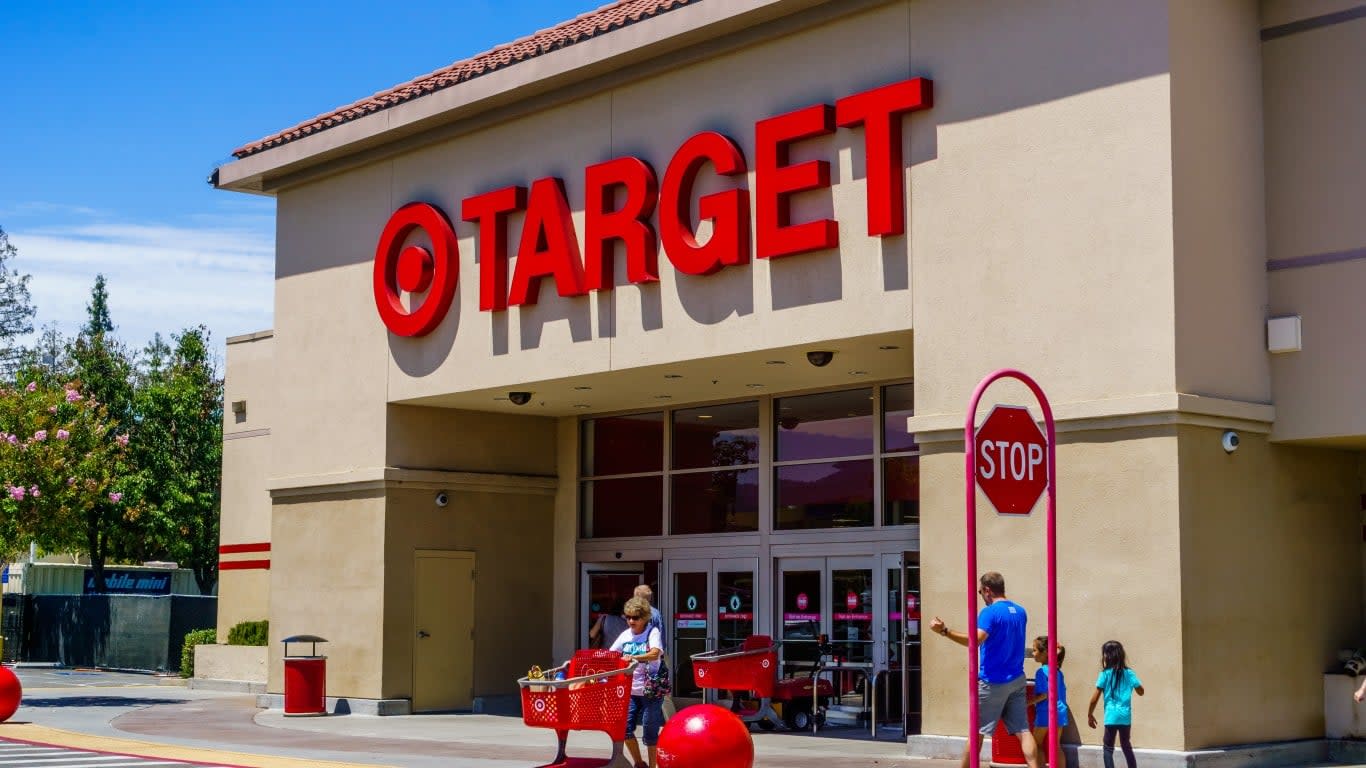
Target’s Dividend King Status Is Under Pressure: What Income Investors Need to Know Now
Images
1 / 4
2 / 4

3 / 4

4 / 4
Target (TGT) maintained its Dividend King status with a 235th consecutive quarterly dividend and $4.56/share annualized dividend, but its FCF payout ratio surged to 72.4% in FY2026 as capital expenditures jumped 28.92% to $3.727 billion while free cash flow fell to $2.835 million. Operating cash flow declined 10.9% in FY2026 and 14.6% the prior year, creating a tighter margin for dividend sustainability despite a solid $5.488 billion cash buffer.

Target faces headwinds from declining operating cash flow and weak consumer sentiment at 56.4, but management expects recovery in FY2027 after seeing positive February sales, meaning the dividend remains safe if the sales momentum holds and capex spending normalizes.

Have You read The New Report Shaking Up Retirement Plans? Americans are answering three questions and many are realizing they can retire earlier than expected.

Target (NYSE: TGT) has been a fixture in dividend income portfolios for decades, and its Dividend King status reflects that. But with revenue declining for multiple consecutive quarters, rising capital expenditures compressing free cash flow, and consumer sentiment in pessimistic territory, retirement investors have a legitimate question: is the dividend still on solid ground?

Metric

Value

Annual Dividend

$4.56/share (annualized)

Dividend Yield

~3.99%

Consecutive Years of Increases

54

Most Recent Increase

1.8% (August 2025)

Dividend King Status

Yes (235th consecutive quarterly dividend)

In FY2025 (ended January 2025), Target paid $2,046 million in dividends against $4,476 million in free cash flow, a comfortable FCF payout ratio of 45.7%. In FY2026 (ended January 2026), capital expenditures surged 28.92% to $3.727 billion, compressing FCF to $2,835 million while dividends paid rose to $2,053 million. That pushes the FCF payout ratio to 72.4%, still below the danger threshold but meaningfully tighter.

Metric

FY2026 Value

Assessment

Earnings Payout Ratio

$4.54 dividends per share / $7.57 EPS

Borderline

FCF Payout Ratio

72.4%

Elevated

Operating Cash Flow Coverage

$6.562B OCF vs. $2.053B dividends

Strong

Operating cash flow coverage remains solid, with $6.562 billion OCF versus $2.053 billion dividends. The concern is the trajectory: operating cash flow fell 10.9% in FY2026 and 14.6% the year before, a two-year decline that warrants attention.

Have You read The New Report Shaking Up Retirement Plans? Americans are answering three questions and many are realizing they can retire earlier than expected.

Metric

Value

Assessment

Total Liabilities / Equity

$43.325B / $16.165B

Moderate leverage

Adjusted EBITDA

$8.072B

Solid base

Interest Coverage (EBIT proxy)

Operating income $5.117B

Adequate

Cash on Hand

$5.488B (+15.25% YoY)

Solid buffer

The $5.488 billion cash position is reassuring. Even when FCF turned negative at −$515 million in Q2 FY2025, Target had no trouble paying its $510 million quarterly dividend. Interest expense has risen due to higher average debt levels, but EBITDA keeps coverage comfortable.

Year

Annual Dividend

YoY Change

FY2026

$4.56 annualized

+1.8%

FY2025

$4.54

+1.8%

FY2024

$4.46

+1.8%

FY2022

$3.60 (annualized Q3 rate)

+20%

FY2021

$2.72 (annualized Q3 rate)

+32%

The streak stands at over 50 consecutive years of annual increases, but the pace has moderated. After raising the dividend from $0.68 to $0.90 per quarter in 2021 and then to $1.08 in 2022, growth has settled into a modest annual cadence. For retirement investors counting on income growth to keep pace with inflation, that is a real consideration.

CFO Michael Fiddelke, speaking on the Q4 FY2026 earnings call on March 3, 2026, pointed to early signs of a turn: "Target saw a healthy, positive sales increase in February, serving as an important milestone on our path back to growth this year, and reinforcing my confidence in the momentum we're building and the future we're creating together." Target holds $8.3 billion in remaining share buyback capacity but made no repurchases in Q4, signaling the dividend takes priority over buybacks when cash is tighter. FY2026 EPS guidance of $7.50 to $8.50 implies stabilization, though tariff uncertainty and consumer spending softness remain headwinds. Consumer sentiment sat at 56.4 in January 2026, well below the 80-point neutral threshold.

Dividend Safety Rating: Safe

The FCF payout ratio of 72.4% is elevated relative to Target's historical range, and two consecutive years of declining operating cash flow deserve respect. However, the $5.488 billion cash position, a 54-year increase streak, and FY2026 guidance pointing toward earnings recovery keep this dividend in the safe column.

The bull case: if February sales momentum continues, consumer sentiment recovers, and capex normalizes, then FCF coverage improves and the streak extends. The bear case: if tariff costs accelerate and operating cash flow declines a third consecutive year, the annual raise becomes harder to justify. Income investors will want to watch operating cash flow trends closely through the first half of FY2027.


You may think retirement is about picking the best stocks or ETFs and saving as much as possible, but you'd be wrong. After the release of a new retirement income report, wealthy Americans are rethinking their plans and realizing that even modest portfolios can be serious cash machines.

Many are even learning they can retire earlier than expected.

If you're thinking about retiring or know someone who is, take 5 minutes to learn more here.