yahoo Press
The bond market is nearing a 5% threshold — but there’s a crucial difference this time
Images
1 / 5
2 / 5

3 / 5

4 / 5
5 / 5
The U.S.-Israel war against Iran has been pushing up the yield on the 30-year Treasury bond in a manner that is likely to spell trouble for stock investors.

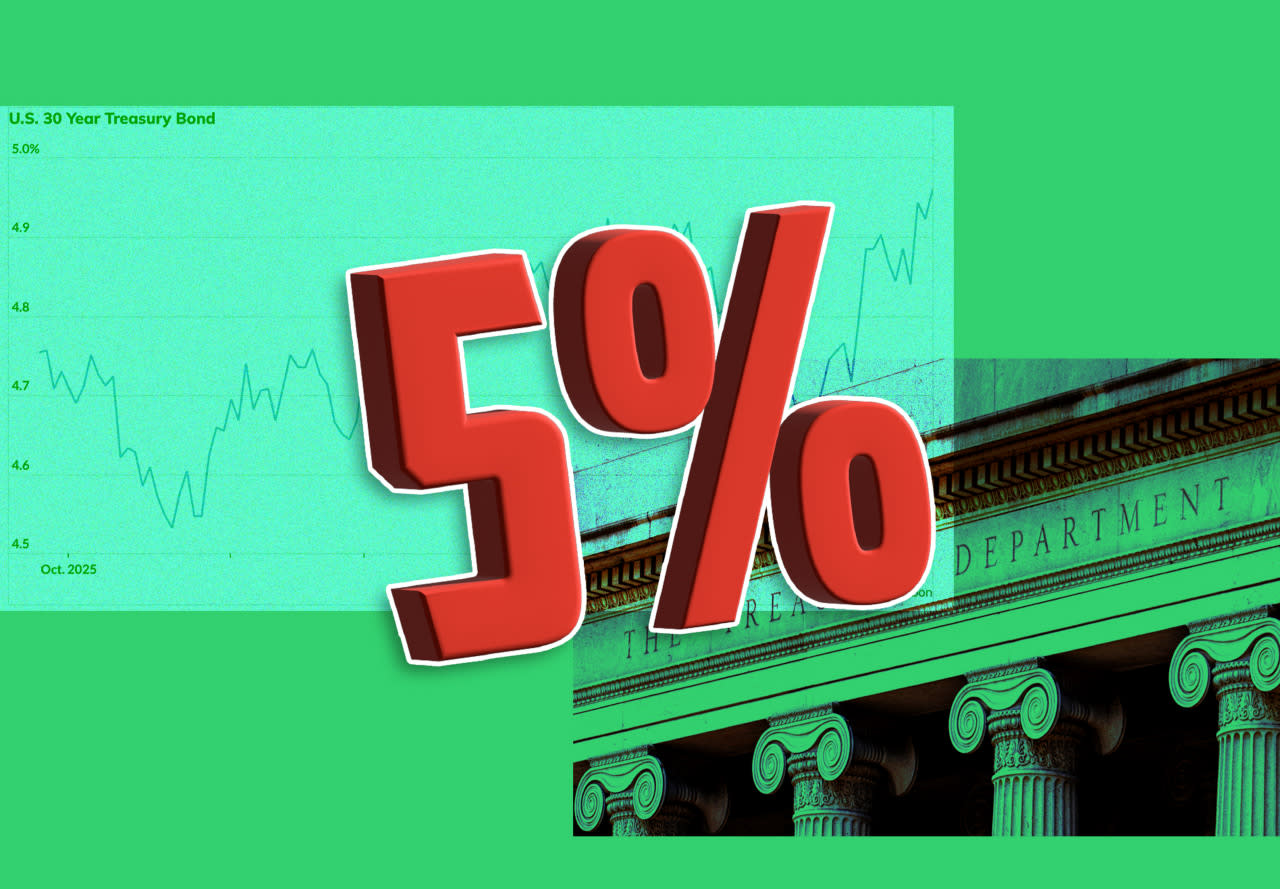
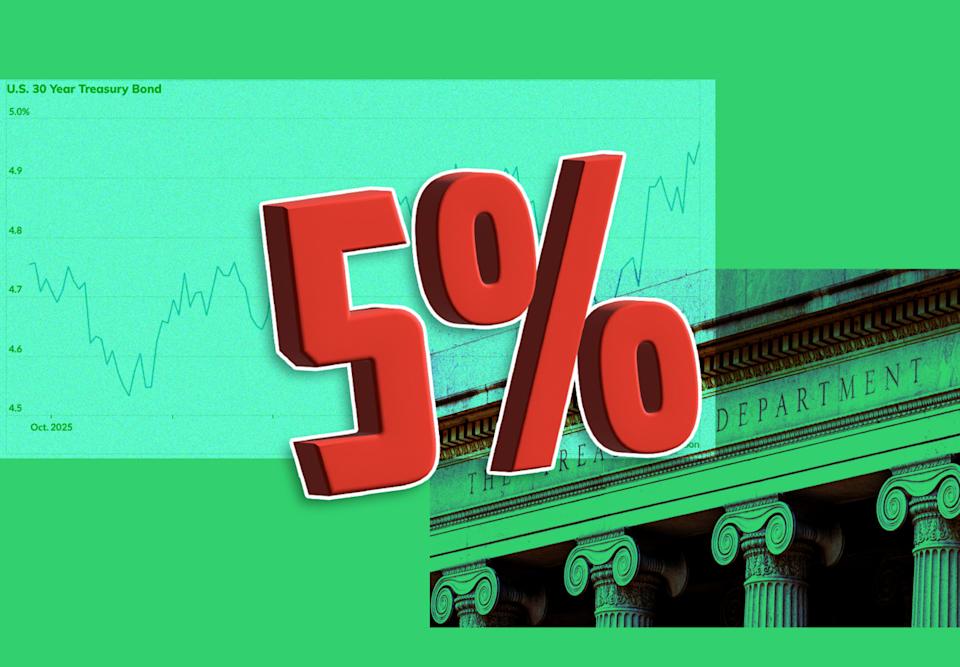
The 30-year yield BX:TMUBMUSD30Y — a benchmark for ultralong-term corporate borrowing — inched toward 5% Tuesday morning, hitting an intraday high of almost 4.98% before pulling back a bit. It also approached 5% during overnight trading ahead of Monday’s U.S. session.

If you’re trying to avoid an IRS audit, leave these three things alone on your tax return

The bond market is nearing a 5% threshold — but there’s a crucial difference this time

‘We’re living the simple life’: I was a fisherman and my wife was a nurse. We retired with $6 million. Here’s how we did it.

These moves on the yield of the U.S. government “long” bond have investors paying attention. The 30-year bond yield “is the market’s long-term confidence gauge and, right now, it’s flashing caution,” said portfolio manager Vincent Ahn at Wisdom Fixed Income Management in Plano, Texas.

“Last summer, the economy was healthy enough to absorb higher rates. Today, the drivers are stagflationary: oil near $100, inflation reaccelerating, and the weakest GDP print in years,” Ahn said in emailed comments. “When yields rise because the bond market is pricing in risk (not growth), that’s when it starts to matter for stocks and for every consumer with a mortgage or a car payment.”

Furthermore, when accelerating inflation risks are the main reason for the 30-year yield’s rise, investors begin to fret over whether the Federal Reserve might lift interest rates and push the economy into a recession — magnifying the risks of a selloff in equities.

To be sure, this isn’t always the case: Last year, for instance, the 30-year yield intermittently broke above 5% on an intraday basis on Jan. 10, May 19 and July 15, and came close to doing this again on Sept. 2. The S&P 500 SPX powered higher in the day and week that followed three out of those four times, according to Dow Jones Market Data. In each instance, the index was higher in the month that followed.

Meanwhile, bond buyers came out of the woodwork and pushed the long-dated yield back down again. Yields move in the opposite direction of bond prices, by rising during selloffs and falling during periods of buying.

What’s different this time is that inflation risks are increasing as the U.S. economy is showing signs of stalling. Revised data released on March 13 showed that the U.S. economy grew at a lackluster 0.7% annual rate in the fourth quarter of 2025, much slower than previously reported. Interestingly, 10-year BX:TMUBMUSD10Y and 30-year Treasurys sold off on the day of the fourth-quarter data release, even though they should have theoretically rallied on the safe-haven appeal of U.S. government debt because of weakening growth.

Stocks closed lower on Tuesday after futures on Brent crude BRN00, the global oil benchmark, briefly went above $104 a barrel. Yields on everything from the 1-year Treasury bill BX:TMUBMUSD01Y through the 20-year bond BX:TMUBMUSD20Y inched higher, alongside the 30-year rate.

The Dow Jones Industrial Average DJIA, S&P 500 and Nasdaq Composite COMP were down by 8%, 6% and 9.2%, respectively, from their record highs as of the final minutes of Tuesday’s session — moving closer to the 10% level that would mark a correction. Nonetheless, stocks have remained surprisingly resilient since the war began on Feb. 28. Still, there’s been much tumult under the surface for equities this year as investors grapple with the disruptive impact of artificial intelligence on certain industries, among other factors.

In bonds, the “parallel selloff across the yield curve is the tell,” Ahn told MarketWatch. The bond market is “repricing the inflation regime. And the war is the accelerant: Oil near $100 doesn’t just hit the gas pump. It cascades through diesel, fertilizer, food, freight and eventually into core services inflation with a lag.

“The fact that Treasurys couldn’t rally on a 0.7% GDP print tells you everything,” he added. “The bond market has made its call: Inflation risk trumps growth risk, full stop.”

As President Trump turned to diplomacy on Tuesday as a way to end the war, strategists pointed out that long-lasting damage already has been done to the energy sector because of the military conflict.

Any eventual calming of tensions “won’t be sufficient to return energy prices to prewar levels,” said BMO Capital Markets strategists Ian Lyngen, Vail Hartman and Delaney Choi. In a note, they cited a “new normal” for oil prices even after the war ends: “Suffice it to say, the cost of gasoline, natural gas, fertilizer and fuel-linked costs such as airfares will increase.”

Others, like New York-based strategist Daniel Tenengauzer at ITC Markets, are thinking of a scenario in which the unwelcome mix of higher inflation and slower economic growth prompts the Fed to hike interest rates — which, in turn, could send the U.S. economy into a downturn.

See: Fed rate hikes are a worry as Iran conflict drags on — but borrowing is already more expensive

“In my view, the damage to the energy compound has already been done,” Tenengauzer said in a phone interview. “So we are going to land in an environment where inflation is going to be higher. The main question is whether the Fed and other central banks will look through that or not.”

Meanwhile, the “demand side of the economy is very vulnerable,” Tenengauzer noted. He added that he’s concerned about “how this pans out over the next few months,” particularly if the Fed hikes rates and “we end up in a recession.”

The Iran crisis is making this retirement strategy look better than it has in decades

A bad Treasury auction is offering a glimpse into the anxiety on Wall Street over the Iran war