yahoo Press
Why Oil Majors Are Quietly Betting Big on Libya Again
Images
1 / 4
2 / 4

3 / 4

4 / 4
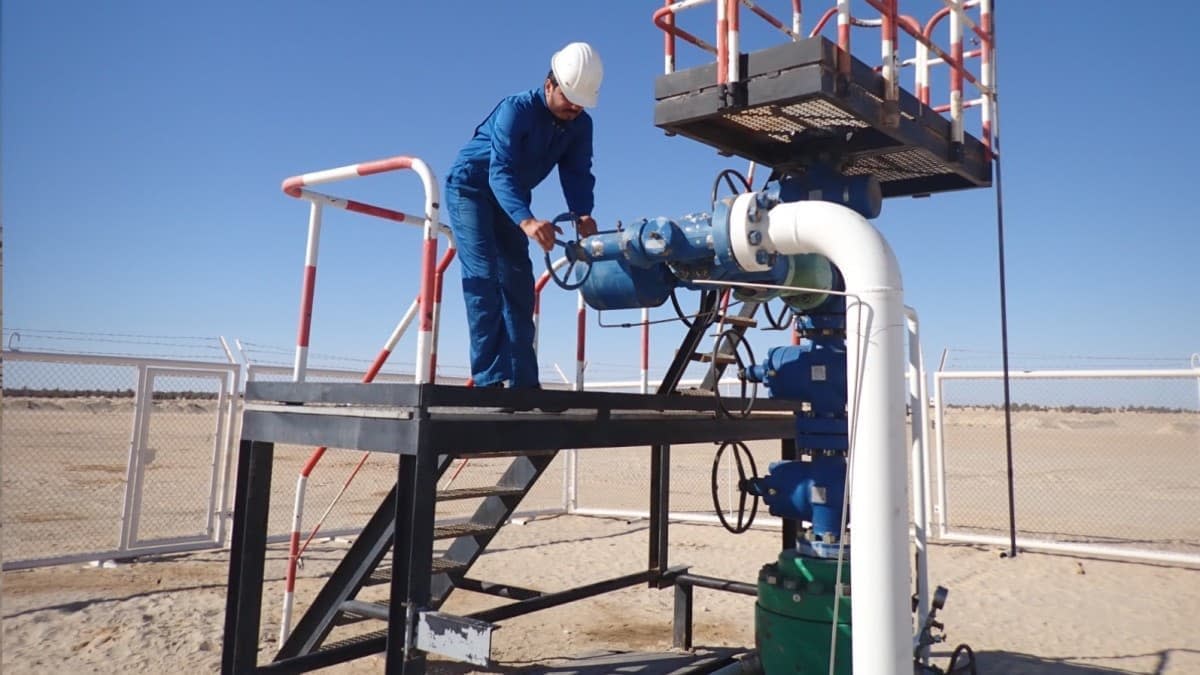
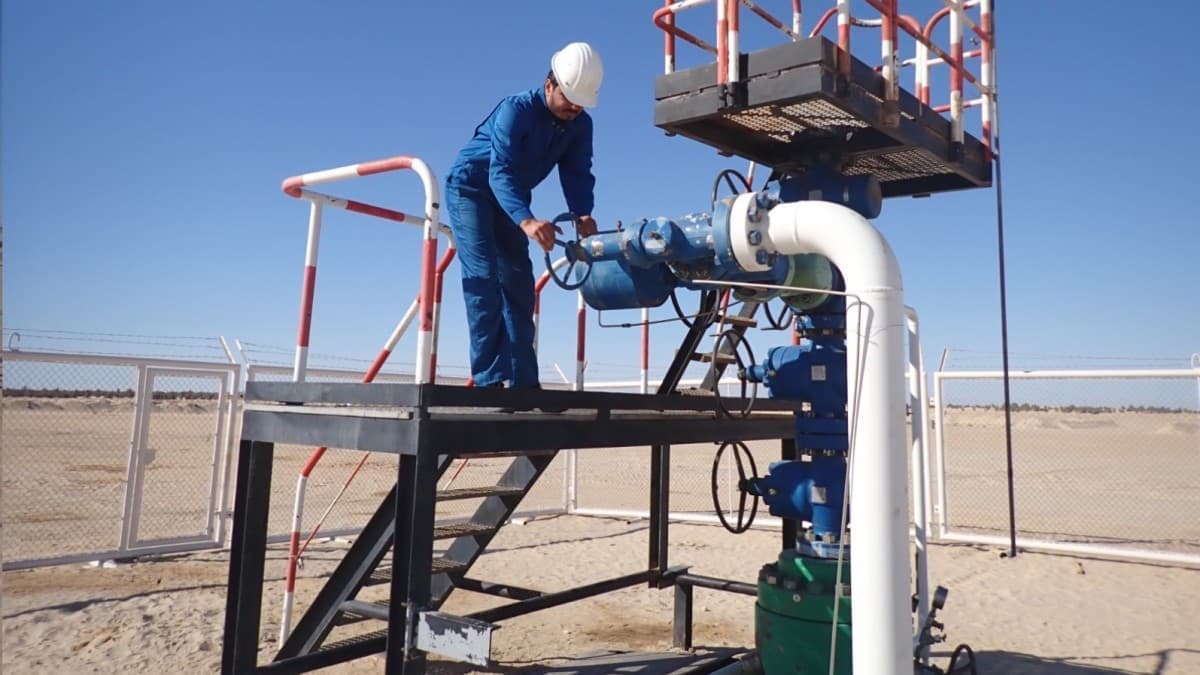
It comes to something when Libya looks like a relative beacon of stability compared to key Middle Eastern states, such as Saudi Arabia, the UAE, and Qatar, but here we are, nevertheless. Of course, the recent fire at Libya's largest oil field, Sharara, caused by a pipeline leak, may have been the product of another attack by one of the many warring factions there, so it is not exactly Switzerland in terms of the global peace rankings table. However, Libya’s appeal to international oil companies (IOCs) has been on the rise again since Russia’s unprovoked invasion of Ukraine on 24 February 2022, as Western countries looked to new oil and gas supply sources to compensate for those controlled by the Kremlin. This resurgence of Western interest coincides with Libya’s re-energised plan to boost crude oil production to at least 2 million barrels per day (bpd) by 2028, and the announcement last year that 22 offshore and onshore blocks would be licensed in the initial bidding round to this effect. Recent news underscores how positively these initiatives are currently playing out.

One of the Western companies that has been among the trailblazers to secure non-Russian energy supplies from as diversified a portfolio as possible is Italy’s Eni, and it announced last week new offshore gas discoveries in Libya. The European oil and gas giant said these were made following exploration activities near the Bahr Essalam field, Libya’s largest producing offshore gas field. Both locations -- Bahr Essalam South 2 (BESS-2) and Bahr Essalam South 3 (BESS-3) -- are located about 85 kilometres (km) offshore in water depth of around 650 feet, according to Eni. It added that its preliminary estimates are that the two structures contain more than 1 trillion cubic feet (Tcf) of gas in place. As the two sites are positioned only around 16 km south of the existing Bahr Essalam facilities, the company expects to be able to develop them on a fast-track development trajectory, through tie-ins to the Bahr Essalam facilities. Eni highlighted that the resulting gas will partly go to Libya’s domestic market and partly to Italy, supporting both local energy supply and export revenues.

Related: 5 Stocks to Buy Now That The Strait of Hormuz is Closed

This deepwater drilling is a testament to Western firms’ confidence in their ability to continue their business in Libya over many years, as it requires long-term capital and security guarantees that IOCs do not commit to unless they believe Libya is entering a more stable, Western-aligned phase. Indeed, it was also Eni that recently started drilling the first deepwater offshore well seen in Libya for nearly two decades, in its energy-rich Sirte basin. This exploration work continues in the basin’s Matsola exploration prospect in Contract Area 38/3 in the Mediterranean Sea, according to Eni. The project also marks the first major new operation between it and Great Britain’s BP -- with the joint venture comprising a 42.5% stake each for the two firms, with the remaining 15% held by the country’s sovereign wealth fund -- the Libyan Investment Authority. The joint venture is committed to drilling a further 16 wells in Libya, across onshore and offshore areas. Moreover, BP also recently signed a memorandum of understanding to evaluate options for redeveloping the giant Sarir and Messla onshore fields in the Sirte basin, and to assess potential unconventional oil and gas development. The firm’s executive vice president for gas and low carbon, William Lin, stated that the agreement “reflects our strong interest in deepening our partnership with Libya’s NOC [National Oil Corporation] and supporting the future of Libya’s energy sector.”

In a similar vein, last week also saw another of the West’s vanguard firms engaged in sourcing new non-Russian energy supplies -- France’s TotalEnergies -- announce the restart of production at Libya’s Mabruk oil field in Libya, in which the firm holds a 37.5% stake. Again, this marks a major turnaround in Libya’s fortunes, as the onshore field, positioned around 130 km south of Sirte, saw production stopped in 2015. “This restart illustrates our long-term commitment in Libya,” said Julien Pouget, Middle East and North Africa director for TotalEnergies’ exploration & production business. “This project, which follows TotalEnergies’ recent announcements regarding the extension of the Waha concessions, brings low-cost, low-emissions oil production in line with the company’s strategy, and contributes to our objective of 3 per cent annual production growth per year until 2030.” The French energy giant agreed more broadly back in to continue its efforts to increase oil production from the giant Waha, Sharara, Al Jurf, and Mabruk oil fields by at least 175,000 bpd. It also agreed with the NOC to make the development of the Waha-concession North Gialo and NC-98 oil fields a priority. These fields have a combined estimated capacity of at least 350,000 bpd. At the same time, improvements in Libya’s refinery operations look likely over time, beginning with the announcement last week that U.S.-based technology and engineering giant KBR was awarded a contract to provide project management and technical services for the South Refinery Project (SRP) in Ubari, southwest Libya. The SRP is in line with KBR’s efforts to advance key oil and gas infrastructure across the country.

Related: Could This Be China’s Strategy To Paralyze the Pentagon?

In broad terms, none of this interest is that surprising, as before the removal of Muammar Gaddafi as leader of Libya in 2011 and the civil war that ensued, the country was producing around 1.65 million bpd of mostly high-quality light, sweet crude oil, particularly in demand in the Mediterranean and Northwest Europe. It also remained the holder of Africa’s largest proved crude oil reserves, of 48 billion barrels. Moreover, in the years leading up to Gaddafi’s forced exit, oil production had been on a rising trajectory, up from about 1.4 million bpd in 2000, albeit well below the peak levels of more than 3 million bpd achieved in the late 1960s, as analysed in my latest book on the new global oil market order. Positively as well, Libya’s NOC was advancing plans at that point to roll out enhanced oil recovery (EOR) techniques to increase crude oil production at maturing oil fields, and its predictions of being able to increase capacity by around 775,000 bpd through EOR at existing oil fields looked well-founded. However, in the depths of the civil war, crude oil output fell to around 20,000 bpd, and although it has recovered now to just under 1.3 million bpd -- the highest level since mid-2013 -- various politically-motivated shutdowns in recent years pushed this down to just over 500,000 bpd for prolonged periods.

Having said all of this, there remain deep-seated issues that may derail Libya’s progress unless they are finally resolved. At the time of signing the interim peace agreement with Tripoli’s U.N.-recognised Government of National Accord (GNA) on 18 September 2020, the Commander of the rebel Libyan National Army (LNA), General Khalifa Haftar, made it very clear that enduring peace would depend on a solution being reached on how the country’s oil revenues would be distributed over the long term. The key to this in his view -- and supported by the GNA back then -- would be the formation of a joint technical committee, which would: “Oversee oil revenues and ensure the fair distribution of resources… and control the implementation of the terms of the agreement during the next three months, provided that its work is evaluated at the end of 2020 and a plan is defined for the next year.” To address the fact that the then-GNA effectively held sway over the NOC and, by extension, the Central Bank of Libya (in which the revenues are physically held), the committee would also “prepare a unified budget that meets the needs of each party… and the reconciliation of any dispute over budget allocations… and will require the Central Bank [in Tripoli] to cover the monthly or quarterly payments approved in the budget without any delay, and as soon as the joint technical committee requests the transfer.” None of these measures has yet been put into place, and there are no ongoing discussions aimed at resolving them. It may be that the bolstered presence of Western interests in Libya may affect such changes, but until they do, the country’s long-term stability remains in question.

By Simon Watkins for Oilprice.com

More Top Reads From Oilprice.com

Indian Refiners Cautious Over Iranian Oil Despite U.S. Waivers

UAE: Weaponizing Hormuz is Economic Terrorism Against the World

Outage in Australia Adds to Global LNG Crunch

Oilprice Intelligence brings you the signals before they become front-page news. This is the same expert analysis read by veteran traders and political advisors. Get it free, twice a week, and you'll always know why the market is moving before everyone else.

You get the geopolitical intelligence, the hidden inventory data, and the market whispers that move billions - and we'll send you $389 in premium energy intelligence, on us, just for subscribing. Join 400,000+ readers today. Get access immediately by clicking here.