Press
‘He will call me Mama’: The Gaza ‘grandmother’ raising an orphaned baby
Images
1 / 18
2 / 18
3 / 18
4 / 18

5 / 18

6 / 18

7 / 18

8 / 18

9 / 18

10 / 18

11 / 18

12 / 18

13 / 18

14 / 18

15 / 18

16 / 18

17 / 18

18 / 18
Maha al-Rubaie, 56, mother of one

Save

Share

Gaza City - Maha al-Rubaie wakes shortly before dawn in the damp former classroom where she lives.

She stretches out her hand to touch the chest of the baby sleeping in the metal crib beside her. She feels the rise and fall of his breath, then settles back on her thin mattress, not to sleep but to watch.

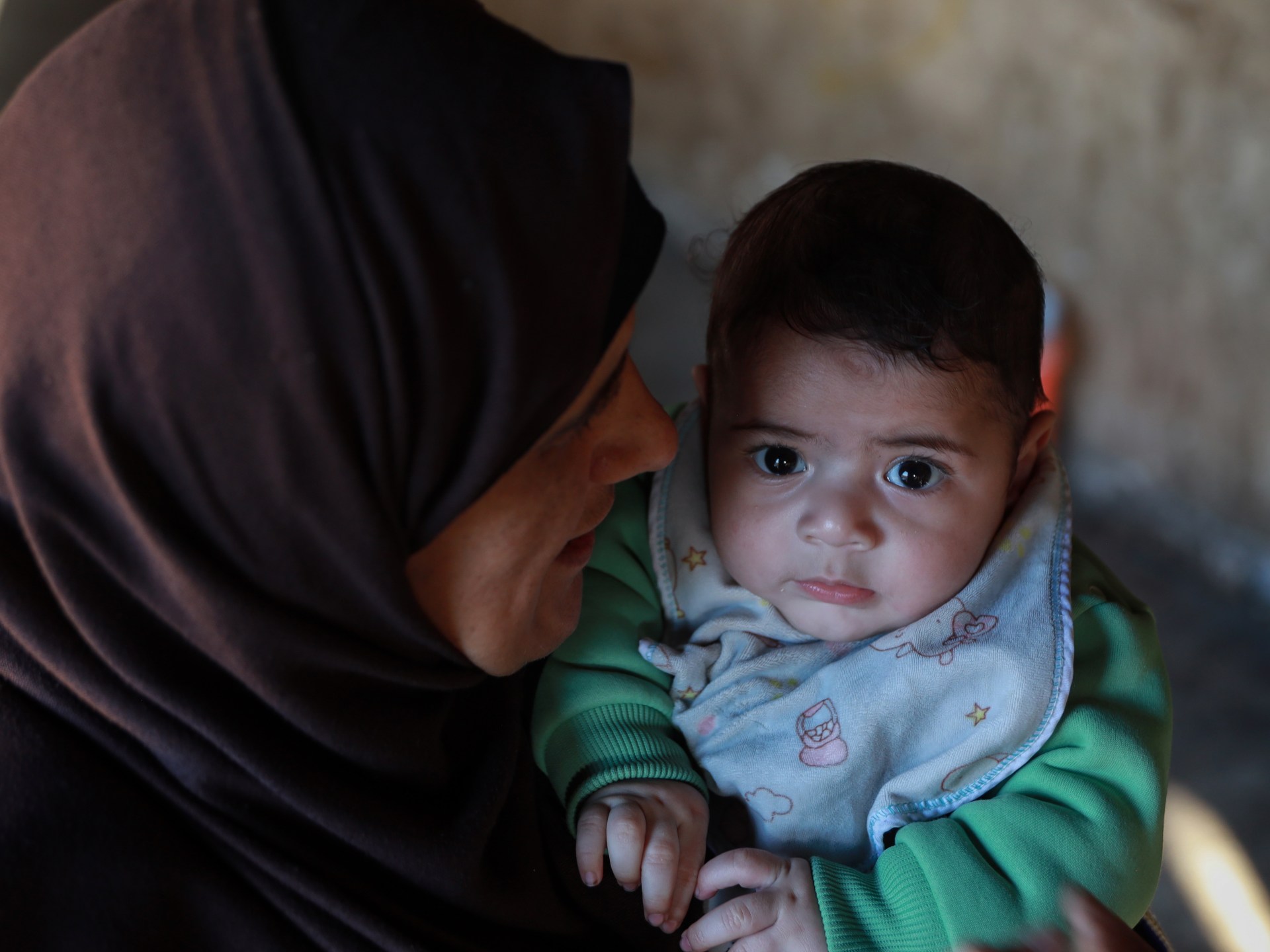
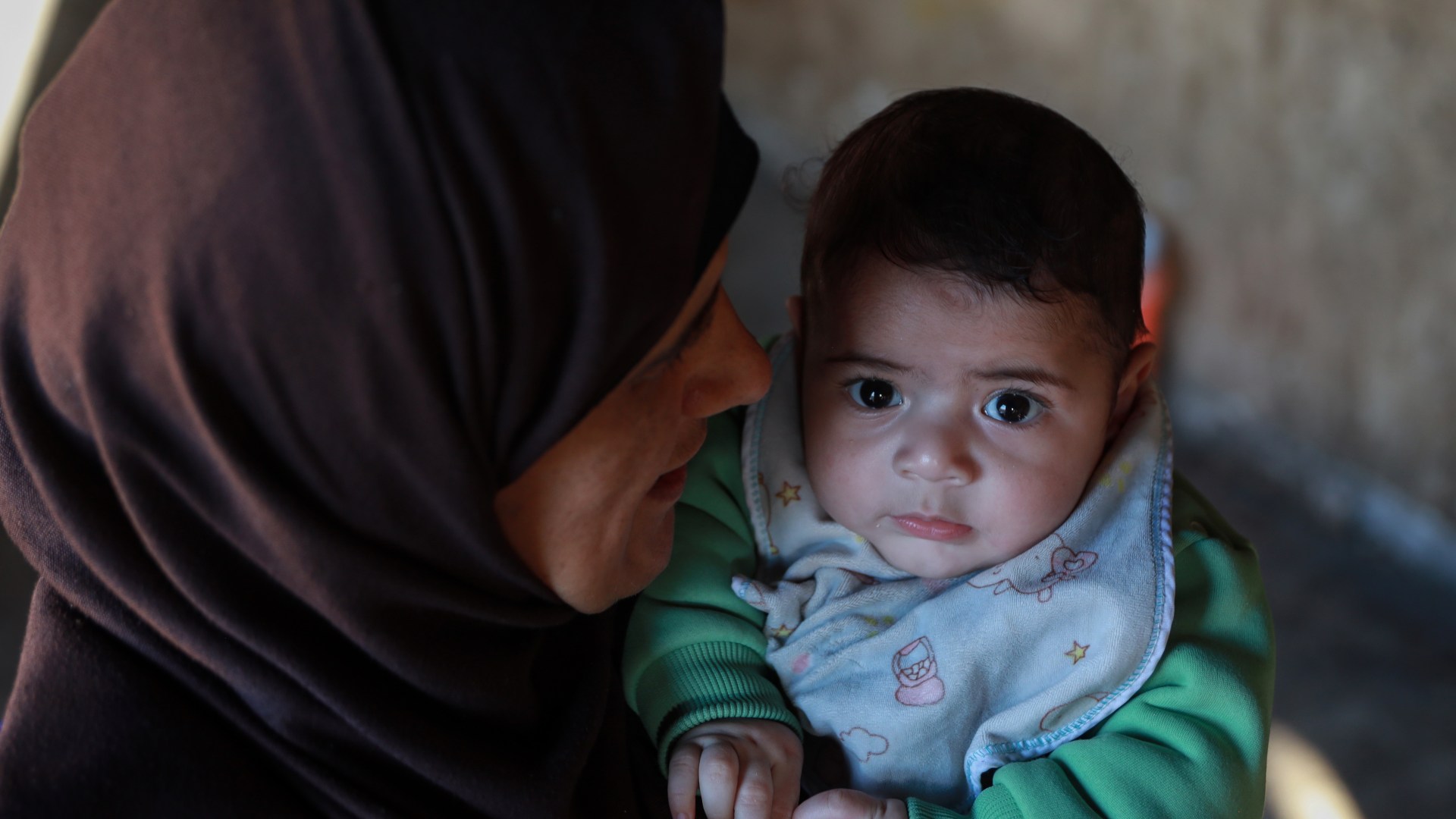
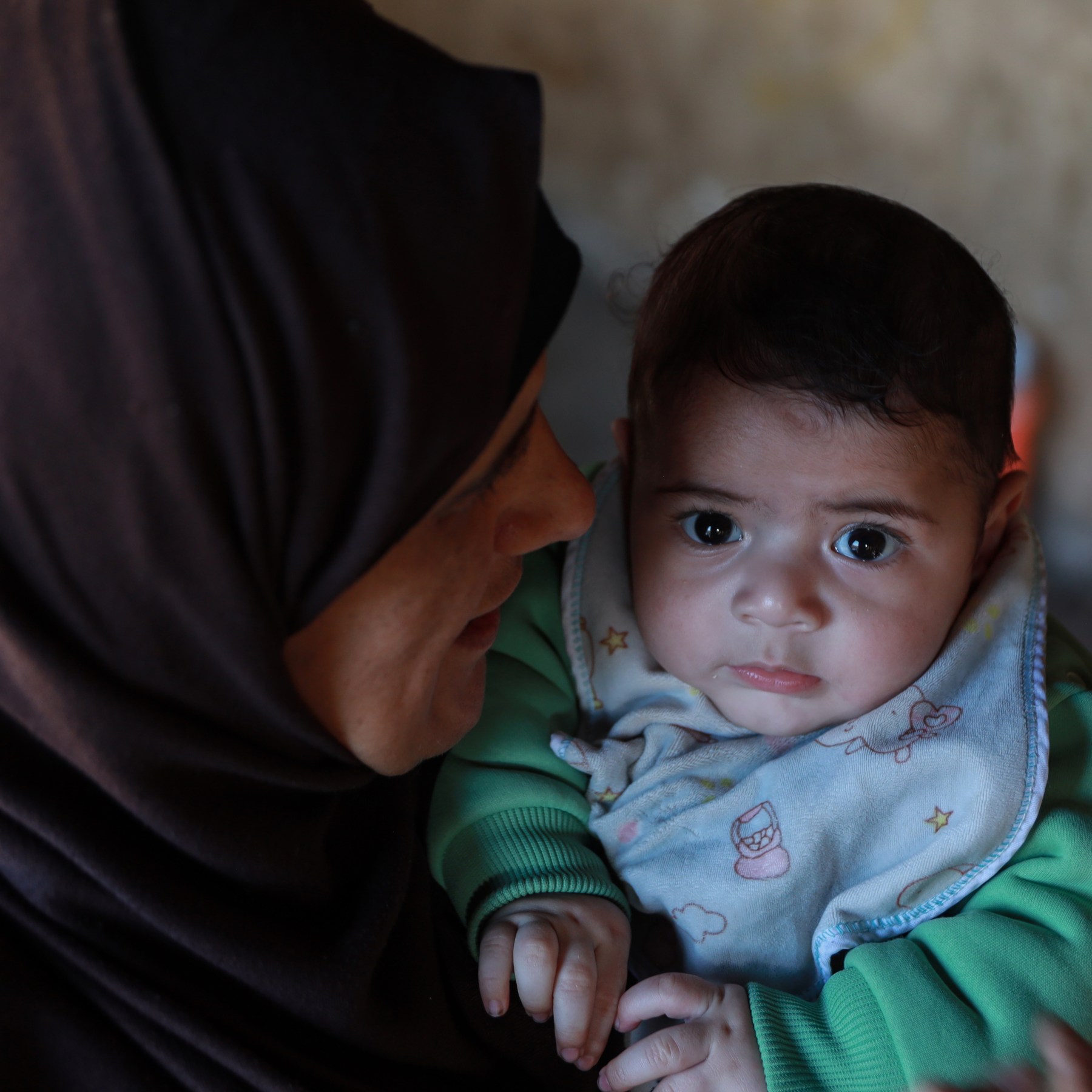
Maha speaks in a low, warm voice. She smiles often and walks with slow, careful steps. Maha, 56 and unmarried, never expected she’d become a mother at this age. Yet she is now “Mama” to Hamza, an orphan who never knew his parents.

Hamza’s wide eyes roam the room, and when they settle on Maha, he smiles.

“When he opens his eyes and looks at me, he murmurs with his lips, ‘Mama,’” she says with a shy smile. “I’m used to my brother’s grandchildren calling me ‘Teta’ [Grandmother], … but he will call me Mama.”

Maha is the paternal aunt of Hamza’s father, Omar al-Rubaie. She and her sister, Huriya, raised Omar beginning when he was 15 along with his two brothers after their father was killed in the 2008 Gaza war and their mother remarried.

“I raised the father when he was orphaned as a child, and now I am raising the son after he too became an orphan,” Maha explains, looking sorrowfully at the baby.

Hamza’s entire immediate family was killed in Israel’s more than two-year genocidal war on Gaza.

On March 18, 2024, as Maha prepared food with Hamza’s mother, Diana, to break their Ramadan fast, an Israeli bomb struck their five-storey home in Gaza City.

“Black dust, rubble and shrapnel filled the air,” Maha recounts.

She, Diana and Omar ran upstairs to where the couple’s three children had been playing with their cousins.

“They were buried under the rubble, … no sound, no movement,” she recalls, her voice bitter.

Diana and Omar lost their children, eight-year-old Dima, six-year-old Anas and three-year-old Mohammed in the strike along with Omar’s brother, his wife and two children.

“Hamza’s mother was completely shattered,” Maha says.

After their children were killed, Diana fell into a severe depression while intense grief left Omar unable to eat. Months later, they tried to conceive again. The day Diana’s pregnancy was confirmed, “Omar and Diana cried hysterically, caught between bitter grief for their murdered children and happiness for the baby to come,” Maha recalls.

Amid starvation inflicted by Israel, the couple anticipated the arrival of their baby, buying clothes when they could. They spoke of having more children.

“They did not know they would be killed and would never see their child at all,” Maha says, her eyes filling with tears.

On September 4, 2025, Diana was nine months pregnant when her and Omar’s tent was bombed beside the school where Maha and the rest of their family live. Diana’s mother was killed, and the dying couple was rushed to the hospital. Diana’s sister begged the doctors to save the baby, and an emergency caesarean section was performed in a hospital corridor moments after Diana died.

“Imagine that - his date of birth is the same as the date of death of his parents, … his dearest people,” Maha says, her voice breaking. “We received a birth certificate and two death certificates at the same time.”

Immediately after his birth, the newborn was transferred to another hospital for neonatal intensive care as he struggled to breathe.

Maha saw the baby inside the incubator for the first time as doctors fitted him with a breathing tube.

“After five days, his face improved, and we named him Hamza,” Maha says, explaining how Omar had wanted a name that was different from those of his dead children, so they chose Hamza, a name he loved.

Maha remembers the first time she held him.

“[His] face was beautiful, radiant. … Seeing him lifted some of the sorrow and grief from our hearts amid all the misery surrounding us.”

Maha and her sister had long looked after Omar’s family, and Huriya, 58, was already caring for Hamza’s eight-year-old cousin after his sisters and parents were killed with Hamza’s siblings.

Maha decided immediately that she would raise the child. “Abdulsalam is your responsibility, and this child will be mine,” she told her sister.

When Hamza was barely 20 days old, an Israeli ground operation in northern Gaza and the devastation of the healthcare services in the area forced Maha to flee south with her baby. He had had recurring seizures, and she was desperate for medical care.

While staying in tents with family, she took Hamza to the hospital, and he underwent tests for 18 days while doctors tried to identify his medical issue. She walked over destroyed roads to carry her son daily to the hospital because there was no transportation.

She was terrified of losing Hamza.

The doctors determined he would have periodic neurological seizures due to oxygen deprivation at birth, and he would need medication, but his condition could stabilise with the right care. But with the health system decimated by Israel's war, Maha has not been able to secure the specialist neurological care or all the medication that Hamza needs.

After a "ceasefire" began in October, they returned to northern Gaza and the school.

Maha’s life today is marked by sleepless nights, exhaustion, constant care and vigilance.

She heats water daily over a wood fire that produces thick smoke and strains her lungs, so she can prepare milk, bathe Hamza and wash his clothes.

Maha suffers from nerve issues and doesn’t always have the strength or feeling in her hands to lift Hamza and carry out her daily tasks. She dreams of having toys for him and a stroller because her arms are tired from carrying the boy.

Maha and Hamza live with Huriya and Abdulsalam. Two of the sisters' siblings and a nephew also share the room, helping when they can, as do relatives living beyond a cloth that hangs in place of a door.

At night, Maha lies awake, alert and ready to comfort and feed Hamza before he cries for her. During the day, she often wants to lie down to rest, but he looks at her expectantly. “I force myself to get up and play with him,” she says, looking into Hamza’s eyes and giggling with him.

“I cannot bear to see him sad. It is enough what he has endured - even if he does not yet understand it,” she adds.

Maha’s home and so many of her family members are gone. “But this child remained,” she says, bringing her adopted son his bottle. “Hamza has given me a reason to live.”

She pushes thoughts of her fragile health from her mind, praying that she lives to “raise him and walk with him through his life’s journey”.

She dreams of raising him in a safe place and giving him a good education. “I want him … to grow up and marry so he will not feel alone,” she says.

“May God prolong my life so I can witness his childhood - and his joy.”

This story is part of a miniseries, Mothering on the Margins, exploring how five women around the world grapple with impossible circumstances to raise their children.

Read more from the series:

'I have fought for Aaron': A Ugandan mother confronts disability and stigma

'I count their breaths': A homeless mother protects her children in Delhi