Press
Smoking ban in Scotland's pubs was a 'PR war' - but has it saved lives?
Images
1 / 12

2 / 12
3 / 12
4 / 12

5 / 12
6 / 12
7 / 12
8 / 12
9 / 12
10 / 12
11 / 12
12 / 12
Exactly 20 years ago, Scotland became the first part of the UK to ban smoking in enclosed public places - including pubs, restaurants and workplaces.

To some, the legislation heralded dusk on the halcyon days of proper boozers. To others, it put a stop to nights of stinging eyes and stinking clothes - and, most importantly, it saved lives.

Though it can be hard to imagine now, much of the 20th Century was seen through a cloud of smoke. You could puff away on aeroplanes, in hospitals and in offices.

By 2006, in the interests of public health, the realms of the smoker were being restricted.

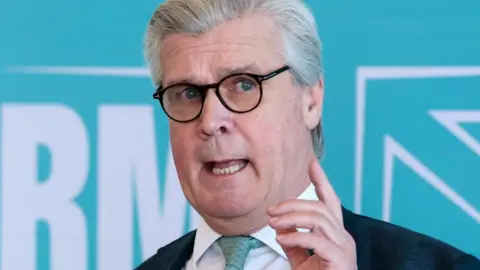
The man behind that change in Scotland was Andy Kerr, Scotland's former health minister.

The ex-Labour MSP spearheaded the smoking ban campaign as the country aimed to shed its tag as the "sick man of Europe".

His bill proved to be ground-breaking, with Wales, Northern Ireland and England following suit the following year.

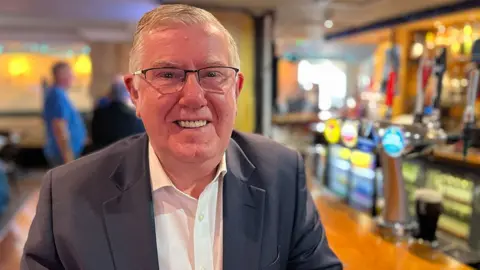
Kerr is back at the Calderwood Inn in East Kilbride - a place of special significance not just because it's where he met his wife.

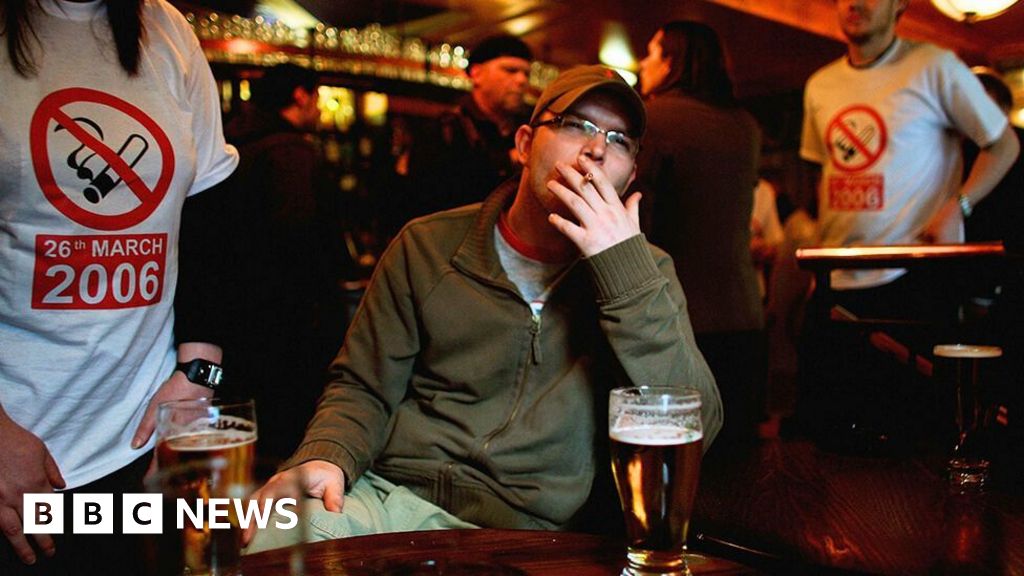
It was in this cosy South Lanarkshire pub on the morning of 26 March 2006 that he officially launched the smoking ban.

"Sadly I had to drink an orange juice because the press were here," Kerr tells BBC Scotland News.

While the former MSP says the ban is the piece of legislation he is most proud of in his career, he was not without his critics.

Even as Kerr smiled for photographers in the smoke-free pub in March 2006, a regular claimed the law would "ruin" Scotland's economy.

"It was seen as the end of the world for the pub," Kerr remembers.

The years since the ban have undoubtedly been tough for Scotland's bars.

More than 10% - about 700 - closed within four years of the smoking ban, according to one study.

And a fifth of the country's pubs shut between 2009 and 2022, according to the Office for National Statistics.

Yet Kerr notes that home TV sports subscriptions and cheap supermarket booze were among many important factors in the plight of the hospitality industry.

For the ex-minister - a former smoker who saw his dad suffer from lung disease - the legislation was a public health necessity that has "undoubtedly" saved lives.

About a quarter of Scottish adults smoked when the ban was introduced.

By 2024, that figure had been cut to 14%.

Exposure to second-hand smoke - associated with deadly toxins - has been cut by 96% since the ban, according to analysis by Public Health Scotland and the University of Stirling.

The legislation was also linked to a 17% drop in the number of people being taken to hospital with heart attacks and a 7% reduction in strokes, as well as helping to improve the health of pregnant women and babies, the research found.

One of Kerr's chief opponents during the smoking ban campaign was Paul Waterson, the former chief executive of the Scottish Licensed Trade Association (SLTA).

He started working in pubs in the 1960s, in the days when "you couldn't see your customer for smoke".

A pub owned by his family - the Maltman on Glasgow's Renfield Street - was one of the first in the UK to have a non-smoking bar.

But as chief executive for the SLTA - a role he stepped down from in 2018 - Waterson ultimately argued for a restricted ban applying to bar areas and places where hot food was served.

At the time, his organisation claimed a full ban would increase alcoholism, cost thousands of hospitality jobs and cost the Treasury £85m in lost revenue.

"It was a moral argument against a business argument, and a moral argument wins," he tells the BBC.

"It was a war and we didn't realise it was a war - a PR war."

Although Waterson still believes some arguments against a ban could have merit, he recognises the case against it is "dead".

He adds: "It shows you how it's moved. We can never go back."

Back at the Calderwood Inn, Alexandra, 28, is at the pool table with her fiancé Andrew, 26.

She was only a child when the ban was introduced, yet the sight and smell of smoke-filled pubs is seared into her brain.

Remembering trips to the pub with her father, she tells BBC Scotland News: "You walked in and it was a wall of smoke.

"It sticks to everything - I remember it stinking."

Although smoke-filled pubs are hard to fathom for younger Scots, Alexandra and Andrew say they would not necessarily be opposed to indoor smoking areas in areas that do not serve food.

"There needs to be a line," says Andrew, a smoker, adding: "But it would create a good atmosphere."

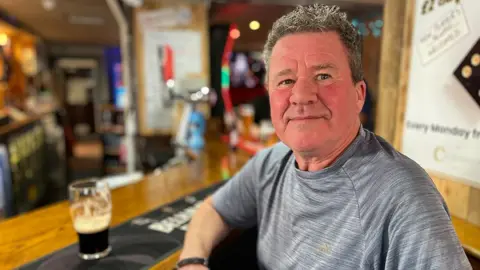
Tam Leddie - who has been drinking in the Calderwood long enough to remember the days when women were refused service - recalls nights ending with piles of cigarette butts being swept up from the floor.

"It used to be like fog-like," he tells the BBC, adding that walking into a pub for the first time without the omnipresent cloud felt "unreal".

As a non-smoker, Tam is thankful for the change.

"It didn't seem a problem at the time - it was the done thing - but I wouldn't like someone sparking up at a table now," he says.

"And it's better for people that are trying to give up, they're not tempted in here."

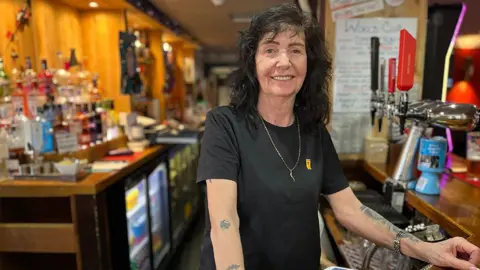
Behind the bar, Carol Graham says the ban did not convince her to quit.

She remembers the legislation as the "end of an era".

"I thought people would just stop going to pubs, that they wouldn't get the business and were going to close - and a few did," she says.

Attempts to legislate against smoking did not end with the ban, which was soon followed by the requirement for cigarette packets to have graphic health warnings on them.

In 2013, the Scottish government set a target of achieving a "tobacco-free" Scotland by 2034 in which no more than 5% of the population smokes,

A bill making its way through the UK Parliament will make it illegal for people born on or after 1 January 2009 to ever buy cigarettes, as well as introducing restrictions on the advertising and sale of vapes.

Simon Clark, director of the smokers' rights group Forest, campaigned against the ban 20 years ago.

He says that while most smokers have adapted to the ban, "the war on smoking has gone far enough".

"Government has a duty to educate people about the health risks, but beyond that politicians and anti-smoking campaigners should butt out," he tells BBC Scotland News.

Dr Garth Reid of Public Health Scotland disagrees.

He describes the ban as a "landmark" policy, adding: "There are people now who have absolutely no memory of having restaurants and bars and buses that there was smoking in.

"So it's profoundly changed the social norms and that helps to protect the country in terms of people not starting smoking."

However, he notes that more than 8,000 smoking-related deaths continue to be recorded in Scotland every year.

While smoking rates have steadily declined in Scotland, it has been mirrored by a rise in e-cigarette use.

Health experts have raised concerns about the chemicals used in them, with warnings that their long-term use has not been adequately studied.

In 2024, one in 10 Scots said said they vaped, up from about 5% a decade earlier - with e-cigarettes particularly popular among young people.

Vapes are not outlawed in enclosed public places as part of the 2006 legislation, but they are typically banned by pubs.

"Young ones coming to the pub now, they're all vaping," Carol says.

"And half of them have never smoked in their life."

The challenge now, says Dr Reid, is to learn the lessons from 20 years ago to curb a trend he described as "really concerning".

The party's leader in Scotland has admitted making a "clumsy" remark at a rugby club dinner in 2018.

Voters will elect the next Members of the Scottish Parliament on Thursday 7 May.

MSPs voted in favour of passing an amendment to visitor levy legislation before the first scheme comes into force.

The ex-SNP leader, who is stepping down from Holyrood this week, has defended her support for the trans community.

A record 42 MSPs are stepping down, from grandees to first timers - they share their reasons why.