yahoo Press
How can a surgeon struggle on a $665K salary? Ramit Sethi blames a certain financial mistake — here’s how to avoid it
Images
1 / 4
2 / 4

3 / 4

4 / 4
Moneywise and Yahoo Finance LLC may earn commission or revenue through links in the content below.

Jeff, 51, is a specialized surgeon. His wife Susan, 48, is a stay-at-home mom. Even though Jeff earns an enviable $665,000 a year, the couple — married 19 years — is still struggling to pay the bills.

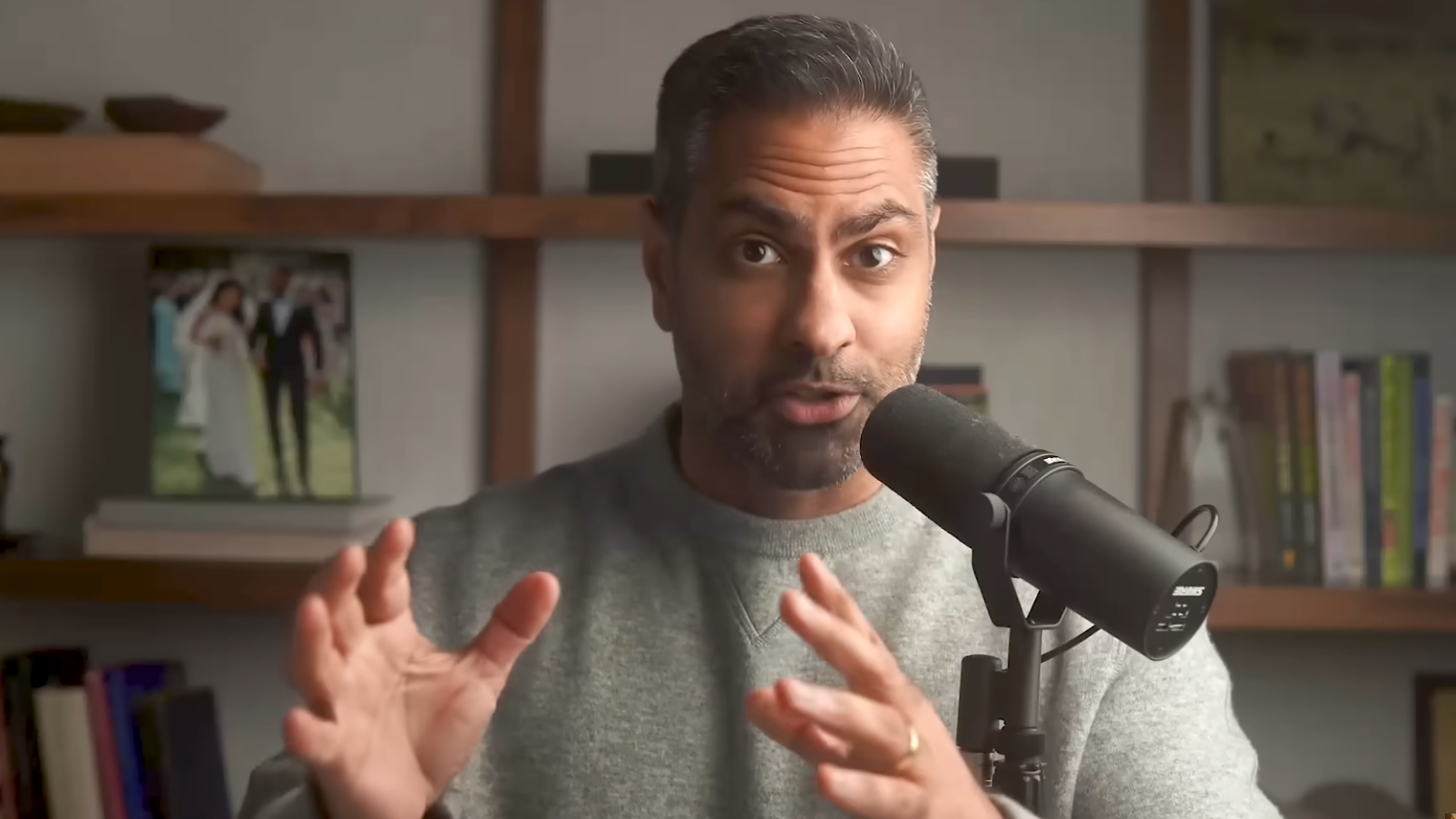
The couple called into finance guru Ramit Sethi’s podcast, I Will Teach You To Be Rich, to get some help (1).

Thanks to Jeff Bezos, you can now become a landlord for as little as $100 — and no, you don't have to deal with tenants or fix freezers. Here's how

New 2026 IRA rules are here. See how to protect your nest egg from inflation before the next tax deadline with physical gold. Get your free guide from Priority Gold

Dave Ramsey warns nearly 50% of Americans are making 1 big Social Security mistake — here’s what it is and the simple steps to fix it ASAP

After taxes, Jeff takes $426,000 a year, but he only started earning that much around the age of 40. As his income grew, the family’s discretionary spending ballooned.

Sethi pointed out that people can feel money anxiety and develop poor spending habits, whether they make $50,000 or $500,000 a year.

“If you feel bad about money at $50,000, you’re probably going to feel that way when you 10 times your income,” he said.

But it turns out flashing their cash wasn’t the only problem. Here’s the piece of the puzzle Jeff and Susan were missing.

Sethi first pointed to some of the psychological issues at play. For example, Susan grew up without a lot of money, and while she often deprives herself of small expenditures like pedicures, she also has a hard time saying no to her kids when it comes to big-ticket items.

But, according to Sethi, one of their biggest problems has to do with their financial advisor.

In a more recent YouTube video posted to Sethi’s channel, he states, “I would never pay a percentage of assets under management (2).”

Percentage-based fees grow as your wealth grows, which means you can end up paying an ever-increasing sum to your advisor.

But Sethi clarified he’s not against working with a professional, saying “I would, and have, happily paid a financial advisor to help me out, to take a second look at my asset allocation.”

Sethi advocates for fixed advisory fees — which are a safer way to keep more of your investment gains as your wealth grows.

As for Jeff, he has two brokerage accounts managed by an advisor charging a 1.24% fee.

“I generally feel as though most people are good and they’re not trying to rip us off,” Susan said.

But when she asked their financial advisor about his fee, “he told me, ‘oh, it’s roughly around 1%.’ I’ll never forget, he made this face like, oh, it’s not that much.”

Sethi says he knows that face.

“Most advisors make their money when your portfolio grows, which is why they love older people and wealthy people who specifically do not understand commission structures,” he said.

Read More: I’m almost 50 years old and don’t have retirement savings. Is it too late?

Jeff and Susan have $460,000 in two brokerage accounts. If they live to age 85 — for about another 35 years — without making any further contributions to these accounts, and assuming a conservative 5% return, their advisor’s 1.24% fee adds up to a whopping $863,170, according to Sethi.

Right now, the couple pays roughly $6,000 a year in fees — about $500 a month. But fast-forward 35 years — 420 months — and they’ll be paying 1.24% on a much larger portfolio, averaging around $2,054 a month, according to Sethi.

And according to Dr. Jim Dahle, a practicing emergency physician and the founder of The White Coat Investor, it’s not hard to calculate your annual AUM fee. Just multiply your total assets under management by the asset under management percentage.

For example, if you have $700,000 and your AUM fee is 0.9%, you’ll be paying $6,300 in fees this year, he says.

But some advisors who charge AUM fees may count on you not doing the math.

“You’re being ripped off since you refuse to do a math equation once a year and negotiate a little or change to a new advisor,” says Dahle. “I don’t want to say you’re getting what you deserve, but there’s a little bit of truth to that (3).”

Instead of putting their money toward paying high fees, Jeff and Susan could put that money to work by investing in a low-cost ETF or index fund and get a similar return. In doing so, they could also pay much lower fees, says Sethi. According to Charles Schwab, the average annual fee for an equity ETF is usually less than 0.25% (4).

Clearly, investing is not a set-it-and-forget-it enterprise — it requires time and careful attention to ensure you’re making good choices and keeping an eye on excessive fees.

So it pays to have access to simple, jargon-free research to keep you informed as you invest.

Moby offers expert research and recommendations to help you identify strong, long-term investments backed by advice from former hedge fund analysts.

In four years, and across almost 400 stock picks, their recommendations have surpassed the S&P 500 by almost 12% on average. They also offer a 30-day money-back guarantee.

Moby’s team spends hundreds of hours sifting through financial news and data to provide you with stock and crypto reports delivered straight to you. Their research keeps you up-to-the-minute on market shifts and can help you reduce the guesswork behind choosing stocks and ETFs.

Plus, their reports are easy to understand for beginners, so you can become a smarter investor in just five minutes.

Another important consideration for Jeff and Susan will be their asset allocation. Ideally, they should be minimizing their fees paid to advisors and for investments. But they should also ensure they’re invested across an array of different asset classes.

For instance, they may also want to invest in alternative assets, such as real estate, to build out a diversified, risk-resistant portfolio. Commercial real estate, in particular, can offer a number of tax advantages for investors.

But, historically, direct access to the $26.2 trillion commercial real estate sector has been limited to a select group of elite investors — until now (5).

If diversifying into multifamily and industrial rentals appeals to you, you could consider investing with Lightstone DIRECT, a new investing platform from the Lightstone Group, one of the largest private real estate companies in the country with over 25,000 multifamily units in its portfolio.

Since they eliminate intermediaries — brokers and crowdfunding middlemen — accredited investors with a minimum investment of $100,000 can gain direct access to institutional-quality multifamily opportunities. This streamlined model can help reduce fees while enhancing transparency and control.

And with Lightstone DIRECT, you invest in single-asset multifamily deals alongside Lightstone — a true partner — as Lightstone puts at least 20% of its own capital into every offering. All of Lightstone’s investment opportunities undergo a rigorous, multistage review before being approved by Lightstone’s Principals, including Founder David Lichtenstein.

How it works is simple: Just sign up with your email, and you can schedule a call with a capital formation expert to assess your investment opportunities. From here, all you have to do is verify your details to begin investing.

Founded in 1986, Lightstone has a proven track record of delivering strong risk-adjusted returns across market cycles with a 27.6% historical net IRR and 2.54x historical net equity multiple on realized investments since 2004. All told, Lightstone has $12 billion in assets under management — including in industrial and commercial real estate.

As such, even if multifamily rentals don’t appeal to you, Lightstone could still serve you well as an investment vehicle for other real estate verticals.

Get started today with Lightstone DIRECT and invest alongside experienced professionals with skin in the game.

Diversification isn’t just smart; it’s essential. Billionaires like Jeff Bezos and Bill Gates continue to invest heavily in stocks, but they also carve out a portion of their portfolios for assets that behave differently from the market.

One such asset has posted positive returns over two decades, highlighting strong long-term investment potential. And with its moderate relationship with traditional financial markets, this alternative investment could help protect against inflation, especially amid market uncertainty.

It’s no wonder this asset has long been favored by the ultrarich as a resilient and lucrative addition to their portfolios. With an estimated value of over $2.5 trillion — projected to reach nearly $3.5 trillion by 2030 — it represents a massive asset class, according to Deloitte (6).

Are you surprised to discover this asset is fine art?

Until recently, this world was off-limits. Now, with Masterworks, you can buy fractional shares in multimillion-dollar works by icons like Banksy, Picasso and Basquiat. While art can be illiquid and typically requires a long-term hold, it offers unique portfolio diversification.

Masterworks has sold 27 artworks so far, yielding net annualized returns like 14.6%, 17.6% and 17.8%.*

Moneywise readers can get priority access to diversify with art: Skip the waitlist here.

*Past performance is not indicative of future returns. Investing involves risk. See important Regulation A disclosures at Masterworks.com/cd.

So, what can you do if you’re working with a financial advisor who charges you a percentage of assets and you want out?

The fees Jeff and Susan have paid up until now are sunk costs. But the biggest step in this process is realizing you need to make a switch, says Sethi. The rest is just details — though it could make for an uncomfortable conversation, especially if you’ve been working with the same financial advisor for many years.

Sethi recommends explaining to your financial advisor — preferably over email — that you’ve decided to move your brokerage account because the fees you’re paying are not part of your financial goals. By transferring your brokerage account in kind and moving assets as is from one account to another, you can avoid “selling them and triggering a taxable event,” he said.

However, if you do want to keep working with an advisor, Sethi said, “you want to pay a flat fee, never a percentage.”

According to the Wall Street Journal, some advisory fees can even be negotiable. They recommend, “If you’re considering working with a particular advisor, ask if they’re willing to adjust their fees (7).”

If you want to avoid Jeff’s situation but still prefer to work with an advisor, finding a flat-fee advisor is key.

And if you don’t know where to find a flat-fee advisor, Advisor.com can help. The platform connects you with finance experts in your area for free.

Advisor.com does the heavy lifting for you, vetting advisors based on track record, client ratios and regulatory background. Plus, their network of fiduciaries are legally required to act in your best interests.

And many of their advisors offer this transparent, flat-fee model — the kind Sethi recommends.

Just enter a few details about your goals, and Advisor.com’s AI-powered matching tool will connect you with a qualified expert best suited to your unique financial situation.

During your free initial consultation you can confirm the advisor’s fee structure fits your needs.

Most Americans earn a dismal 0.39% APY on their cash at big banks. Unlock 4.05% APY and pay $0 in account fees instead with a Wealthfront Cash Account

Vanguard reveals what could be coming for U.S. stocks, and it’s raising alarm bells for retirees. Here’s why and how to protect yourself

Robert Kiyosaki begs investors not to miss this ‘explosion’ — says this 1 asset will surge 400% in a year

Taxes are going to change for retirees under Trump’s ‘big beautiful bill’ — here are 4 reasons you can’t afford to waste time

Join 250,000+ readers and get Moneywise’s best stories and exclusive interviews first — clear insights curated and delivered weekly. Subscribe now.

We rely only on vetted sources and credible third-party reporting. For details, see our editorial ethics and guidelines.

@RamitSethi (1), (2); The White Coat Investor (3); Charles Schwab (4); Clarion Partners (5); Deloitte (6); Wall Street Journal (7)

This article provides information only and should not be construed as advice. It is provided without warranty of any kind.