yahoo Press
This little-known southwest Missouri site preserved 13,000 years of ancient history
Images
1 / 8
2 / 8

3 / 8

4 / 8
5 / 8

6 / 8

7 / 8

8 / 8
STOCKTON, Mo. — Long before Stockton Lake, long before the Sac River was controlled by a dam, people kept returning to the same bend in what is now Cedar County.

They came because the place had what they needed.

The river offered fish and mussels. Gravel bars held chert, the hard stone used to make tools and spear points. The nearby woods and floodplain provided plants, game and fuel. And after people left, the river slowly covered their camps with new layers of dirt and silt.

That is what made Big Eddy so unusual.

Instead of mixing everything together, the river buried one period after another, almost like stacking pages in a book. Missouri State University says every major prehistoric period is represented at the site, with the oldest artifacts found 11 to 13 feet below the surface.

Then the river started taking that history back.

Archaeologists first noticed artifacts there in 1986 while canoeing the Sac River in Cedar County. Missouri State says the site began eroding in the 1970s, and a 2002 magazine article said the riverbank was being lost at more than four feet a year in places. Researchers tied much of that erosion to large water releases from Stockton Dam upstream.

That turned Big Eddy into a race against time.

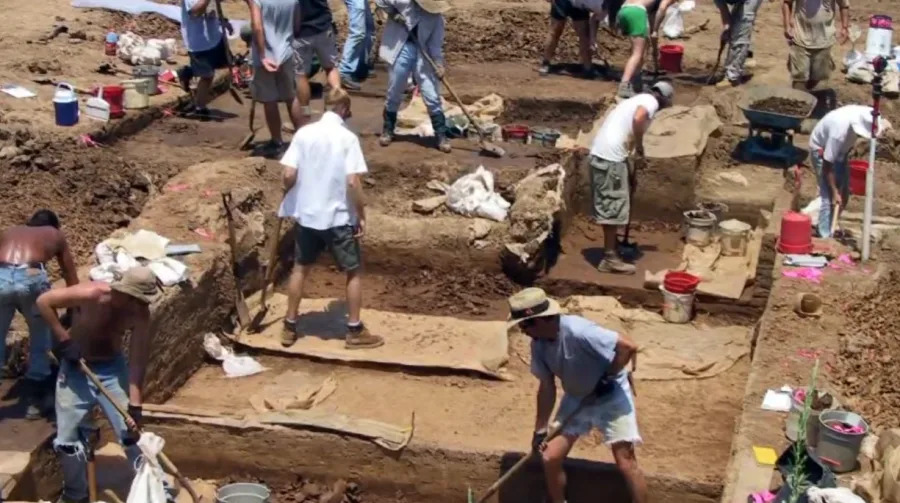
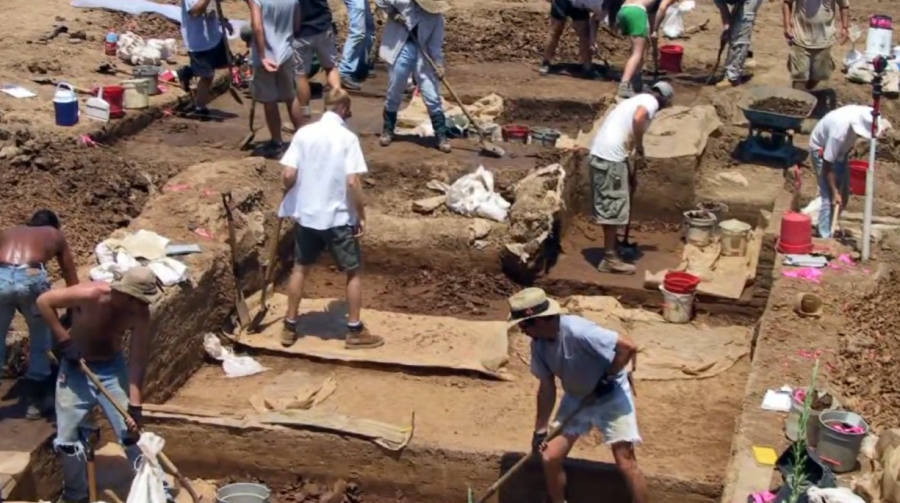
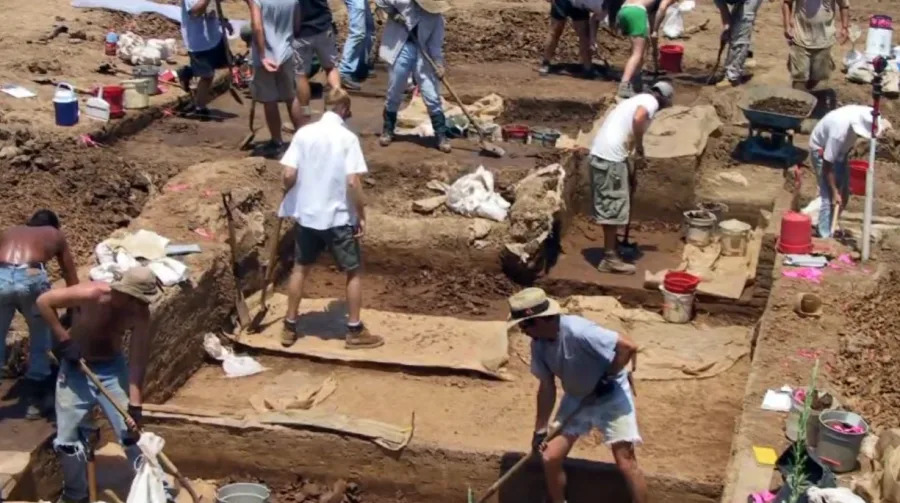
The U.S. Army Corps of Engineers funded five excavation seasons between 1997 and 2005. When archaeologists from Missouri State began digging, they thought the site held evidence of Native occupation going back about 8,000 years. They soon realized it was much older. The university says Big Eddy contained artifacts among the oldest found on the continent, some left in place more than 13,000 years ago.

The 1997 dig showed just how deep that history ran.

Researchers found evidence from the Mississippian, Woodland, Archaic and Paleoindian periods, and possibly from an even earlier time. That meant the same spot had been used again and again across thousands of years, by very different groups of people.

The site was especially important because it did not just produce old objects.

It showed how people used the place.

Archaeologists found spear points, scrapers, drills and piles of stone flakes left over from making tools. In some layers, they could see clusters of that debris still sitting where ancient people left it. That told researchers Big Eddy was not just a place where people passed through. At times, it was a camp, a work site and possibly a meeting place.

Some of the oldest layers drew the most attention.

Missouri State says at least three, and possibly as many as five, very early Native cultures are represented there, including Clovis or Gainey, Dalton and San Patrice. Those names come from the styles of spear points and tools found in the ground. Big Eddy mattered because those early layers were still separate and readable, instead of jumbled together.

That gave archaeologists something rare.

Usually, ancient points are found alone or mixed in with later material. At Big Eddy, researchers could tell which objects belonged together and which time period they came from. That made it easier to see how tool styles changed and how people’s use of the site changed over time.

The site also raised a bigger question.

Missouri State says later digging found hints that people may have been there even before Clovis, which would push the history back to roughly 14,000 to 15,000 years ago. The evidence was not conclusive. Researchers found stones that may have been used as tools, but they were careful not to overstate what those finds meant.

Even so, the possibility drew national attention.

Archaeologists quoted by Missouri State described Big Eddy as one of the most important stratified Paleoindian sites in the country and one of the archaeological treasures of the midcontinent.

Later work widened the story beyond the artifacts themselves.

Researchers studied the valley, the soil, plant remains and radiocarbon dates to better understand what the landscape looked like when people were living there. By then, Big Eddy was not just helping explain one campsite. It was helping explain an ancient stretch of the Ozarks.

Today, Big Eddy is still little known outside archaeology circles.

But along one quiet stretch of river in Cedar County, researchers found a record of human life that had been buried, layer by layer, for thousands of years — and was almost lost before anyone understood what it was.

Copyright 2026 Nexstar Media, Inc. All rights reserved. This material may not be published, broadcast, rewritten, or redistributed.

For the latest news, weather, sports, and streaming video, head to KOLR - OzarksFirst.com.