huffpost Press
‘Shout Quotes’ Are So Confusing — And You Might Be Using Them Without Even Realizing
Images
1 / 10

2 / 10
3 / 10
4 / 10
5 / 10
6 / 10

7 / 10
8 / 10

9 / 10

10 / 10
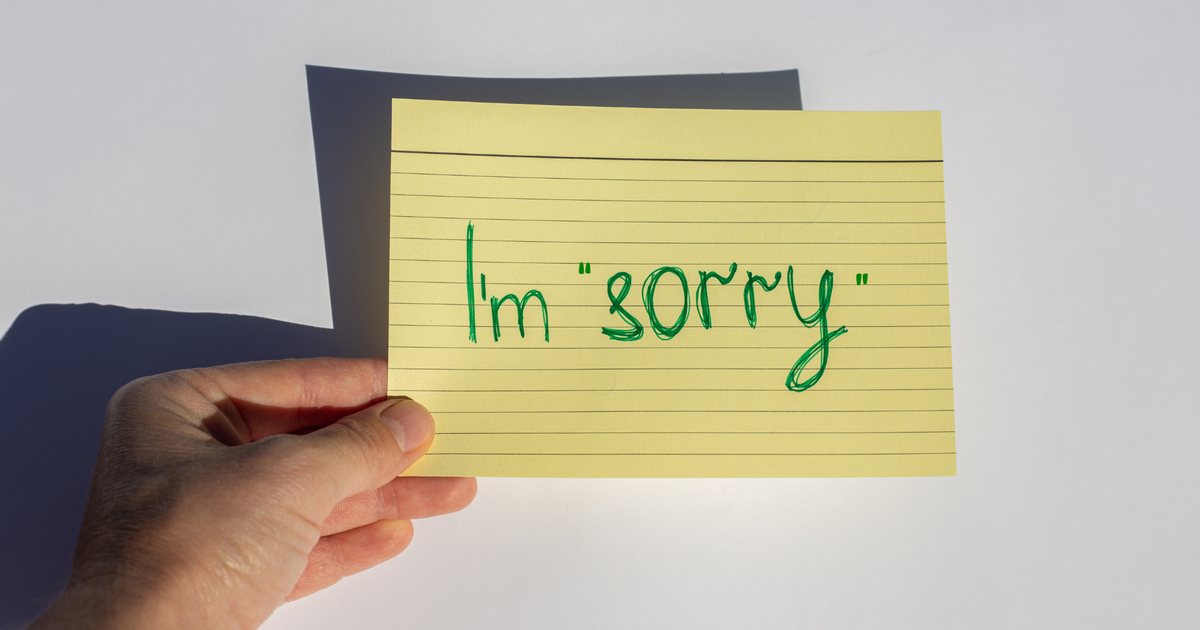
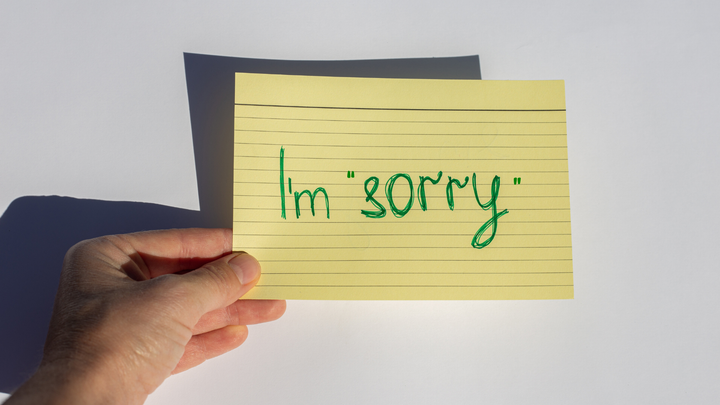
An errant set of quote marks can completely change a sentence’s meaning. For instance, a Post-It that reads “I’m ‘sorry’ for eating your leftovers!” from your roommate suggests your roommate isn’t actually sorry at all, and would happily eat your pad kee mao again if given the chance.

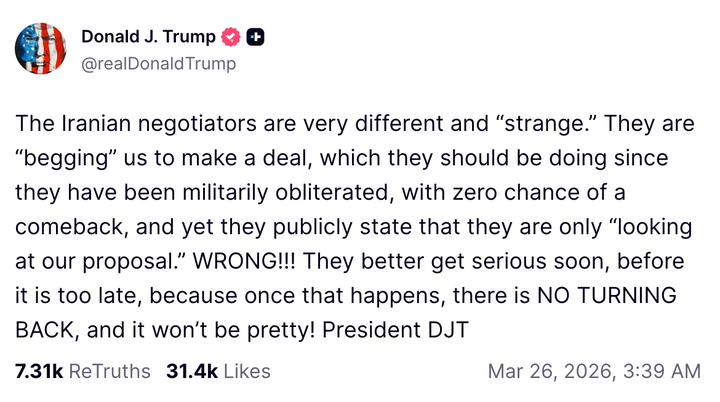
Lots of people use quotation marks for emphasis, in spite of the confusion they introduce. Sometimes you’ll see them on handwritten signs. We’ve seen them used in text messages and tweets, too ― generally, written by people of a certain age. Our president, age 79, regularly puts random words in quote marks in his online musings.

“The Iranian negotiators are very different and ‘strange,’” Donald Trump wrote on Truth Social on Thursday. “They are ‘begging’ us to make a deal, which they should be doing since they have been militarily obliterated.” (Hey, at least he went two whole sentences without turning on caps lock.)

Before we get into discussing that type of quote marks, let’s discuss how quotes are generally used in punctuation.

We most often see quotation marks to offset dialogue and show that someone is speaking.

Then there’s “scare quotes.” Writers use them to draw attention to a single word or phrase and signal irony, sarcasm, uneasiness or disapproval: A food critic who writes, “The ‘piping hot’ pizza was served cold,” for instance, is laying on the irony. (Note: We used single quote marks around “piping hot” there because the quoted words are already inside of double quote marks. We’ll do that throughout the story.)

Finally, we have those errant quote marks that Trump and homemade sign-makers seem to favor. They’re used to call attention to a word or short phrase in the same way you would bold, italicize or underline something. Lexicographer Grant Barrett calls these “shout quotes.”

In a 2008 blog post, he pointed to White Castle using the slogan “Buy ’em by the ‘sack’” on its burger packaging as an example. The quotation marks aren’t meant to cast doubt on whether it’s really a sack, but to add emphasis. Barrett suggests it may be White Castle’s way of acknowledging that “sack” is a more regional word choice compared to the more widely used “bag.” They also might be highlighting the quantity or abundance being offered.

To sum it up, shout quotes “are appropriate when you have no other easy way to indicate emphasis,” Barrett writes. “They’re appropriate when used, for example, in casual sign-making. They’re appropriate when bolding or underlining is not possible. They’re appropriate when used by people who don’t do typesetting for a living.”

There’s been some speculation online that people used quote marks because they had no other way to emphasize a word on a typewriter back in the day.

But a grammarian we spoke to said that’s not the case.

“Using quote marks in such a way is an old practice that’s still with us. It preceded the invention of typewriters and was not derived from typewriting,” said Pat O’Conner, who runs The Grammarphobia Blog and has written a number of books about the English language with her husband, Stewart Kellerman.

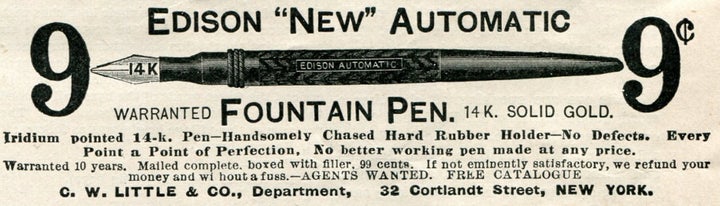
It might be a slight holdover from early 20th-century advertising conventions, though. In a guide for writing advertising by Frederick Houk Law from 1920, the author advises quote marks for emphasis: “Place in quotation marks any highly unusual word or expression to which you wish to call emphasis,” he wrote, alongside the example “Our ‘London-Best Coats’ are guaranteed to be rainproof.”

For example, here’s a 1897 ad promoting a “new” Edison brand automatic fountain pen.

As for the age factor, veteran copy editor Amy J. Schneider isn’t convinced that shout quotes are limited to older people.

“On one hand, yes, people who grew up with [a software editor] like Microsoft Word may be more familiar with the availability of underlining, italic or bold for emphasis than those who did not ― old habits die hard!” she said.

But on the other hand, language and computer literacy levels vary across all ages, in Schneider’s experience.

Schneider thinks grammar snobs and professional writers would do well to remember that not everyone engages with words (and punctuation) the same way they do, and that’s entirely OK.

“Many people see quotation marks as a way to set something off, just as they do for speech ― especially for something like a sign reading, ‘Thank You’ for not smoking,” she said. “Of course it’s not appropriate for formal writing, but in casual use such as a handmade sign or a social media post, it serves its purpose.”

But there’s so much room for misunderstanding (and people posting notes from quote-mark-happy co-workers on Reddit for laughs), you’re probably better served by bolding, italicizing or underlining your words.

These days, we see quote marks and our minds go to sarcastic places, said Linda Taylor, an editor and author of “Pathway to Publication: Move Your Writing from Manuscript to Book.”

“I had a friend who had a book published and the sign someone made for her called her a ‘writer,’ which of course made it sound like she thought she was a writer but she really wasn’t,” Taylor said. “It made her sound like she was a ‘writer’ with a wink.’”

Still, it’s ultimately a matter of preference whether you find shout quotes annoyingly imprecise or almost endearing in their old-timey and ambiguous nature. (Look at the bright side: Using them sure beats CAPITALIZING EVERYTHING.)

By entering your email and clicking Sign Up, you're agreeing to let us send you customized marketing messages about us and our advertising partners. You are also agreeing to our Terms of Service and Privacy Policy.