Press
Who are the Artemis II astronauts heading to the Moon?
Images
1 / 15

2 / 15
3 / 15
4 / 15
5 / 15
6 / 15
7 / 15
8 / 15
9 / 15

10 / 15

11 / 15

12 / 15
13 / 15
14 / 15
15 / 15
Four astronauts are about to become the most closely watched crew since Apollo.

They will be the first to orbit the moon for more than 50 years, testing the path back for the next generation.

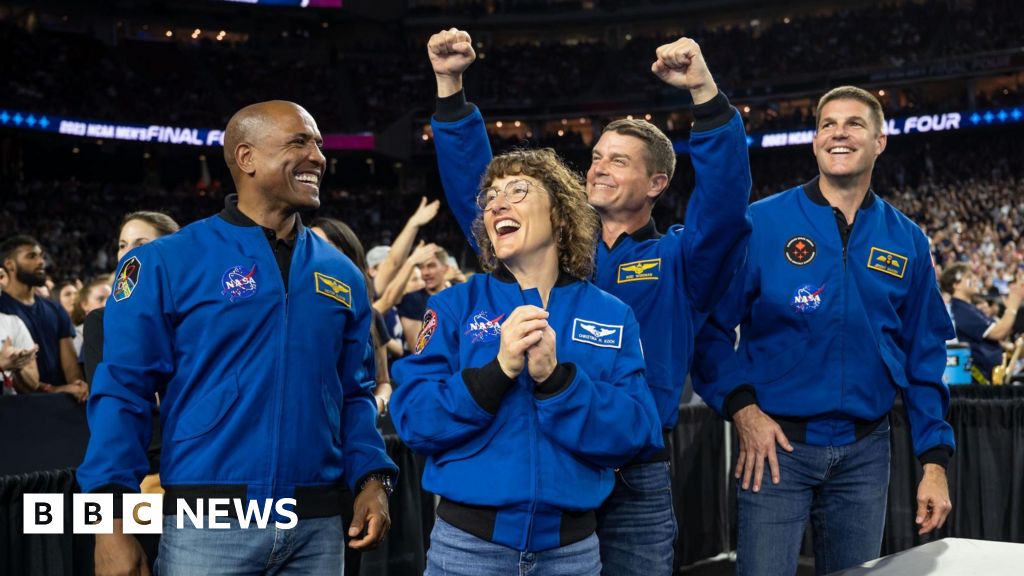
The crew includes three Nasa astronauts - Commander Reid Wiseman, Victor Glover and Christina Koch - along with Jeremy Hansen of the Canadian Space Agency.

Not only are they accomplished pilots, engineers and scientists, they are also spouses and parents balancing a heroic adventure against the risks they and their loved ones will face.

Here's what we know about them.

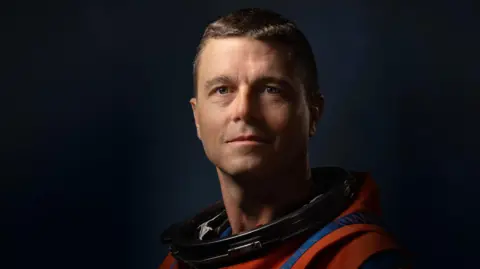
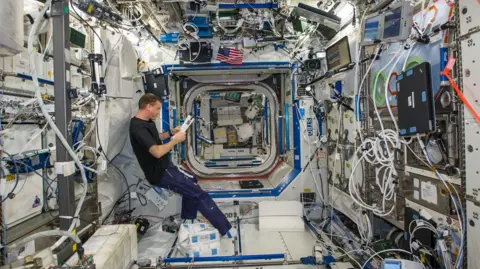
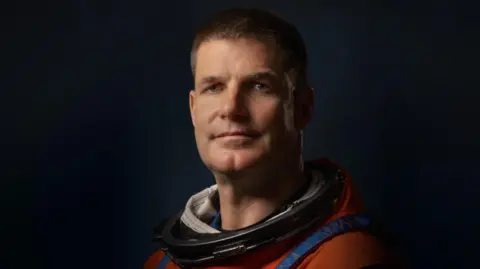
Reid Wiseman is a US Navy test pilot turned astronaut, who spent six months on the International Space Station in 2014 as a flight engineer on Expedition 40. Wiseman says he has a lifelong love of flying, but on the ground he's afraid of heights.

He will command Artemis II in what is the second flight of the Orion spacecraft, and the first to carry people around the Moon in more than 50 years.

Born in Baltimore, Maryland, Wiseman lost his wife to cancer in 2020 and has raised their two teenage daughters alone. He describes being a single parent as his "greatest challenge and the most rewarding phase" of his life.

He has not shielded his children from the realities of risk, however. While out on a walk with them, he said: "Here's where the will is, here's where the trust documents are, and if anything happens to me, here's what's going to happen to you… That's part of this life."

He says he wishes more families had that conversation – because "you never know what the next day is going to bring".

Although he carries the title of commander, he is careful not to make Artemis II sound like his mission alone.

"When I look at Victor, Christina and Jeremy, they want to go do this mission, they are keenly driven, they are humble to a fault. It is so cool to be around them," he says, hoping that in decades to come their flight will be seen as a "tiny step" towards people living on the Moon and, eventually, walking on Mars.

For the personal item Nasa allows astronauts to take up with them, Wiseman plans to take a small notepad so that he can jot down his thoughts during the mission.

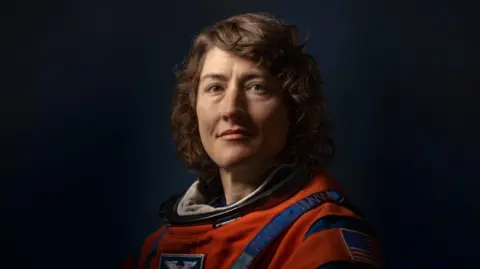
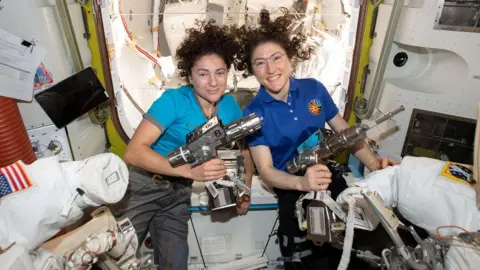
Christina Koch is an engineer and physicist who became an astronaut in 2013 and went on to set the record for the longest single spaceflight by a woman, spending 328 days aboard the International Space Station in 2019. During that mission she also took part in the first all-female spacewalk.

Born in Grand Rapids, Michigan, and raised in North Carolina, she will become the first woman to travel to the Moon.

Her journey to Artemis II began with a photograph. As a child she kept a poster of the Earth rising above the lunar surface – Bill Anders' famous Earthrise picture from Apollo 8 – on her bedroom wall, and decided she wanted to become an astronaut when she learnt that a human, not an automatic camera, had squeezed the shutter.

"The fact that it was a human behind that lens made that picture so much more profound and changed the way we thought of our own home," she says. "The Moon was not just a symbol for thinking about our place in the Universe, it is a beacon for science and understanding where we came from."

Koch has spent more than 25 years around Apollo veterans through a scholarship foundation and Nasa remembrance events, and says that what the former astronauts have really taught her is camaraderie.

Koch is taking handwritten notes from people close to her for her personal item, which she has described as a "tactile connection" to loved ones back on Earth.

At home, spaceflight is a running conversation with her husband. She says he's inquisitive about "what the big milestones are, what the risky parts are, when he can sigh a sigh of relief, when he needs to be glued to the TV".

One of the more prosaic preparations has been to persuade him that Artemis is not like her ISS mission - there will be no casual phone calls from orbit, no quick check-ins to locate a missing item in a cupboard. "He's not going to be able to ring me and ask where something is in the house," she laughs. "He's going to have to find it."

Jeremy Hansen is a former Royal Canadian Air Force fighter pilot and physicist who joined the Canadian Space Agency in 2009. Although he has never flown in space before, he has played a key role in training new astronauts at Nasa's Johnson Space Centre, becoming the first Canadian to lead that work.

He is married with three children and enjoys sailing, rock climbing and mountain biking.

Like Koch, Hansen traces his fascination with space back to Apollo 8. Growing up in rural Canada, he turned his treehouse into an imaginary spaceship after seeing a photograph of Buzz Aldrin standing on the lunar surface.

The risks the Apollo astronauts took has shaped how he talks to his own family about Artemis II. Over the Christmas holidays they watched footage of the uncrewed Artemis I launch together so he could warn them that, when the main engines light, it can briefly look and sound like the rocket is exploding – and reassure them that this is normal.

He has told them, too, that when they hear engineers on the loop discussing "worst case scenarios" or unusual sensor readings, it will often sound scarier than it is; it is simply how teams probe the edges of safety on a first crewed flight.

If all goes to plan, Hansen will become the first non-American to travel to the Moon – a milestone he sees as a sign of how far international cooperation in space has come since Apollo. "The Artemis missions have set such an ambitious goal for humanity that… nations around the globe are coming together," he says.

Hansen will carry four Moon-shaped pendants for his wife and three children, engraved with the phrase "Moon and back" and set with their birthstones. The Canadian will also be taking maple syrup and maple cookies on his lunar voyage.

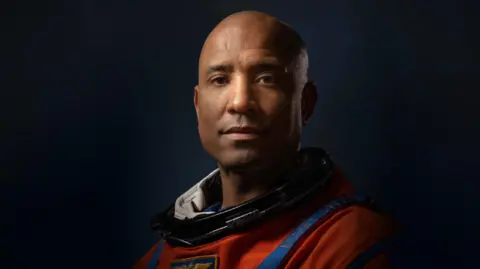
Victor Glover is a former US Navy fighter pilot and test pilot who was selected as a Nasa astronaut in 2013. He served as pilot of Nasa's SpaceX Crew 1 mission and spent nearly six months on the International Space Station as part of Expedition 64. Born in Pomona, California, he is married with four children and is set to become the first black person to travel to the Moon.

Those who know him say he is the most charismatic of the quartet and the most sharply dressed, with designer brown leather boots that somehow look good even with an orange flight suit. His call sign, "IKE", is reputedly short for "I Know Everything", a nod to his three master's degrees in flight test engineering, systems engineering and military operational art and science.

At a red carpet event in 2023, in New York, he looked every inch the modern astronaut celebrity, alongside his wife Dionna.

Preparing for Artemis II, Glover has been working through original Gemini and Apollo journal papers from the 1960s, hunting for engineering and piloting lessons that might still apply. Between the graphs and equations, he says, you glimpse the people behind the missions; what their families were going through, what they knew and did not yet know as they pushed into the unknown.

"Pushing ourselves to explore is core to who we are," he says. "It is part of being human… We go out to explore, to learn where we are, why we are, understanding the big questions about our place in the universe."

Glover has said he will take with him a Bible, his wedding rings and family heirlooms, along with a collection of inspirational quotations compiled by Apollo 9 astronaut Rusty Schweickart.

In a Nasa video, each of the astronauts distil the mission into a single phrase. "We are ready," says Koch; "We are going," adds Hansen; "To the Moon," says Glover. Wiseman, completes the sentence: "For all humanity!"

From a race with China to lunar discoveries, the US is investing time, effort and money to head to the Moon - and beyond.

Nasa is on track to launch its Artemis II mission in April which will be tracked by Goonhilly Earth Station, near Helston.

Reports it plans the biggest listing ever sent the shares of firms in its orbit soaring in US trade on Wednesday.

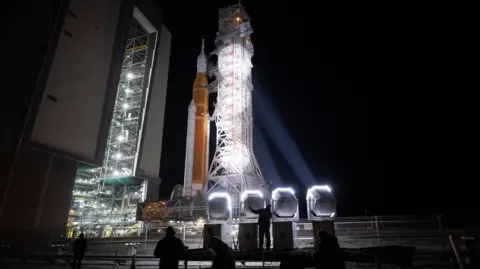
The 98m tall Space Launch System (SLS) and Orion spacecraft made a four mile journey from their assembly building to Pad 39B at the Kennedy Space Center in Florida.

Nasa is preparing a mission to send astronauts around the Moon for the first time in more than 50 years.