yahoo Press
Fed’s Musalem Says Current Rate Likely to Remain Appropriate
Images
1 / 5
2 / 5

3 / 5

4 / 5
5 / 5
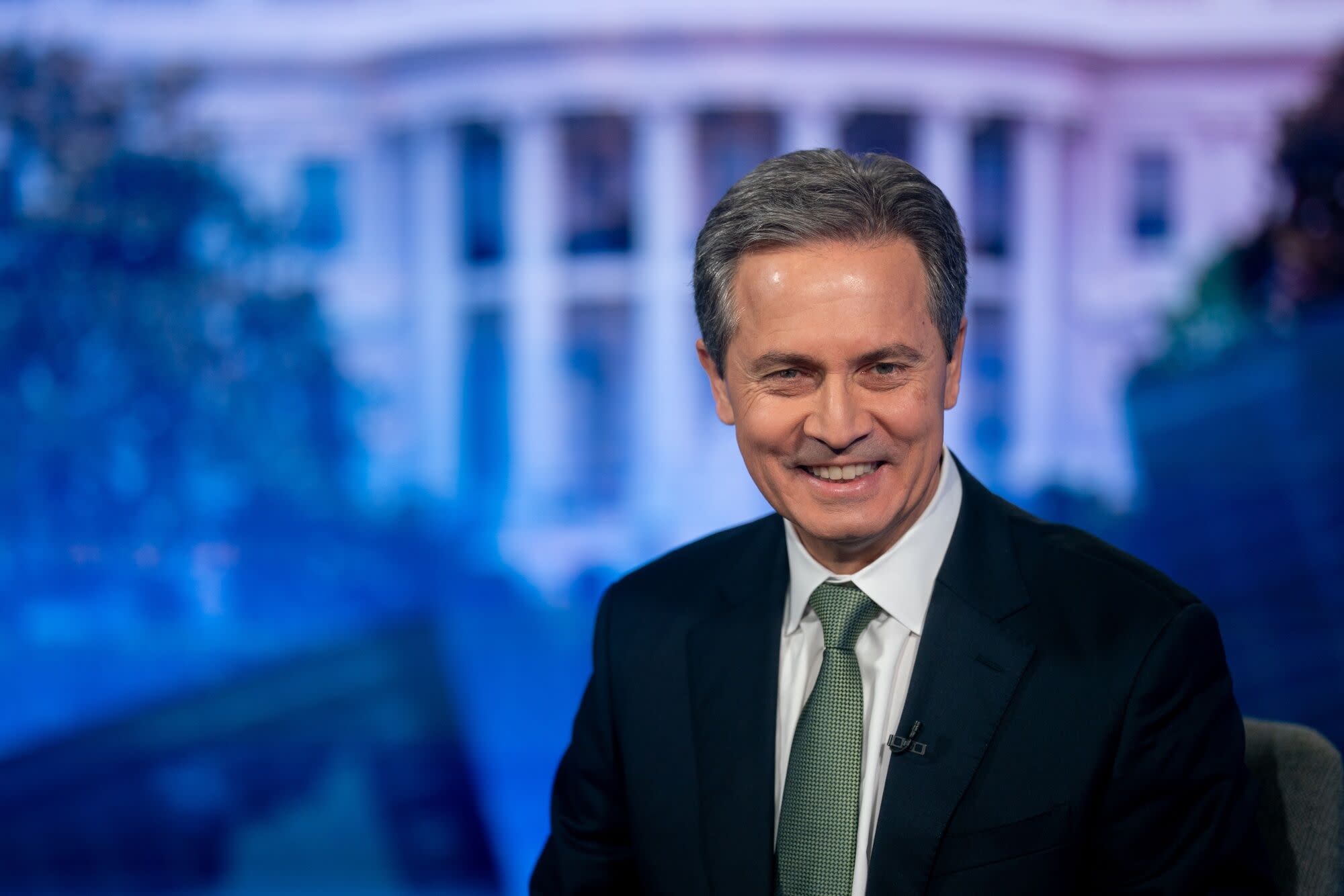
(Bloomberg) -- Federal Reserve Bank of St. Louis President Alberto Musalem said risks are rising to both inflation and employment, and officials should be prepared to adjust interest rates in either direction depending on how the economy evolves.

“Policy is well positioned to address risks to both dual mandate objectives, and I expect the current setting of the policy rate will remain appropriate for some time,” Musalem said Wednesday at the American Enterprise Institute in Washington. “However, I will support adjustments in the stance of policy if the evidence indicates the economy requires them.”

Fed officials are evaluating how a surge in energy prices caused by US-Israeli strikes on Iran will hit inflation and the economy. Fed Chair Jerome Powell said Monday that policy was in a good place for officials to wait and see what the effects will be. Investors now expect rates to remain unchanged for the rest of the year, according to pricing in federal funds futures contracts.

Musalem said he supported the central bank’s decisions to hold interest rates steady so far this year. Answering questions after his speech, he said the war in Iran has added uncertainty to the economic outlook.

If the conflict ends in two or three weeks, he will look to see what “echoes” show up in energy markets and financial conditions. “Even if the war were to end, it’s going to take time to bring a lot of the damaged capacity back,” he said.

His base case is a scenario in which the unemployment rate remains stable around current levels, the economy grows close to potential and underlying inflation begins to gradually decline toward 2% later this year.

But speaking to reporters after his speech, Musalem said the odds of that baseline have decreased since the war began, and he has marked down his projection for growth somewhat and marked up his projection for the unemployment rate by a few tenths of a percentage point. He said he sees headline inflation going meaningfully higher but his outlook for core inflation is only somewhat higher.

The St. Louis Fed chief declined to specify how long he thinks interest rates need to remain at current levels, saying the timing will be determined by the economy.

He could favor lowering rates if the labor market deteriorates and inflation doesn’t rise, he said, or if inflation falls. But he would also support raising rates, he said, “if core inflation or medium- to long-term inflation expectations moved persistently higher and away from 2%.”

“Allowing inflation expectations to become unanchored would risk not only higher inflation but also slower growth and a weaker labor market,” he said.

Musalem further underscored his point about inflation expectations when speaking with reporters.

“We have to earn the credibility to keep inflation expectations anchored every day,” he said, adding later that the US economy has faced four supply shocks in five years, each of which has boosted inflation. “I don’t take anchored inflation expectations as a god-given truth. I know we have to work very hard at it every day.”

Rising oil prices sent average US gasoline prices above $4 a gallon this week for the first time since August 2022. The increase has squeezed households and dented consumer sentiment. Fresh jobs data on Friday will provide officials with more insight on the health of the labor market following a surprisingly weak report for February.

In his remarks, Musalem also addressed growing concerns around losses in non-bank lending known as private credit.

“For now, recent stress in private credit markets appears mostly due to liquidity issues and some marking down of net asset values, rather than widespread credit quality problems,” he said. “I am, however, watching vigilantly for a more meaningful tightening in financial conditions.”

(Updates starting in the fourth paragraph with additional context and remarks.)

More stories like this are available on bloomberg.com

©2026 Bloomberg L.P.