yahoo Press
Investors Are Losing Confidence in Super Micro Computer (SMCI) Stock: ‘It’s Uninvestable’
Images
1 / 5
2 / 5

3 / 5

4 / 5
5 / 5
Investors are starting to lose confidence in computer hardware firm Super Micro Computer (SMCI) despite its strong sales growth, close ties to chipmaker Nvidia (NVDA), and a key role in building AI data centers. This comes after co-founder Wally Liaw was indicted for allegedly bypassing U.S. export restrictions to China, which triggered another wave of selling. While Liaw has stepped down and the company says it is cooperating, the damage to sentiment has already been done, especially since this isn’t an isolated problem.

Unlock  hedge fund-level data  and  powerful investing tools  for smarter, sharper decisions

Discover top-performing stock ideas and upgrade to a portfolio of market leaders with  Smart Investor Picks

Indeed, Super Micro has faced multiple issues over the years, including delays in filing financial reports that nearly led to a delisting. Because of its history, some investors are now stepping away completely. According to Bloomberg, Tortoise Capital recently exited its position following the indictment, while Zacks Investment Management described the stock as “uninvestable” for now due to uncertainty around management and potential legal exposure.

Still, not everyone is bearish. Some investors continue to hold the stock because of its strong position in the AI infrastructure market and expected revenue growth that could exceed $40 billion in Fiscal 2026, an 87% year-over-year increase. In addition, the stock now trades at just over 7 times forward earnings, which is well below both its historical average and the broader market. However, the key issue is trust. Investors want reassurance that these problems are isolated and that stronger controls are in place.

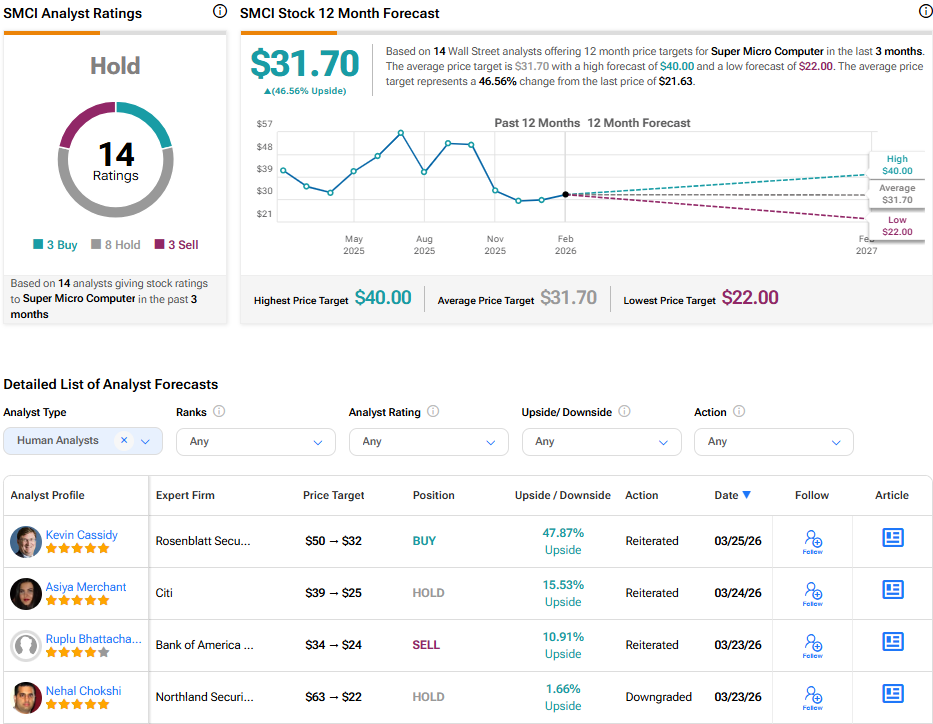
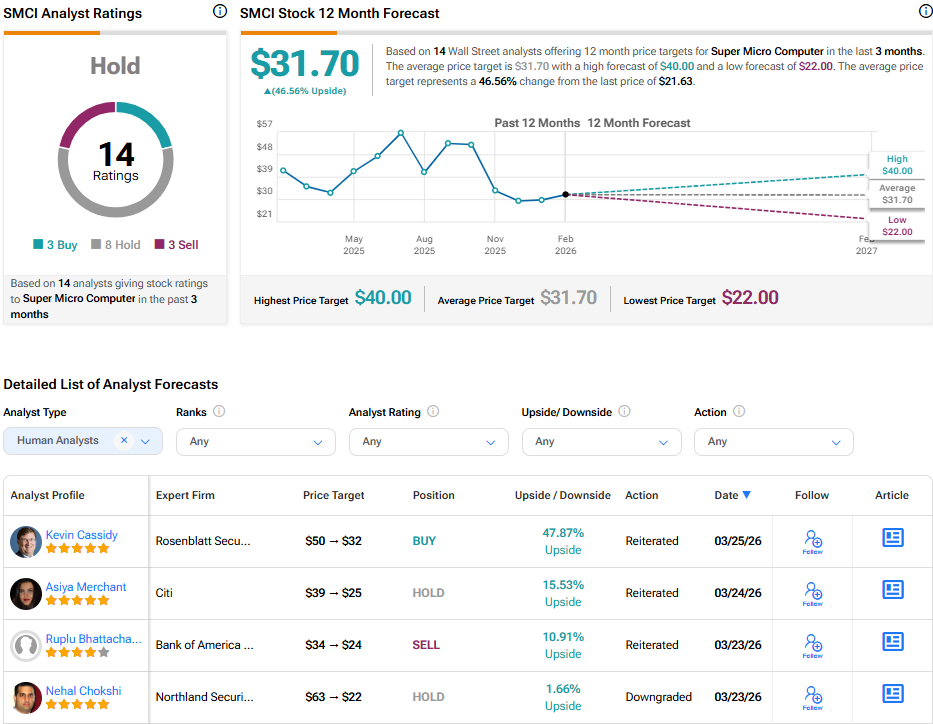
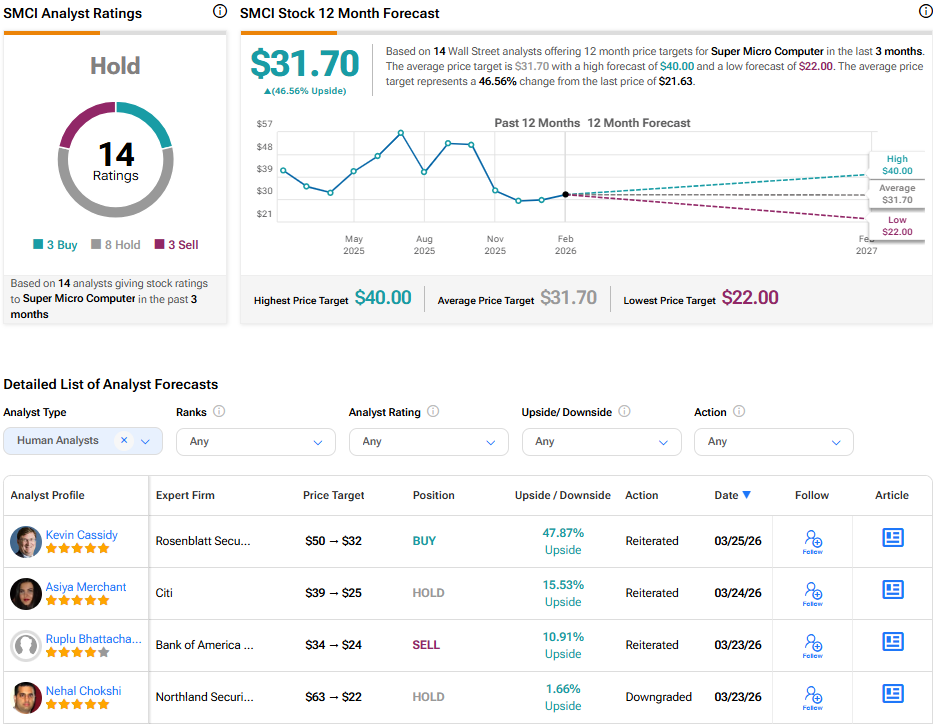
Turning to Wall Street, analysts have a Hold consensus rating on SMCI stock based on three Buys, eight Holds, and three Sells assigned in the past three months, as indicated by the graphic below. Furthermore, the average SMCI price target of $31.70 per share implies 46.6% upside potential.

Disclaimer & DisclosureReport an Issue