Press
Starmer holds off from emergency measures but warns storm is coming
Images
1 / 10

2 / 10
3 / 10
4 / 10

5 / 10
6 / 10
7 / 10
8 / 10
9 / 10
10 / 10
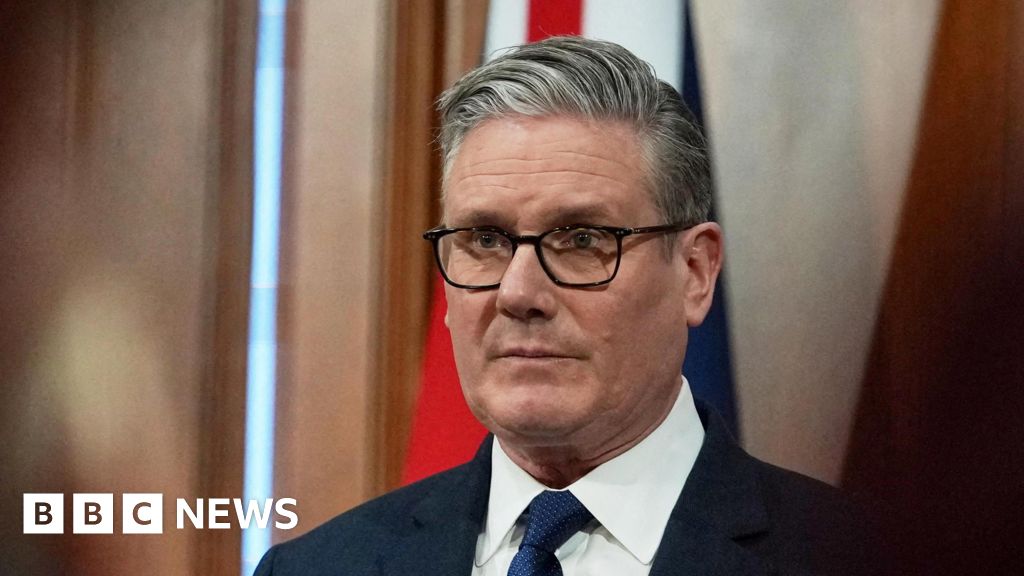
Even if the US and Israel had not struck Iran just over a month ago, Sir Keir Starmer probably would have been giving a press conference today  - and it would have contained much of the same content.

April has long been earmarked in government as a crucial moment for the prime minister to advertise various decisions made previously which take effect either today or next week, for example increases in minimum wage rates and the abolition of the two-child benefit cap.

As the prime minister acknowledged, these are not new announcements. And some of them will continue to be criticised by his political opponents as the wrong priority for limited government resources.

Still, it was striking to see the prime minister today redeploy these announcements as part of an argument for why the UK was well-placed to handle whatever the economic impacts of this conflict turn out to be.

Otherwise, though, this was a prime ministerial address peppered with gloomy language. Sir Keir spoke of a coming "storm", which may well be "fierce".

If the prime minister's message could be summarised in just one sentence, it was his admission that "this will not be easy".

Sir Keir was using that phrase to describe both the general economic impact of the Iran conflict and the particular difficulties in getting the Strait of Hormuz open again.

Indeed, at one point he warned that even if the conflict ends that does not necessarily mean the strait will reopen.

"This will not be easy" would also serve perfectly well as a description of the political impact of this conflict for the prime minister.

It is a simple statement of political fact that no government welcomes an economic shock. Historically  - both in the 1970s and over the past few years  - incumbent governments across the world have been punished by voters in such moments.

In that political context, the prime minister has made three big calls, all of them on display at today's press conference.

First, while talking up the gravity of the moment, he has decided not to respond with emergency measures.

Other than a package of support for those who use heating oil, the government is warning that any support for household energy bills will not come until the autumn.

The prime minister argues that households are protected, first, by the energy price cap for the next three months, and then by the fact that when the current cap elapses it will be the summer, when energy use is lower.

This is one of the areas where Sir Keir is coming under most criticism from other parties.

To his left, the Greens say he should commit billions to subsidise energy bills from July, while to his right the Conservatives and Reform UK say VAT should be removed from household energy bills now.

The Liberal Democrats want to change how renewable energy projects are funded to reduce bills. Plaid Cymru is calling for more support for households and businesses, while the SNP argues independence would allow Scottish ministers to cut bills by reducing energy costs.

But household bills are just one element of this.

The prime minister has also resisted pressure, including from the Conservatives, Reform, the SNP and the Lib Dems, to introduce emergency measures to reduce fuel prices at the pump.

He insisted again today that the proposed increase in fuel duty in September was under review, but it is hard to find anybody in Westminster who believes this will go ahead. Some Labour MPs privately question why Starmer does not just say so now.

In holding off before taking action, the prime minister is putting himself out of step with some of his allies.

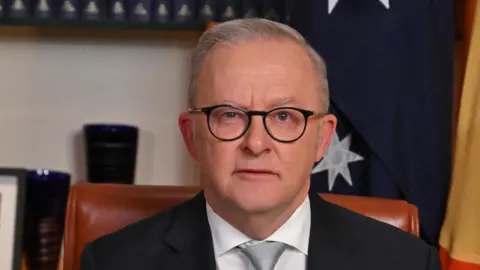
To take just one example, Australia  - led by a Labour government from which this government often takes inspiration  - has halved its fuel taxes.

On Tuesday, a member of the European Commission urged people to work from home, drive less, drive more slowly and fly less.

The UK government's messaging, while gloomy about the overall situation, is in starkly different place.

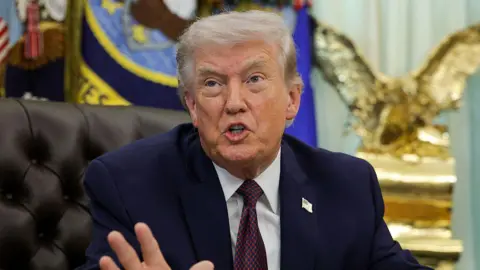
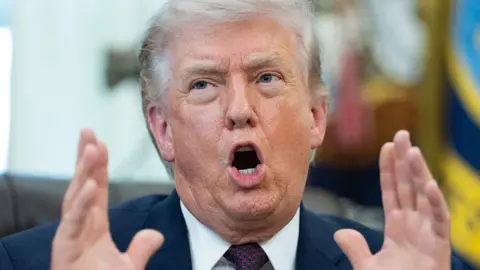
The second big call from Sir Keir is to embrace his disagreements with US President Donald Trump.

It's only a couple of months ago that the prime minister was still prioritising sticking close to the president as much as possible in order to protect the UK-US relationship.

That personal relationship has clearly ruptured in a serious way over Sir Keir's decision to resist US demands to play a bigger role in the war.

While insisting that the transatlantic alliance remains strong in terms of security and intelligence cooperation, the prime minister today emphasised, as he has done several times in recent days, that "this is not our war".

The third big call is related and formed a surprisingly prominent part of today's press conference: to use this moment to seek closer ties with the EU.

We already knew that there was going to be a second annual UK-EU summit in a month or two's time, and we already knew that the UK government hoped to use it not only to complete existing negotiations on areas of cooperation but also to seek deeper ties in other areas.

But Sir Keir's decision to emphasise it in today's press conference, called in the context of a spiralling conflict about which the UK and the US profoundly disagree, was deliberate and meaningful.

Having stressed the economic impact of the Iran conflict, the prime minister then stressed the economic dividends he hopes to secure from a closer post-Brexit relationship.

Notably, he said that Labour's 2024 general election manifesto still stood, which is to say the commitments that the UK would neither rejoin the EU's customs union or its single market.

But it feels increasingly like the government wants to get as close as possible to single market membership as it can from outside the bloc.

Of course, former Conservative prime minister Theresa May wanted that once too, but the EU resisted "cherrypicking"  - the idea that the UK could have what it saw as the benefits of the single market (economic cooperation through shared regulations) without what it saw as the drawbacks (the free movement of people).

Those questions about economic support, the UK-US relationship and post-Brexit ties with Europe will now be at the heart of British politics as this storm gathers pace.

Sign up for our Politics Essential newsletter to keep up with the inner workings of Westminster and beyond.

President Trump says the US will "leave" Iran "very soon" as Iran's president says Tehran has the "necessary will" to end the war.

The US president finds himself under growing pressure at home to avoid a protracted conflict.

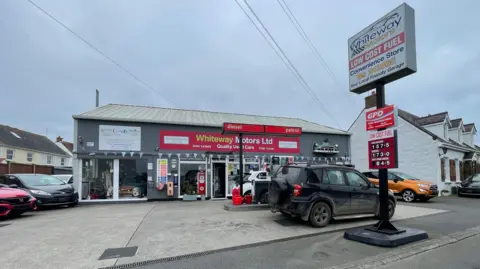
The owner says he has been "bombarded" by customers but wants to be fair to everyone.

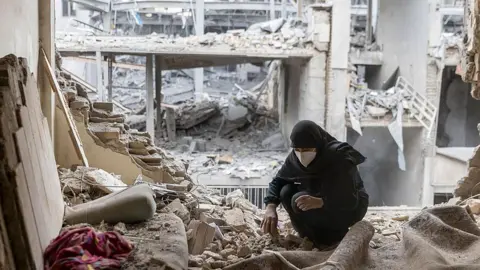
Conflict has spread across the Middle East since the US and Israel launched strikes on Iran on 28 February.

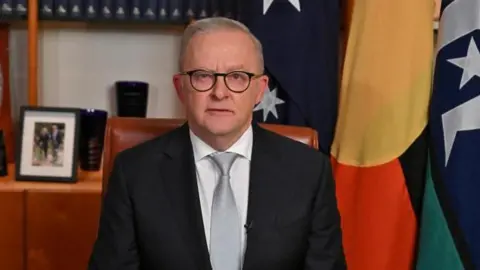
Anthony Albanese used a rare TV address to tell Australians that the "months ahead may not be easy" amid the global effects of the war.