huffpost Press
'Yeah, Yeah, Yeah, But What About The Constitution?' Trump’s Justices Aren’t Going To Side With Him On Birthright Citizenship.
Images
1 / 9

2 / 9
3 / 9
4 / 9
5 / 9
6 / 9
7 / 9
8 / 9

9 / 9
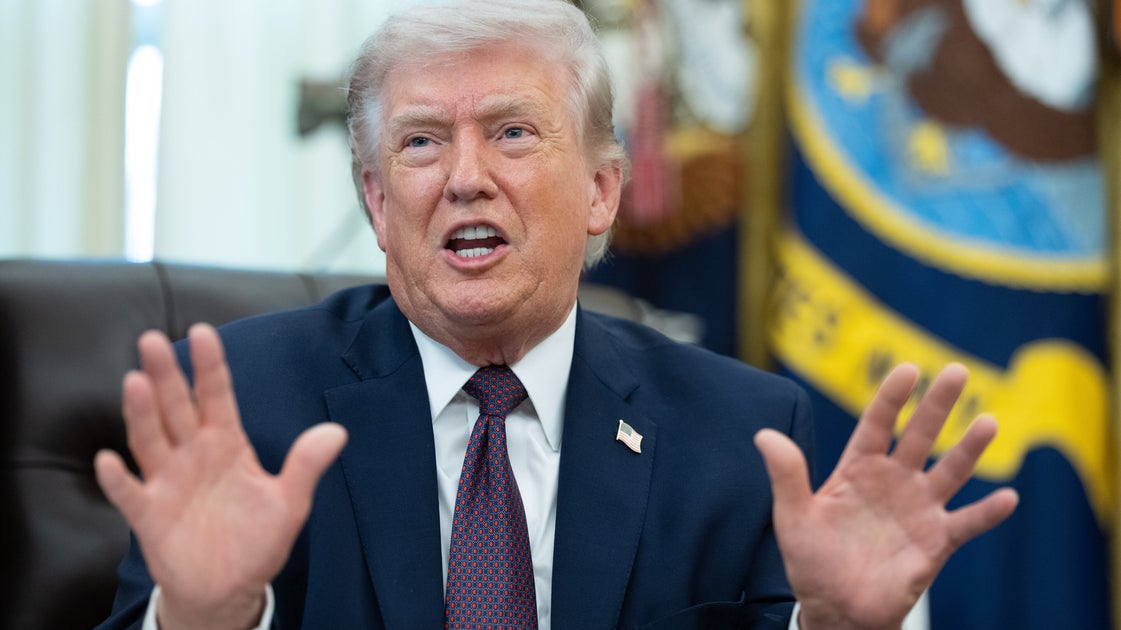
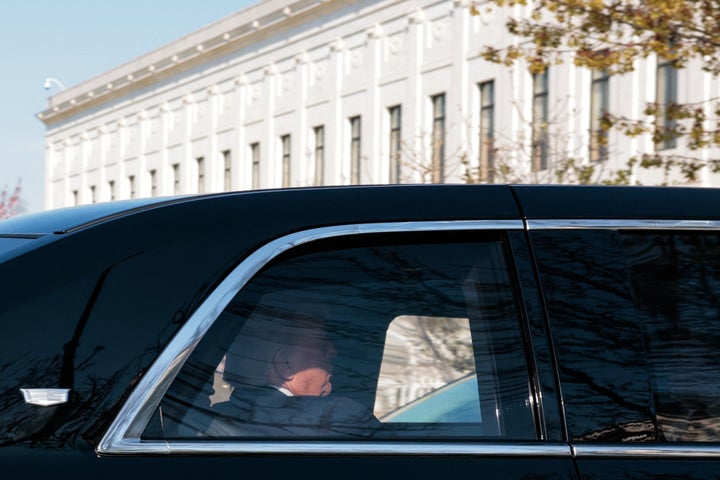
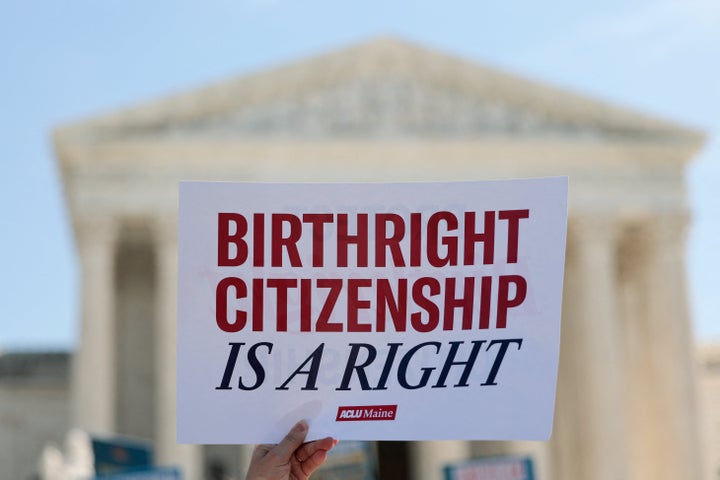
President Donald Trump became the first sitting president to attend a Supreme Court argument on Wednesday. That gave him a front-row seat to watch the justices, including three he appointed, torch his top priority of restricting birthright citizenship for the children of parents without legal immigration status.

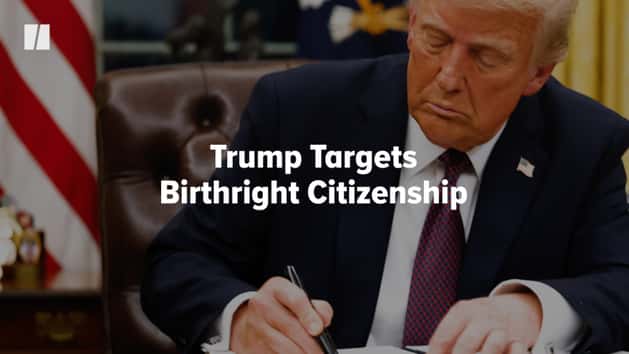
On his first day back in office last year, Trump issued an executive order ending birthright citizenship for the children of undocumented immigrants and temporary residents beginning on Feb. 20, 2025. The case before the court, Trump v. Barbara, came out of a string of challenges to that order, which has never taken effect because lower courts have unanimously ruled against it.

The arguments before the Supreme Court appeared to go just as poorly for Trump as they did elsewhere. Liberal and conservative justices alike approached the Trump administration’s arguments that the 14th Amendment’s grant of birthright citizenship to all people born in the country, with limited defined exceptions, does not mean what everyone has understood it to mean for well over 100 years with bewilderment, exasperation and even irritation.

The administration’s argument, made by Solicitor General D. John Sauer, is that the 14th Amendment’s birthright citizenship clause and subsequent court precedents meant to limit citizenship at birth to children of parents “domiciled” in the U.S. Having domicile requires a person to owe “allegiance” to the U.S. and not another foreign government while intending to remain in the country. The administration went on to argue that neither illegal immigrants nor temporary visitors to the United States can possibly fulfill these requirements.

But this new definition, which has never been accepted by a court or the government, ran into problems from the start.

The examples that Sauer offered to justify his redefinition of birthright citizenship were “very quirky,” Chief Justice John Roberts said. And he wasn’t sure how Sauer could extrapolate these “tiny and idiosyncratic examples” to “that big group” of undocumented immigrants.

It wasn’t hard to hear the disdain in Justice Neil Gorsuch’s voice when he noted Sauer was relying on “Roman law sources” to support his argument. And that followed moments after Gorsuch told Sauer, who tried throughout to argue that the holding in U.S. v. Wong Kim Ark — the first case to assert that the 14th Amendment’s birthright citizenship clause applies to the children of noncitizens — supported his argument, that “I’m not sure how much you want to rely on Wong Kim Ark.”

The 1898 decision in that case featured prominently, as it stands as the landmark ruling affirming the birthright citizenship for all people born on U.S. soil, an idea left unchallenged up until Trump’s executive order. As Justice Sonia Sotomayor pointed out, the case clearly undercuts the administration’s whole argument around domicile, allegiance and choosing to remain in the country because Wong’s parents moved back to China when he was a child and never returned to the U.S. — and yet when he returned as an adult, he still retained his birthright citizenship.

The hits kept on coming.

Justice Amy Coney Barrett called Sauer’s argument “not textual” because if a child’s parents had to have allegiance and an intent to stay in the U.S. to be considered domiciled, then it would exclude large groups meant to be covered by the 14th Amendment. Her prime example: the children of enslaved people brought illegally to the U.S. after the slave trade was banned who may want to leave when freed. Barrett provided two contemporary examples to this situation in undocumented immigrants trafficked into the country against their will or “foundlings,” children with unknown parentage.

When Sauer tried to offer up how the law treats children with unknown parentage, Barrett cut him off, “Yeah, yeah, yeah, but what about the Constitution?”

Roberts really brought down the hammer when he asked Sauer about the relevance of his use of stories about birth tourism in his opening argument.

“You do agree that has no impact on the legal analysis before us,” Roberts said.

Sauer responded with a long-winded explanation of how the authors of the 14th Amendment couldn’t possibly have approved and that today we live in a “new world where 8 billion people are one plane ride away from having a child who’s a U.S. citizen.”

“It’s a new world, but it’s the same Constitution,” Roberts responded.

Gorsuch, similarly, laid it on thick when questioning Sauer. He questioned Sauer’s insistence that the court only look at the original debates around the 14th Amendment in 1868 rather than the adoption of modern immigration law in 1940 and 1952. This matters because the 1940 and 1952 laws explicitly declared that all children born on U.S. soil were born citizens — save for those excepted in the 14th Amendment. Gorsuch appeared to argue that the court should look at how domicile was defined in 1940 and 1952, which would go against the administration’s arguments.

Justice Brett Kavanaugh also picked up this argument to ask Sauer why Congress adopted a meaning of birthright citizenship in 1940 and 1952 that it based on the understanding of the holding in Wong Kim Ark that differs from the administration’s argument that Wong Kim Ark only authorized a limited birthright citizenship.

This highly skeptical, even dubious, questioning from four conservative justices indicated that, along with the three liberals, there would be at least seven votes against Trump’s executive order.

Justice Samuel Alito stood out as the only justice clearly on Trump’s side. He jumped in early to ask Sauer whether it made sense for the law to adapt to changing circumstances. Just as the Constitution and laws governing economic regulation could adapt even though they were written by people who couldn’t predict the invention of microwaves, so too could they adapt to changes to immigration — like the creation of legal and illegal statuses or the advent of birth tourism.

Veering close to making a conspiratorial argument about “terror babies,” Alito also asked the ACLU’s Cecilia Wang, who argued against Trump’s order for the Barbara plaintiffs, whether a child of Iranian citizen parents born in the U.S. owed allegiance to the U.S. even if Iran has mandatory military conscription. Wang responded that such a concern would have applied to large swaths of European immigrants in the past, including Irish and Italian immigrants. (Alito’s father and maternal grandparents were Italian immigrants.)

While Alito stood as the only voice taking Trump’s side, that provides little comfort that even one justice would oppose what has been the clear interpretation of the 14th Amendment since at least 1898, if not since its adoption in 1868.

Justice Clarence Thomas asked few questions during arguments, although he did not appear to be questioning the administration’s arguments. He could be a second vote along with Alito for the administration.

This case should have resulted in the shellacking that Trump saw with own eyes before leaving early on Wednesday. But he has still pushed the boundaries of what is up for debate in our constitutional system. Even if the court issues what looks like an eventual rebuke, Trump’s injection of questions about who is or isn’t an American may linger long after.

By entering your email and clicking Sign Up, you're agreeing to let us send you customized marketing messages about us and our advertising partners. You are also agreeing to our Terms of Service and Privacy Policy.