yahoo Press
Sharpton cites BNPL racial disparities
Images
1 / 4
2 / 4

3 / 4

4 / 4
This story was originally published on Payments Dive. To receive daily news and insights, subscribe to our free daily Payments Dive newsletter.

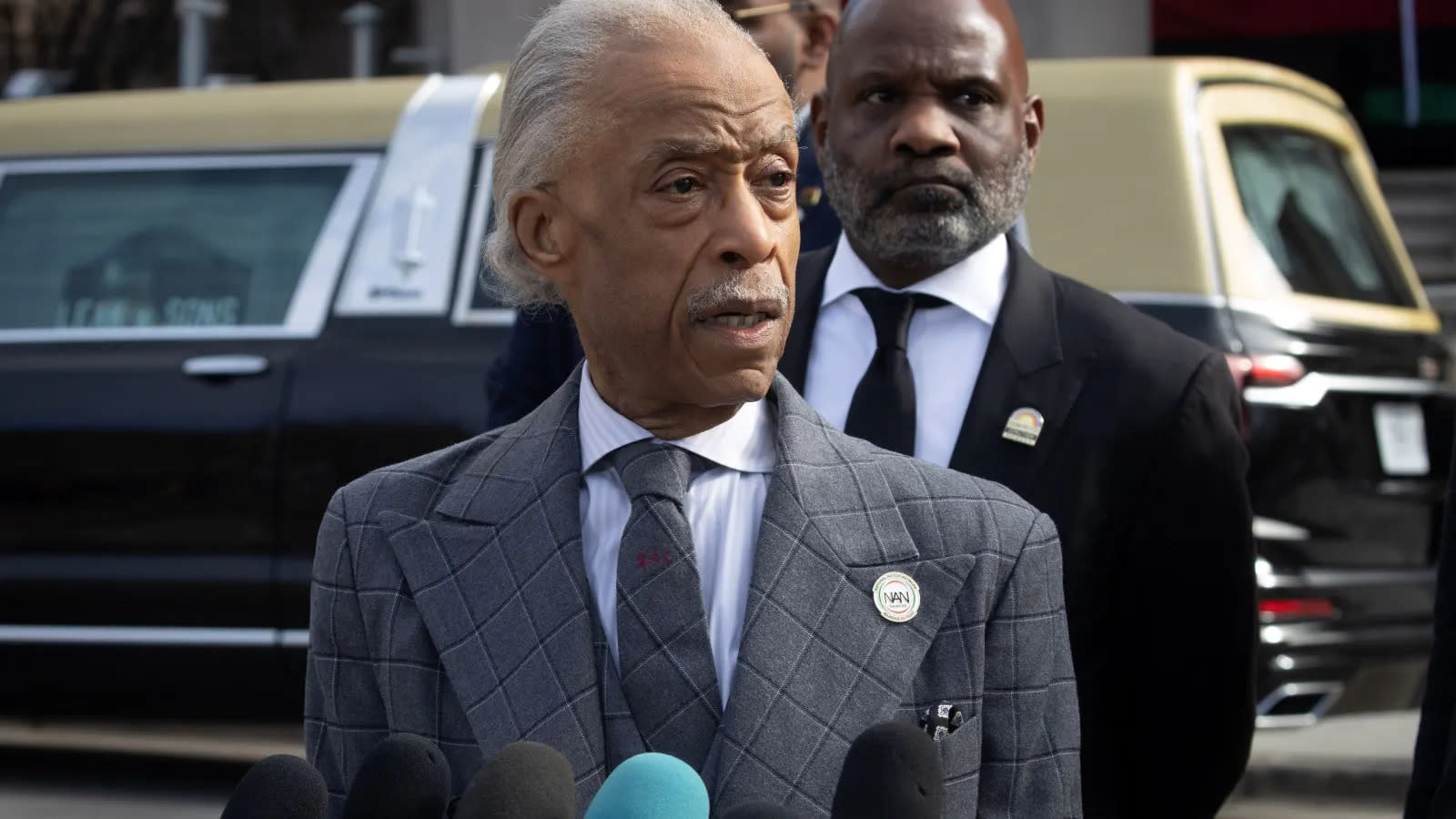
Buy now, pay later providers “cause disproportionate harm to marginalized communities,” the civil rights activist Al Sharpton said in a letter to the attorneys general of states leading an inquiry into industry practices.

In December, the attorneys general of seven states led by Connecticut and North Carolina requested information from a half dozen BNPL providers, including Affirm Holdings and Klarna Group, about their loans and other business practices.

In a comment Wednesday via email, Sharpton said that “buy now, pay later loans sound like a lifeline, but for too many Black and Brown Americans, they’ve become a debt trap.”

Sharpton, who leads the New York City-based National Action Network, was unavailable for an interview due to planning for an event next week, as were other NAN representatives, a spokesperson said.

Sharpton commended the states’ effort in a March 6 letter to the Connecticut and North Carolina AGs, but requested they expand their inquiry to include Shop Pay, the Affirm-operated BNPL product offered by e-commerce platform Shopify; Splitit, an Atlanta-based BNPL provider; and Qlarifi, which operates a consumer credit database for the BNPL industry.

Socure, a Nevada-based digital ID verification and fraud-prevention firm, acquired Qlarifi in December.

An Affirm spokesperson Thursday pointed to the company’s December comment on the states’ inquiry. The company said then that it supports “thoughtful regulation and consistent industry standards that promote transparency for consumers and the flexibility to pay over time without any late fees or junk charges.”

Representatives for Splitit and Socure did not immediately respond to requests for comment on the letter.

“BNPL is concentrated among consumers who already face structural barriers in the financial system,” Sharpton wrote, citing statistics that Black consumers are 63% more likely than white consumers and Hispanics 50% more likely than whites to use BNPL loans.

The data Sharpton cited are from an article published by Unbiased, a company that connects financial advisers and consumers. That article links the racial statistics to a May 2025 article by Bankrate that discusses BNPL customers’ ages and incomes but not their racial demographics.

A spokesperson for Tusk Strategies, a public relations and lobbying firm that works with Sharpton’s organization, said Thursday that the data for Black and Hispanic consumers were “relative percentages inferred from” the Consumer Financial Protection Bureau’s March 2023 report on BNPL use.

“These same groups are more likely to experience lower incomes, income volatility, and limited access to affordable mainstream credit, making them particularly vulnerable to products that (appear) low-cost upfront but carry hidden risks,” Sharpton wrote.

A spokesperson for Connecticut Attorney General William Tong declined to comment Tuesday, calling the BNPL inquiry “an active and ongoing matter.” A spokesperson for North Carolina Attorney General Jeff Jackson offered no comment. The Colorado attorney general’s office had no comment, a spokesperson said Wednesday.

The office of Illinois Attorney Kwame Raoul is reviewing the companies’ responses, a spokesperson said Tuesday in an email. Spokespeople for the AGs in California, Minnesota and Wisconsin did not respond to messages seeking comment.

Besides Affirm and Klarna, the AGs sent their information requests to Block’s Afterpay, PayPal Holdings, Sezzle and Zip with a Dec. 31 deadline for responses.

The states sought details on a variety of BNPL business practices, including the providers’ customer service practices; procedures for reports to credit reporting agencies or databases; accepted payment types; dispute-resolution practices; and their internal analyses of account delinquencies and defaults.

Two trade groups representing the industry countered Sharpton’s criticism.

“The data shows that consumers of all ages, incomes, and demographics are choosing BNPL to manage their finances,” a spokesperson for the Financial Technology Association, Miranda Margowsky, said Wednesday. “People are using these products responsibly and repaying their BNPL loans 98% of the time.”

The FTA represents several BNPL companies including Klarna and Zip.

BNPL products offer consumers “a more transparent, lower-cost credit option,” Ian P. Moloney, chief policy officer for the American Fintech Council, said Wednesday. AFC members include Affirm and ClarityPay Program Services.

“This is especially true for consumers who have been historically underserved by traditional financial services offerings, including communities of color,” he said in an email. “Responsible BNPL providers represent a great opportunity to improve financial inclusion in a meaningful and affordable way.”

A Boston Federal Reserve Bank study released in May 2024 found that BNPL use was “significantly higher among financially vulnerable consumers and disproportionately high among women, Black, and Latino consumers.”

That study also found that a person’s credit score was “the most important factor predicting BNPL use.” Consumers with scores below 700 were “six to ten percentage points” more likely to use BNPL, according to the research by former principal economist Joanna Stavins, who retired from the Boston Fed earlier this year.

Sharpton also asked the AGs to investigate how BNPL companies “collect, aggregate and use consumer data” and what policies they have to “ensure those practices do not produce disparate impacts or discriminatory effects on Black and Brown communities.”

The CFPB under the Biden administration proposed an interpretive rule that would have treated by now, pay later loans like credit card transactions and provided consumers with protections — including the right to dispute charges and seek refunds — similar to those afforded to credit card holders.

The Trump administration scrapped the Biden-era rule last year as it began to dismantle the federal agency.

Recommended Reading

Regulatory patchwork vexes BNPL