yahoo Press
NASA Astronaut Just Took the Most Breathtaking Photo of Earth You've Ever Seen
Images

1 / 10
2 / 10

3 / 10

4 / 10

5 / 10

6 / 10

7 / 10

8 / 10

9 / 10

10 / 10
Ever since Apollo 8 astronaut Bill Anders captured Earthrise in 1968 — Earth hanging in the black void above the lunar surface — the image of our planet from deep space has carried a weight that no other photograph can replicate. It is the perspective that puts everything in its place. It makes the world simultaneously enormous and impossibly small.

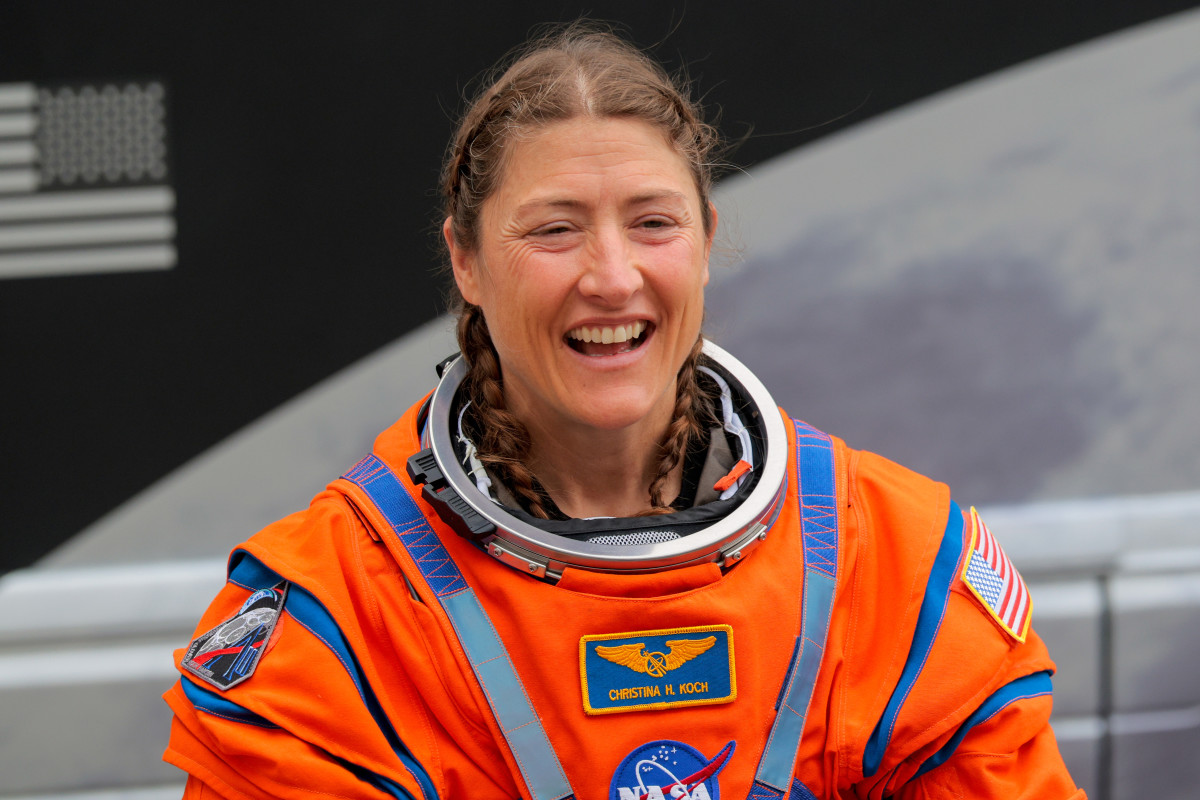
On Saturday, April 4, NASA astronaut Christina Koch looked out one of the Orion spacecraft's main cabin windows on her way to the Moon and took another one.

Koch is one of four astronauts aboard NASA's Artemis II mission, the first crewed test flight of the agency's Artemis program. She, along with commander Reid Wiseman, pilot Victor Glover, and Canadian Space Agency astronaut Jeremy Hansen, lifted off April 1 from Kennedy Space Center in Florida and are currently making a roughly 10-day journey around the Moon and back. They are traveling deeper into space than almost any humans in history — and on Monday, they will officially break the record, surpassing the Apollo 13 crew's 1970 mark for the farthest humans have ever traveled from Earth.

The whole-Earth photograph has a name among scientists and philosophers — the Overview Effect. Astronauts who have seen Earth from deep space consistently describe a profound shift in perspective, a visceral understanding of how fragile and isolated our planet is against the scale of space. Edgar Mitchell, who walked on the Moon during Apollo 14, called it an instant global consciousness.

Koch knows the feeling better than almost anyone. Before Artemis II, she completed a record-breaking 328-day stay aboard the International Space Station. She has looked down at Earth more than most humans alive. And yet here, from a distance orders of magnitude farther than the ISS, the view is different. Earth isn't below you. It's behind you.

Artemis II is scheduled to splashdown off the coast of San Diego at approximately 8:07 p.m. ET on Friday, April 10. NASA is providing real-time coverage throughout the mission on its YouTube channel, along with a separate live stream of views from the Orion spacecraft as bandwidth allows. You can track Orion's exact position in space at nasa.gov/trackartemis.

Monday, April 6 is the mission's most dramatic day — a lunar flyby during which the crew will break the all-time distance record and temporarily lose contact with Mission Control as Orion passes behind the Moon.

This story was originally published by Men's Journal on Apr 5, 2026, where it first appeared in the News section. Add Men's Journal as a Preferred Source by clicking here.