Press
‘Dying of thirst’: Inside Gaza’s al-Mawasi water crisis
Images
1 / 9
2 / 9
3 / 9
4 / 9

5 / 9

6 / 9

7 / 9

8 / 9

9 / 9
Residents in Gaza describe daily torment as water shortages worsen, leaving families desperate for clean drinking water.

Save

Share

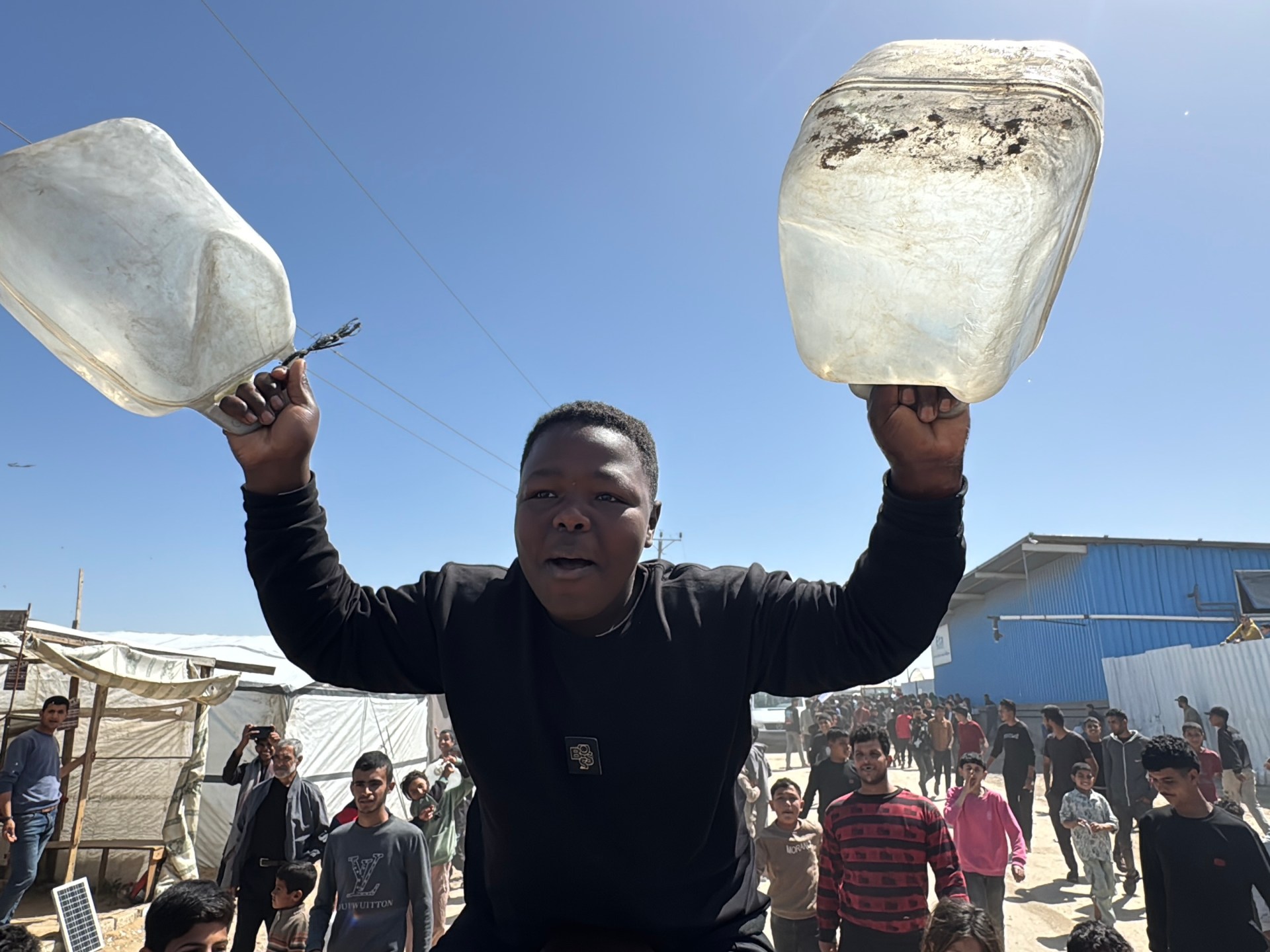
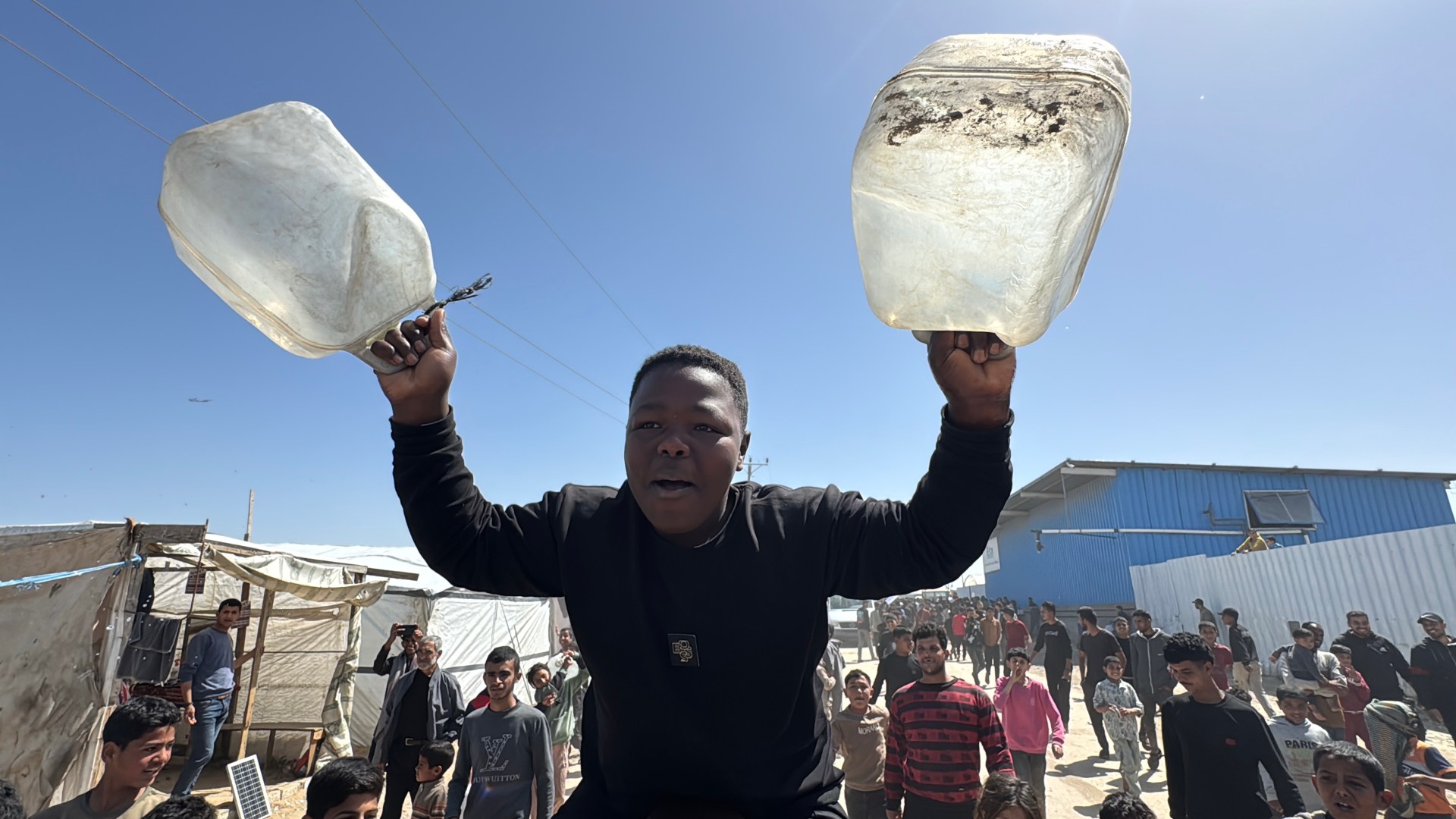
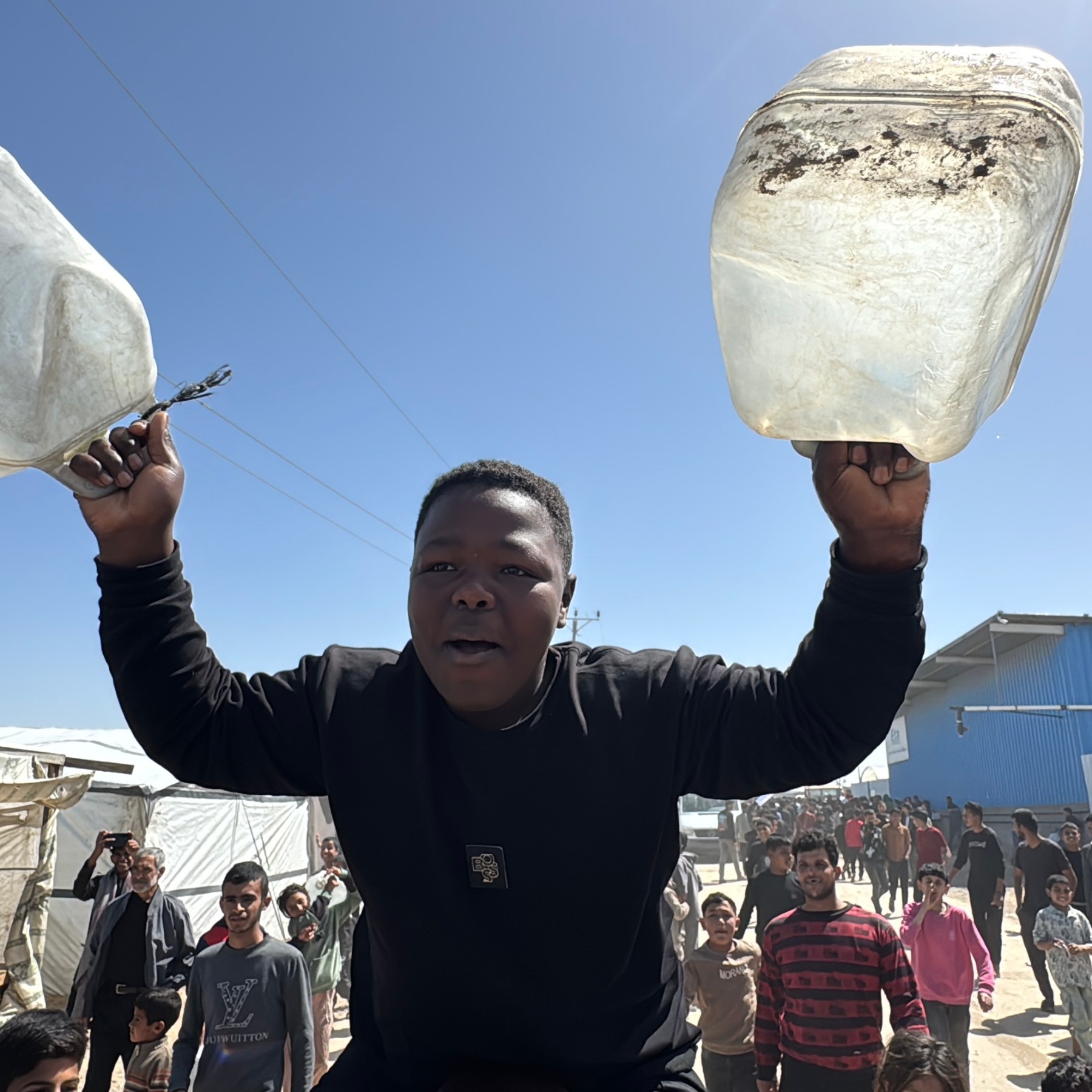
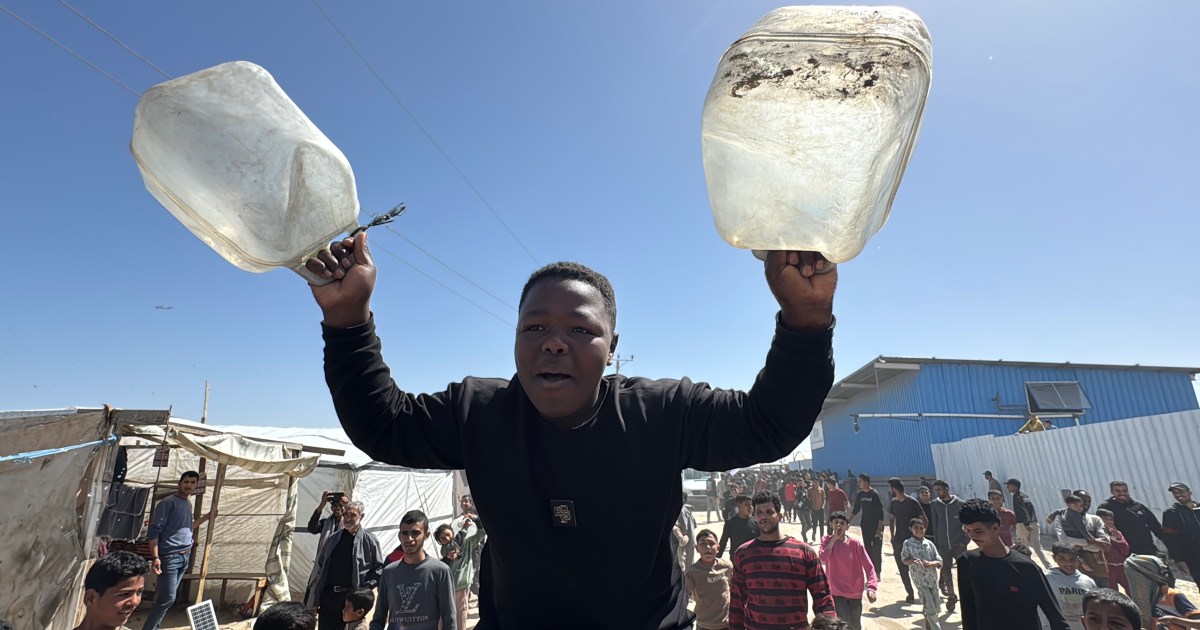
Khan Younis, Gaza Strip – Nawaf al-Akhras begins his day by carrying bottles and jerrycans with his eldest son to a water filling station about one and a half kilometres (0.9 miles) from his tent in southern Gaza’s al-Mawasi camp.

Upon arrival, they are met with thousands of people crowding the station, waiting under the scorching sun for their turn.

Nawaf, a father of seven who was displaced from Rafah to al-Mawasi two years ago, describes the daily round trip, which can stretch for five hours or more, as a torment for his family, and for other Palestinians displaced as a result of Israel’s genocidal war on Gaza.

“My entire day with my son is spent waiting in line to fill water, with people coming from very far distances,” Nawaf tells Al Jazeera. “It’s daily suffering, just so that we can drink water.”

Water shortages have recently worsened in several areas across Gaza, including al-Mawasi, after Eta – a company that provided clean and potable water, serving displaced people across the Strip from Rafah to Beit Hanoun – stopped operating due to what it said was a lack of funding.

“Water trucks used to come almost daily near the tents and eased the burden of collecting and transporting water,” Nawaf says.

“But for several weeks now, these trucks have stopped, and our struggle to obtain drinking water has doubled.”

Nawaf explains that he can barely fill two small jerrycans due to the overwhelming crowd and intense competition among displaced people to access the filling stations.

“We died from hunger, and now they are testing death by thirst on us… this is what’s left,” Nawaf says.

“Two jerrycans are barely enough for my family’s daily drinking needs, forcing us to ration even drinking water,”

Nawaf and other displaced residents fear that the water crisis will worsen further, especially with the arrival of summer and rising temperatures.

“I won’t even begin to describe the suffering of summer in the tents… It feels like we are literally being roasted in a frying pan… There is no roof to protect us or our children’s bodies… and now, with the lack of drinking water, things will definitely be catastrophic,” Nawaf says.

Severe water shortages in al-Mawasi have pushed residents to organise protests. Hundreds of displaced people took part in one such protest on Saturday, April 5, demanding an end to the worsening drinking water crisis amid harsh humanitarian conditions, as Israel continues to prevent sufficient aid from entering Gaza.

They have called on international institutions and local authorities to intervene to prevent further deterioration, stressing the need for an immediate response to save the lives of thousands of children and elderly people, and adding that access to clean water is a fundamental human right.

Salah al-Koush, a resident of al-Mawasi and one of the protest participants, told Al Jazeera that the struggle to find water has become a daily nightmare since water trucks that once provided limited supplies stopped operating.

He added that his displaced family of 13 has been forced to buy “utility water” with a high salt content for drinking, cooking, and daily use, even though it is typically not considered safe to drink.

“The current crisis has forced many displaced people here to use contaminated water,” he said.

“I fear for my four children; every day, there are cases in the camp of children getting sick due to water contamination.”

Al-Mawasi, which lies in the west of Khan Younis, has transformed from a sparsely populated agricultural strip into one of the most densely populated areas during the war.

Having previously only hosted a few thousand residents, hundreds of thousands of displaced people flowed into al-Mawasi following its designation as a so-called “safe zone” by Israeli forces during Israel’s genocidal war. Despite also coming under attack and lacking the basic infrastructure to accommodate large numbers, tens of thousands of Palestinians displaced from other parts of Gaza moved there, living in overcrowded tents.

The population surge has intensified a water crisis that the United Nations has described as catastrophic.

According to UN human rights experts, the majority of Gaza’s population does not receive enough drinking water. The crisis “was not only predictable; it was predicted”, the experts said.

UN officials have also noted that “people are receiving far less water than they need”, leading to the spread of waterborne diseases amid rising temperatures and deteriorating sanitation conditions.

This collapse is the result of Israel’s widespread destruction of water infrastructure, alongside fuel shortages and Israeli restrictions on the entry of equipment needed for maintenance.

The Palestinian Water Authority has confirmed that attacks have “destroyed water infrastructure in the Gaza Strip”, including “around 65 percent of water wells” in some areas, leading to a sharp decline in the sector’s ability to produce and distribute water.

As a result of the war, per capita water availability has dropped by 97 percent, while total available water in Gaza is now estimated to be only 10 to 20 percent of pre-war levels.

This supply remains unstable and dependent on fuel availability, as Gaza relies primarily on groundwater sources, according to a report by the Palestinian Water Authority.

At the same time, human rights organisations warn that the crisis is no longer merely a byproduct of war but has taken on a systematic nature.

According to the Euro-Med Human Rights Monitor, “the lack of clean drinking water has become a matter of life or death” for civilians.

UN experts have also argued in a letter in July 2025 that what is happening goes beyond a conventional humanitarian crisis and falls within the use of essential resources as a tool of pressure.

The experts said the issue was not limited to infrastructure destruction, but also included cutting supplies, restricting fuel entry needed to operate water facilities, and obstructing repair and maintenance efforts.

“Israel’s blockade and destruction of civilian infrastructure has left most of Gaza’s two million residents displaced and without access to the minimum vital amount of drinking water,” the experts said.

This recurring pattern, combining direct targeting with sustained restrictions, has led to a deliberate reduction in the amount of water available to the population.

The UN experts warned that the “use of thirst as a weapon” has become a reality in Gaza, stressing that “cutting water and food is a silent but deadly bomb”.

The dynamic is reflected in daily life, where people are forced to travel long distances to reach limited water sources, wait for hours in queues, and sometimes risk their lives in unsafe areas.

With repeated supply disruptions and instability, access to water is no longer guaranteed, turning it from a basic service into a tool of control over civilian life.