huffpost Press
Affordability Could Sink A Major Trump Ally In Europe
Images
1 / 7

2 / 7
3 / 7
4 / 7
5 / 7
6 / 7

7 / 7
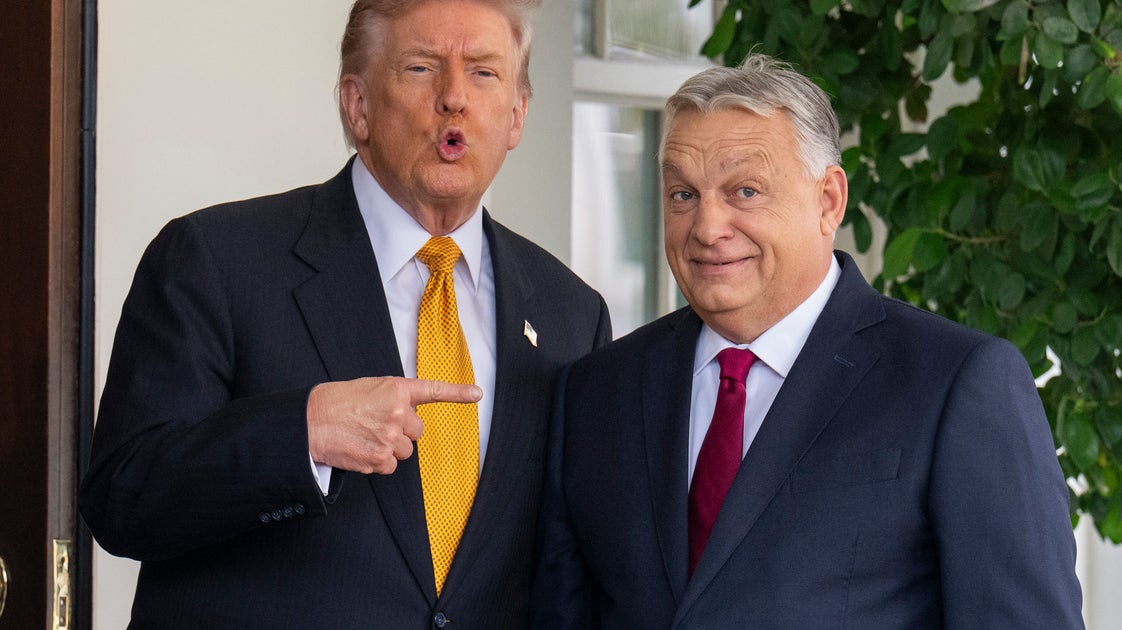
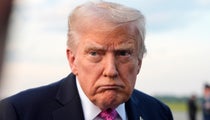
WASHINGTON – As President Donald Trump faces a perilous midterm election later this year with voters rebelling over the still-rising prices, his first priority is not an endangered Republican congressman or governor, but an eastern European leader 4,000 miles away whose autocratic style seems to have served as a template for Trump at home.

Hungary’s Viktor Orbán has strong-armed his country’s judiciary, attacked its universities, muzzled its independent media, demonized LGBT people, and ushered in crony capitalism and rampant corruption cloaked in Christian nationalism — just as Trump is trying to implement, and to varying degrees succeeding, in the United States.

On Sunday, though, Orbán is facing his toughest election challenge to date in his 16-year rule, with polls showing he will likely not win a fifth consecutive term. What’s more, in a possible preview of America’s coming November midterms, if Orbán does lose, it likely will not be because of his autocratic impulses but something far more pedestrian: affordability.

Under Orbán’s leadership, life for ordinary Hungarians has gotten significantly more difficult in recent years, according to analysts and observers. And while voters seemed willing to tolerate losing their freedoms if their quality of life was simultaneously improving, they could well be ready to move on now that it is not.

“Many people must by now have noticed that corruption and state capture have a real economic cost,” said Pawel Zerka, a senior fellow with the European Council on Foreign Relations in Paris.

“People know very well that the Orbán government has been authoritarian and corrupt for a long time, but you might accept that, or at least not think it’s worth the trouble to stand up and mobilize against it, as long as the system seems to deliver in other ways,” said Johan Norberg, a Cato Institute researcher. “When the economy stalls and the country starts to fall behind its neighbors, patience wears thin.”

Voter discontent over their personal situations — which led to 77 million Americans casting ballots for a coup-attempting convicted felon who was promising to immediately lower prices — has in Hungary led Orbán to find an external villain to blame, and he has spent much of the final months of his campaign attacking Ukrainian president Volodymyr Zelenskyy rather than his actual opponent, center-right candidate Peter Magyar.

In so doing, Orbán has aligned himself with Vladimir Putin, again paralleling Trump’s own preference in the Russian dictator’s four-year-old war of territorial conquest as well as Trump’s disdain for America’s traditional allies in western Europe.

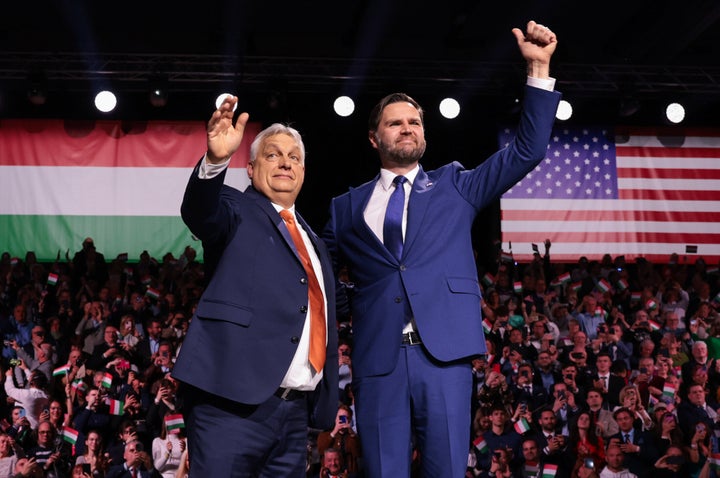
Trump, who has repeatedly endorsed Orbán, sent Vice President J.D. Vance to campaign for him at a rally in Budapest earlier this week and even addressed rallygoers himself via speakerphone after Vance called him from the stage. “The United States is with him all the way,” Trump said of Orbán.

Fiona Hill, a Russia expert who served on Trump’s first-term National Security Council, said she is not surprised by Trump’s overt support for Orbán, who has already done to Hungary what Trump is trying to do to the United States.

“His success is their success,” Hill said. “It’s the man and the model he sets for governance.”

Late Friday, Trump resorted to a seeming bribe to Hungarian voters, offering “the full Economic Might of the United States to strengthen Hungary’s Economy” — if, according to the social media post, “Prime Minister Viktor Orbán and the Hungarian People ever need it.”

Trump’s White House did not respond to HuffPost queries asking whether the offer was still valid if Orbán loses Sunday.

Duly elected governments the world over have for generations embraced the phrase “liberal democracy,” not in the liberal-versus-conservative framework of American politics, but liberal as valuing individual freedoms that grew out of the European Enlightenment centuries ago.

Orbán was the first elected leader on that continent in the post-World War II era to turn that on its head and instead boast of creating an “illiberal” democracy, pointing to countries like Russia and China as models for Hungary. After serving an earlier term as prime minister from 1998 to 2002, Orbán returned to office in 2010 with a supermajority in Parliament, allowing him to push through dramatic changes that helped him handily win three subsequent elections.

New tax policies punished businesses but favored those of loyalists. Independent media outlets were similarly driven out of business, largely leaving behind those with fawning coverage.

The once-independent judiciary was remade in Orbán’s own image, while the country’s universities were placed under the control of groups loyal to him. Central European University, founded by Hungarian-born George Soros, was forced to move most of its operations to Vienna. Electoral maps were redrawn to make it easier for his Fidesz party to dominate Parliament.

And even though Hungary’s joining the European Union in 2004 allowed it to quickly and dramatically increase its citizens’ standard of living, Orbán instead took to railing against it, claiming that the group wants to suppress Hungarian identity.

The result of all the government interventions has taken its toll. Businesses have shied away from investing because of corruption — the independent group Transparency International now finds Hungary has corruption worse than in China, and only slightly better than Albania — while the EU has withheld aid because of Orbán’s repeated violations of its laws.

Compared to peer countries that had previously been satellites of the Soviet Union, Hungary’s economic performance in recent years has been dismal, with rising unemployment and declining purchasing power for its citizens. Gross domestic product growth last year was 0.3%. Post-COVID inflation hit 17% in 2023 — nearly twice as high as in the U.S.

Much like in the United States, where Democratic focus on economic concerns has spurred a sharp backlash to Trump ahead of this year’s midterm elections, pocketbook issues have proven more effective in driving opposition to authoritarian leadership in Hungary than more philosophical concerns about democracy and civil rights.

“People realized that he was an autocrat and the country was headed the wrong way once they started to be worse off financially,” said Ivan Laszlo Nagy, a Hungarian journalist who is covering the election. “Now it’s just about wanting a fresh start.”

The United States’ long-standing policy of remaining neutral in the elections of allied nations went out the window after Trump won in 2016 — a White House aide from the first term called the previous policy “a quaint notion” — as Trump began openly supporting leaders and candidates who shared his anti-immigration and “nationalist” views. He backed Marine Le Pen in France, Nigel Farage in Britain and Andrzej Duda in Poland, among others.

That approach has accelerated after Trump returned to office in January 2025. The very next month, Vance traveled to the Munich Security Conference and embraced the far-right AfD party, which Germany had tried to marginalize because of its echoes of Nazi ideology. In the subsequent year, Trump, as well as top aides including Defense Secretary Pete Hegseth and Secretary of State Marco Rubio, have attacked institutions the U.S. helped create after World War II to help prevent future conflicts, such as NATO and the EU.

At this week’s rally in Budapest, Vance continued that theme. “Will you stand against the bureaucrats in Brussels?” he asked the crowd. “Will you stand for Western civilization? Will you stand for freedom, for truth and for the God of our fathers? Then my friends go to the polls in the weekend and stand with Viktor Orbán because he stands for you and he stands for all these things.”

Of course, whether the endorsement of Trump and Vance will help Orbán in a country where only one-fifth of the population speaks English is an open question. Indeed, given the economic landscape and challenger Magyar’s lead in the polls, experts said, it could actually backfire.

“At this stage, such support of Vance and Trump would honestly equate more to a kiss of death rather than genuine political capital,” said Gregoire Roos, director of Europe and Russian programs at London-based Chatham House.

“Hungarians are still overwhelmingly pro-European. But Vance, against Orbán’s explicit wishes, opened his salvo in Hungary with rather primitive anti-EU rhetoric,” added Jan Techau, with the Center for European Policy Analysis in Berlin. “Not even Orbán himself uses such vocabulary when bashing Brussels. He knows where his people stand. Vance does not. Having such allies does not buy Orbán anything.”

By entering your email and clicking Sign Up, you're agreeing to let us send you customized marketing messages about us and our advertising partners. You are also agreeing to our Terms of Service and Privacy Policy.