Press
Energy bills, mortgages and more: How the Iran war affects your money
Images

1 / 9

2 / 9

3 / 9
4 / 9
5 / 9
6 / 9
7 / 9
8 / 9
9 / 9
From petrol prices to mortgage rates, the US-Israel war with Iran has already had an impact on people's finances in the UK.

US president Donald Trump announced a ceasefire last week, but negotiations between the two countries ended without a deal, raising concerns that the economic effects of the conflict would be long lasting.

One think tank has estimated the average working-age British household could be hundreds of pounds worse off this year as a result of the  conflict.

Here are some of the areas to watch out for.

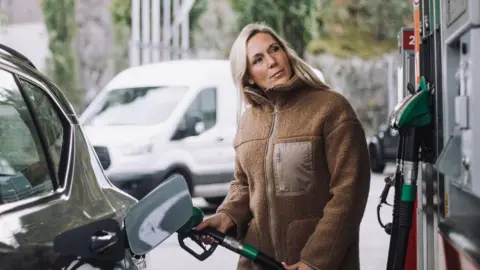
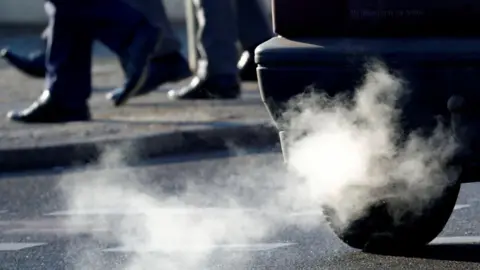
Drivers have already noticed that prices at the pump are on the rise.

Crude prices have risen sharply since the start of the war, although they are volatile as they react to the status of the conflict and commentary from the White House.

The average price of petrol was 158.27p per litre on 13 April, according to the motoring organisation RAC. That's an increase of more than 25p since the start of the conflict.

Diesel has jumped to 191.5p a litre, up nearly 49p since the beginning of March.

It means that the average cost filling a 55-litre family car with petrol has increased by £14 since the start of the Iran conflict, with diesel up by £27.

RAC's head of policy Simon Williams says the rate of increase of pump prices is slowing, but the chance of any reductions will be dictated by the success or failure of peace talks.

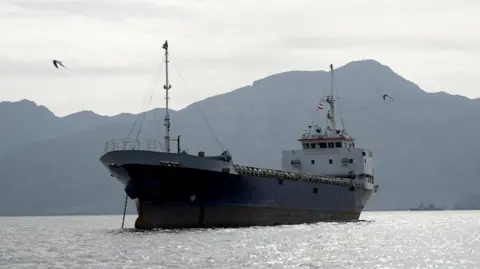
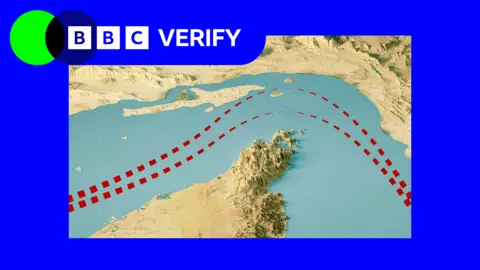
"It's a highly volatile situation with much depending on what happens with the Strait of Hormuz," he said.

In early March, the increase in pump prices triggered a row between petrol retailers and the government. Retailers accused the government of using "inflammatory language" by suggesting firms were profiteering from the oil price surge.

According to analysts, every $10 increase in oil pushes up pump prices by roughly 7p a litre.

Even if oil shipments start to move freely through the Strait of Hormuz, drivers have been warned it will be a while before any benefit is felt.

While motoring organisations say that there are plenty of supplies, they are encouraging people to reduce non-essential journeys. They also suggest people amend their driving style, by not accelerating or braking too hard to conserve fuel.

Not everyone has a car or may not use one for a daily commute. However, when petrol rises, it can carry through to higher prices for goods and services.

For example, if transport costs for supermarkets increase that could then be reflected in the cost of food.

Before the war began, there had been a hope and expectation of a steady fall in the interest rates charged on new, fixed mortgages, as well as lower variable rates.

Now, the opposite is happening.

Lenders have raised rates quickly, due to their own funding costs rising and an expectation that the base borrowing rate will not fall as previously anticipated.

The average two-year fixed rate has jumped from 4.83% at the start of March to 5.89% now, according to the financial information service Moneyfacts. The cheapest deals have risen the fastest.

For those looking for a five-year deal, the average rate has risen from 4.95% to 5.77% over the same period.

At times of economic uncertainty, lenders pull mortgage products off the shelves, reducing choice.

There are now about 1,500 fewer residential mortgage products on the market, according to Moneyfacts, although that still leaves more than 6,000 deals to choose from.

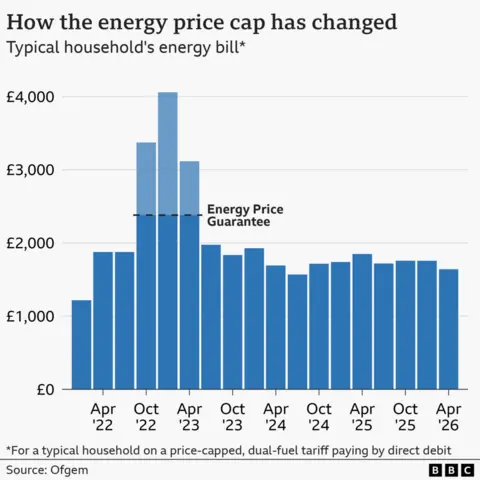
There is some protection in place for household gas and electricity bills, thanks to the price cap in England, Wales and Scotland set by energy regulator Ofgem.

However, it is time limited and does not cover everyone.

The maximum price for each unit of energy, for those on variable deals governed by the cap, is set until July.

In fact, prices went down at the start of April.

However, what happens between now late May on the wholesale energy market will determine these household bills from the summer. The period of high wholesale costs is likely to mean a sharp increase in energy prices for millions of people, although a ceasefire – were it to hold – would lower the price peak.

Energy consultancy Cornwall Insight's latest forecast predicts that, under Ofgem's price cap for July to September, a dual-fuel household using a typical amount of gas and electricity would pay £1,861 a year, up from the current £1,641. However, this forecast is subject to change.

The last time there was a particular spike, following Covid and Russia's invasion of Ukraine, the government had to step in to help with the Energy Price Guarantee (EPG).

The chancellor has said there could be government support if needed for bills at the start of winter but, unlike the EPG, it would be targeted at those who need it most, rather than universal.

Those looking to fix their energy unit price instead are facing a similar situation as people searching for a mortgage.

Some energy tariff providers have pulled deals, or have now set them at a higher price. Geopolitical uncertainty also means there are likely to be fewer deals with a longer duration.

The most immediate impact of rising prices is felt by those who use heating oil, often stored in a tank outside their property. There is no cap that limits the cost.

Heating oil is used widely in rural areas and in Northern Ireland.

Prime Minister Sir Keir Starmer announced support amounting to £53m for the most vulnerable users of heating oil. The money will be distributed via the devolved authorities. In England, councils will decide who qualifies and how they will receive the financial help.

Competition authorities are also checking whether customers are being treated fairly.

"Generally, we would expect that customers who have placed orders for heating oil should receive it at the agreed price. Suppliers should be clear what they are charging and terms must be fair," said Emma Cochrane, at the Competition and Markets Authority.

At the start of March, UK inflation – which charts the rising cost of living – was forecast to be at or around the Bank of England's target level of 2% over the next five years, according to the Office for Budget Responsibility (OBR).

The government's official forecaster said the price of a typical basket of goods would be going up at a rate of 2.3% this year and then 2% a year from 2027. But, it did those sums before the airstrikes on Iran began.

Now, analysts believe the rate of inflation is unequivocally on the rise.

Making an inflation estimate becomes very difficult, given the volatile situation militarily and economically.

However, analysts do not think inflation will return to the peak of 11.1% seen in the UK in October 2022. That is because the war in Ukraine also caused spikes in the prices of basic foodstuffs, such as wheat and edible oil, owing to the role of Ukraine in producing those items. That is not the case now.

The Resolution Foundation think tank has estimated that higher energy prices mean the average working-age household will be £480 worse off this year.

It adds that some of the lowest-income households will be shielded from rising living costs by this year's above-inflation benefits increases and the end of the two-child benefit cap.

But James Smith, the think tank's chief economist, said: "Energy prices remain well above pre-war levels, meaning many households face a decline in their purchasing power this year."

The Bank of England is charged with getting inflation to as close as 2% as possible, and its primary tool to do so is interest rates.

After the rate-setting committee met in February, the Bank's governor Andrew Bailey said there was scope for further rate cuts this year.

A month on, the committee held the Bank rate at 3.75%, and adopted a wait and see approach. Many analysts believe the next move in interest rates is likely to be up, not down.

But while borrowing money could become more expensive than previously thought, savings could be slightly more lucrative.

In times of uncertainty, people have previously hoarded savings. The spending power of that money may reduce, if the cost of living rises, and it may hit general economic growth in the UK.

Financial markets predict there could be two interest rate hikes this year, but the Bank's governor Andrew Bailey has repeated his view that the markets are "getting ahead of themselves".

Wider implications for our finances are highly dependent on how the war – and its global impact – plays out.

But, the choice of holiday destinations in the spring and summer may be more limited. Flights could get more expensive.

Jet fuel has gone up sharply in price. Although airlines have buying strategies that limit some of this impact, the longer aviation fuel remains expensive the harder it is not to pass this on through higher fares, or reduced flights.

https://www.bbc.co.uk/send/u232019801

UK petrol prices have risen because of the US-Israel war with Iran but the ceasefire could see prices drop.

The failure of negotiations at the weekend has raised concerns that the global energy crisis will deepen.

The US president accuses Leo of being "weak on crime and terrible for foreign policy".

Four vessels have crossed the Strait of Hormuz ahead of a US military blockade of Iranian ports set to begin on Monday.

The Jersey Consumer Council said it would increase its fuel surveys to twice a week.