Press
Iran says Strait of Hormuz is 'open' but tracking shows few ships moving
Images
1 / 10

2 / 10
3 / 10
4 / 10
5 / 10

6 / 10

7 / 10

8 / 10
9 / 10
10 / 10
Iran's foreign minister has said the Strait of Hormuz has reopened for commercial vessels, but added that ships should use designated safe lanes.

Tehran has effectively blocked the key oil shipping channel since the US and Israel attacked the country on 28 February. A ceasefire between the US and Iran is due to expire on 22 April.

US President Donald Trump said a naval blockade of Iranian ports would continue until a peace deal was agreed between the two countries but that it was "a great and brilliant day for the world".

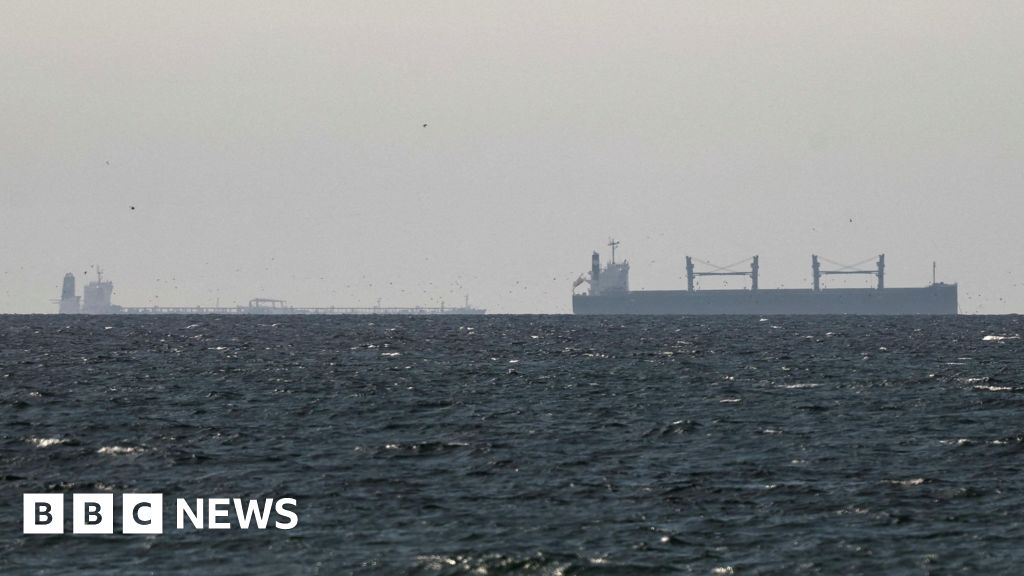
Maritime groups say they are still verifying whether it is safe for vessels to travel through the strait, and tracking shows minimal ship movement.

The announcement by Abbas Araghchi, Iran's foreign minister, came on Friday - the first full day of a 10-day ceasefire between Israel and Lebanon.

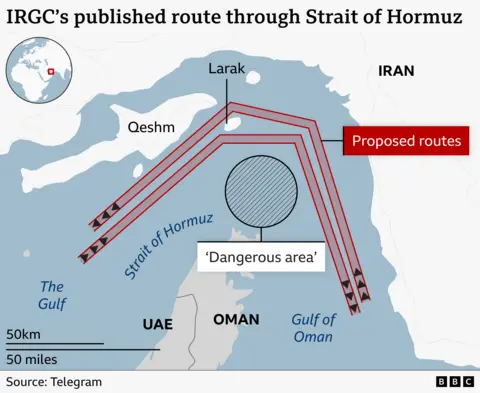
"In line with the ceasefire in Lebanon, the passage for all commercial vessels through Strait of Hormuz is declared completely open for the remaining period of ceasefire on the coordinated route as already announced by Ports and Maritime Organisation of the Islamic Rep of Iran," he wrote on X.

Iranian state TV later quoted a "senior military official" as saying that the passage of these vessels would be through a "designated route" and that the passage of military vessels through the Strait would still be "prohibited."

This is likely referring to a map and two routes designated by Iran's Islamic Revolutionary Guard Corps (IRGC) and widely reported by Iranian media last week.

Some Iranian news outlets have criticised Araghchi's post. Tasnim News Agency, affiliated with the IRGC, called it "bad and incomplete", saying such passage would be considered "void" should the US naval blockade continue. Others called for the Iranian authorities to clarify the matter.

Iranian Parliament Speaker Mohammad Bagher Ghalibaf, who headed Iran's delegation in the recent talks with the US in Islamabad, said on X that Donald Trump "made seven claims in one hour, all seven of which were false".

On the Strait of Hormuz, he said that, with the "continuation of the [US] blockade", the Strait "will not remain open".

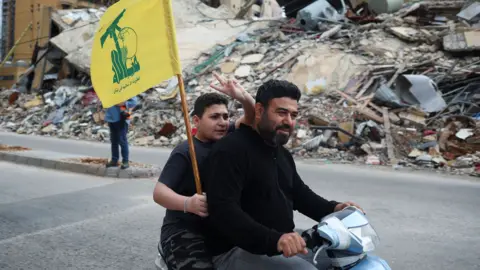
Iran is an ally of Hezbollah, a Shia Muslim political and military group based in southern Lebanon. Israel launched strikes on Lebanon on 2 March in response to those carried out by Hezbollah, which itself was retaliating against the US and Israel for its attacks on Iran.

Meanwhile, Trump said talks with Iran to end the war would continue over the course of the weekend, adding that he did not think there were too many significant differences between the two sides.

It comes after Iran's foreign ministry said the country's stockpile of enriched uranium would not be transferred "anywhere under any circumstances", denying Trump's claim on Friday that the regime had agreed to hand it over to the US.

Trump also told CBS News, the BBC's US partner, that no ground troops would be needed to remove the enriched uranium, saying that the US and Iran would "work together to go get it".

"And then we'll take it to the United States," he added.

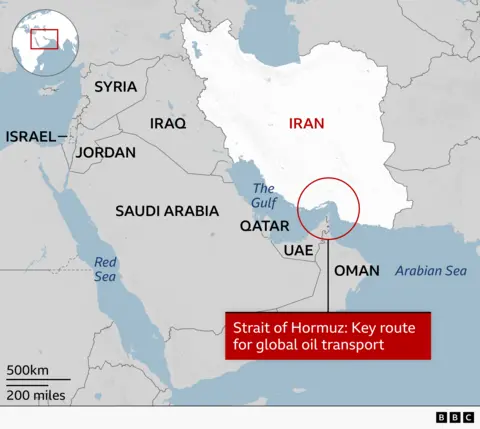
About 20% of the world's oil and liquefied natural gas (LNG) usually passes through the strait, but the number of ships transporting this has dramatically decreased during the recent hostilities. Iran has threatened to attack tankers and other ships, as well as warning that it has laid mines.

This has sent shock waves across the global economy, causing fuel prices to soar. While the cost of oil plummeted on Friday following Araghchi's announcement, questions remain about the validity of it and whether a temporary reopening would allow ships to transit through.

"I need further clarification for the shipping industry that there will be no risks for the ships to navigate and it will be in accordance with international law," Arsenio Dominguez, the head of the International Maritime Organisation (IMO), told BBC World Business report.

The IMO has information that some ships have started to sail but that it still needed to verify this as "some ships turn off their identification systems in order not to be targeted", he said.

Cormac McGarry, director for maritime security at the consultancy firm Control Risks, said he was "no more optimistic than he was yesterday" about the strait reopening, despite Araghchi's announcement.

He told BBC's 5 Live Drive that the statement "basically changes nothing" as the implicit threat of mines remain.

"Right now, the scenarios are looking pretty bleak for shipping over the next few weeks," McGarry added.

UK Prime Minister Sir Keir Starmer said on Friday that his country and France would lead a multinational mission to protect commercial shipping routes in the Strait of Hormuz.

Speaking after a meeting of 49 countries, Starmer underlined the work would be "strictly peaceful and defensive" and would only be put in place once fighting in the region ends.

The remains of 14-year-old Celeste Rivas Hernandez were found in the singer's car last year.

The suspect was accused of purse-snatching and has been charged with larceny and providing false information.

Investigators say Justin Fairfax shot his wife, Cerina, multiple times before turning the gun on himself.

Marie-Thérèse had moved to the US after reuniting with her long-lost love, an American man who died in January.

A 10-day truce between the two countries is now in effect, with Iran-backed Hezbollah voicing support, as negotiations continue between the US and Iran.