foxnews Press
Iran seizes ships in Hormuz as US talks falter after ceasefire extension
Images
1 / 20

2 / 20

3 / 20

4 / 20

5 / 20
6 / 20

7 / 20

8 / 20

9 / 20

10 / 20
11 / 20

12 / 20

13 / 20

14 / 20
15 / 20

16 / 20
17 / 20

18 / 20

19 / 20
20 / 20
Fox News senior White House correspondent Jacqui Heinrich reports on the U.S.-Iran peace talks as a ceasefire deadline looms on ‘The Story.’

Iran seized two container ships in the Strait of Hormuz hours after President Donald Trump extended a ceasefire, as confrontations at sea continued under the truce.

Iran’s Revolutionary Guard said the vessels, identified as the MSC Francesca and the Epaminondas, were operating without proper authorization and had tampered with navigation systems, accusations that could not be independently verified. The ships had earlier reported coming under fire near the strait, underscoring the increasingly volatile conditions in one of the world’s most critical shipping lanes.

Both ships are managed by Mediterranean Shipping Company (MSC).

The Guard attacked a third ship, identified as the Euphoria, which had become "stranded" on the Iranian coast, Iranian media reported.

In a turn of events Tuesday, Trump announced he would extend the two-week ceasefire with Iran. For how long is unclear, but a White House official told Fox News it would be several days.

IRAN FIRES LIVE MISSILES INTO STRAIT OF HORMUZ AS TRUMP ENVOYS ARRIVE FOR NUCLEAR TALKS

Despite heavy U.S. strikes that officials say severely degraded Iran’s conventional navy, Tehran maintains maritime capability through the Islamic Revolutionary Guard Corps’ fleet of fast-attack boats used for harassment and boarding operations in the narrow strait.

"We should think in the thousands," Farzin Nadimi, a senior fellow at the Washington Institute for Near East Policy, told Fox News Digital. "If you include very small boats up to more capable fast-attack craft, the total could reach 3,000 to 4,000 vessels."

Those forces have been used to harass commercial ships, force them to stop, and take them into custody. Iranian state media said similar tactics were used when Revolutionary Guard units attacked multiple vessels before escorting at least two into Iranian waters.

The Iranian made 'Seraj' a high-speed missile-launching assault boat on display in Tehran on August 23, 2010, as Iran kicked off mass production of two high-speed missile-launching assault boats the 'Seraj' (Lamp) and 'Zolfaqar' (named after Shiite Imam Ali's sword) speedboats which will be manufactured at the marine industries complex of the ministry of defence. (YALDA MOAIERY/AFP via Getty Images)

The continued attacks highlight a gap between battlefield claims and reality.

In a Truth Social post April 13, Trump said, "Iran’s Navy is obliterated. It is laying at the bottom of the sea," adding that U.S. forces did not need to target Iran’s "little fast-attack boats" because they were not a threat.

TRUMP WATCHES STRIKE ON IRAN-BACKED HOUTHIS IN YEMEN IN NEW WHITE HOUSE PICS AS LARGE-SCALE OP CONTINUES

But those smaller vessels, long a cornerstone of Iran’s asymmetric strategy, are now central to its ability to disrupt shipping in the Strait of Hormuz.

The seizures mark the latest escalation in a widening maritime standoff between Iran and Washington.

Both sides have targeted commercial and cargo vessels as part of a broader pressure campaign tied to stalled negotiations. U.S. forces have also moved to seize at least one Iranian-linked vessel in the region, with each side accusing the other of violating the terms of a fragile ceasefire.

The Strait of Hormuz is a vital artery for global oil shipments, with roughly 20% of the world’s supply passing through it. Traffic has slowed dramatically as ships reroute or avoid the area amid gunfire, seizures and conflicting directives from both militaries.

In a series of Truth Social posts Tuesday night, Trump claimed Iran privately wants the Strait of Hormuz reopened despite public threats to close it.

"Iran doesn’t want the Strait of Hormuz closed, they want it open so they can make $500 Million Dollars a day (which is, therefore, what they are losing if it is closed!)," he wrote.

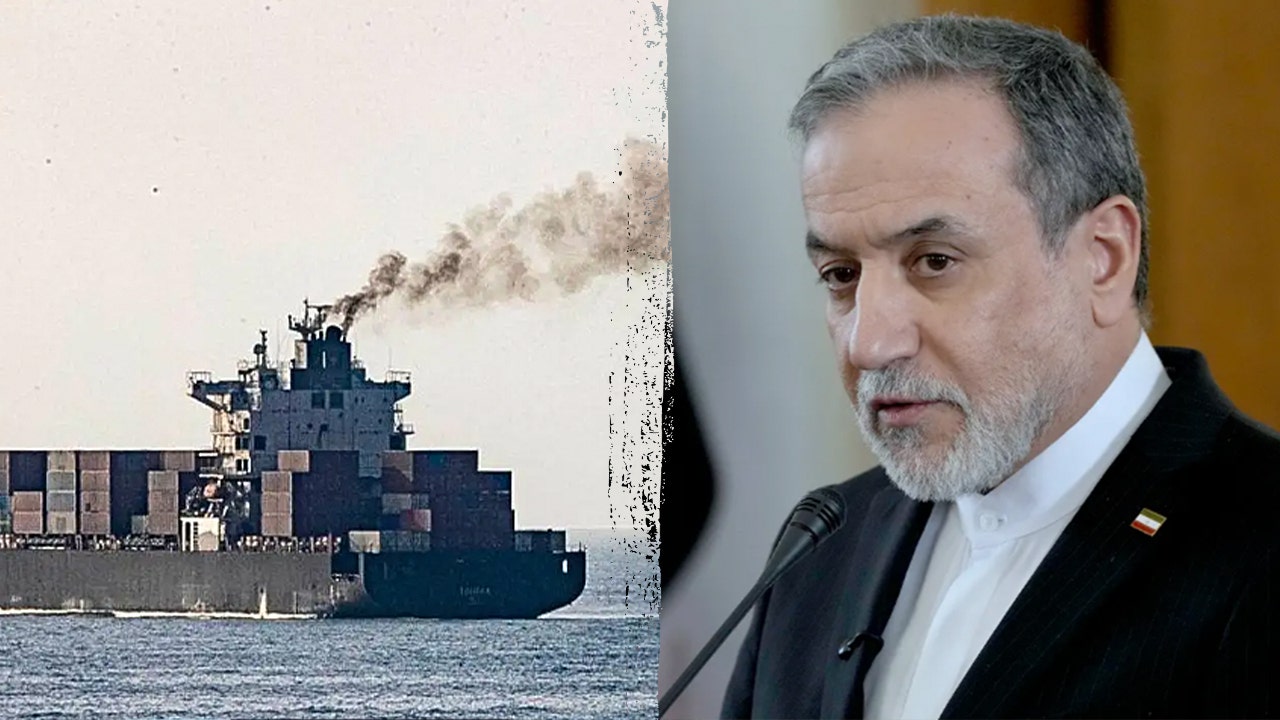
The Iranian-flagged Touska cargo ship pours smoke out after U.S. forces launched missiles at its control room following its violation of the U.S. blockade in the Strait of Hormuz. (U.S. Central Command (CENTCOM))

"But if we do that, there can never be a Deal with Iran, unless we blow up the rest of their Country, their leaders included!"

Trump said he agreed to extend the ceasefire at the request of Pakistani officials while waiting for Iran’s leadership to present a unified position in negotiations.

"Based on the fact that the Government of Iran is seriously fractured, not unexpectedly so and, upon the request of Field Marshal Asim Munir, and Prime Minister Shehbaz Sharif, of Pakistan, we have been asked to hold our Attack on the Country of Iran until such time as their leaders and representatives can come up with a unified proposal," Trump wrote on Truth Social.

"I have therefore directed our Military to continue the Blockade and, in all other respects, remain ready and able, and will therefore extend the Ceasefire until such time as their proposal is submitted, and discussions are concluded, one way or the other," he added.

Plans for renewed peace talks remain in limbo, with Iran signaling it may not participate in a second round of negotiations while the U.S. maintains its naval blockade. The blockade remains a key sticking point driving the confrontation at sea.

Iranian Foreign Minister Abbas Araghchi called the naval blockade an "act of war," accusing Washington of violating the ceasefire.

"Blockading Iranian ports is an act of war and thus a violation of the ceasefire. Striking a commercial vessel and taking its crew hostage is an even greater violation," he wrote on X.

Iranian Foreign Minister Abbas Araghchi called the naval blockade an "act of war," accusing Washington of violating the ceasefire. (Vahid Salemi/AP)

The comments came after U.S. forces moved to seize Iran’s M/V Touska vessel on Monday, which Araghchi described as "an act of piracy."

The seizures come as U.S.-Iran diplomacy appears increasingly uncertain, with a planned second round of talks in Islamabad thrown into doubt. Vice President JD Vance, who had been expected to lead the U.S. delegation, remained in Washington after Iran signaled it would not participate, scrapping plans for the delegation to travel to Pakistan.

CLICK HERE TO DOWNLOAD THE FOX NEWS APP

The abrupt shift followed a day of mixed signals from Trump, who said Tuesday morning he did not want to extend the ceasefire as its deadline approached, warning time for negotiations was running out. By the afternoon, however, he reversed course and announced he would extend the truce indefinitely to allow more time for diplomacy.

The reversal has further clouded fragile negotiations. No date has been set for renewed talks, and Iranian officials continue to insist they will not engage while the U.S. maintains its naval blockade. The confrontation has increasingly shifted from the negotiating table to the waters of the Strait of Hormuz, where the risk of miscalculation is rising.

Fox News' Lucas Tomlinson contributed to this report.

Get the latest updates from the 2024 campaign trail, exclusive interviews and more Fox News politics content.

By entering your email and clicking the Subscribe button, you agree to the Fox News Privacy Policy and Terms of Use, and
        agree to receive content and promotional communications from Fox News. You understand that you can
        opt-out at any time.

Subscribed

You've successfully subscribed to this newsletter!