huffpost Press
Legal Experts Warn The Worst Could Be Yet To Come After 10 Commandments Ruling
Images
1 / 9

2 / 9
3 / 9
4 / 9
5 / 9
6 / 9

7 / 9
8 / 9

9 / 9
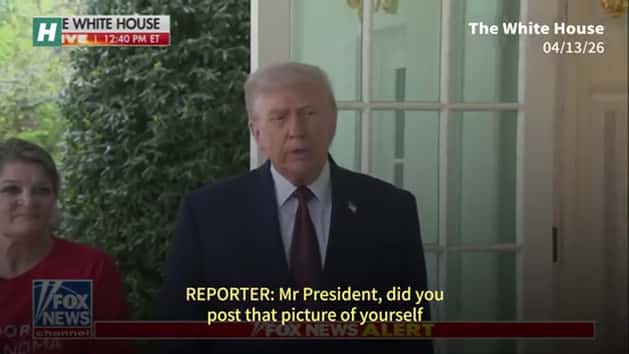
The movement to inject Christianity into public life, which has been brewing in right-wing circles for years and got a major boost when Donald Trump returned to office, just got a big win.

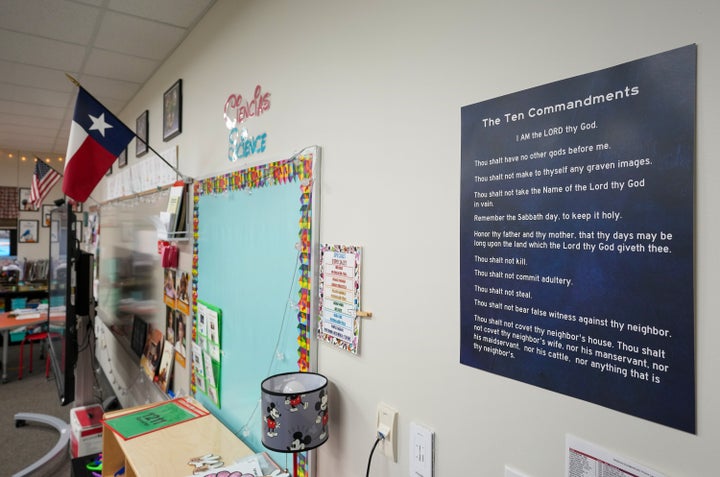
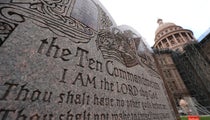
A federal appeals court ruled on Tuesday to uphold Texas’ law that requires every public school classroom in the state to display the Ten Commandments from the Christian Bible.

The conservative victory blurs the line between church and state and muddles decades of legal precedent. The establishment clause of the First Amendment prohibits the government from sponsoring any religion. The Supreme Court ruled in 1980 that public schools could not be forced to display the Ten Commandments, as it was a violation of the clause.

“The First Amendment safeguards the separation of church and state, and the freedom of families to choose how, when and if to provide their children with religious instruction,” the group of civil rights and religious freedom organizations that sued the state over the law said in a joint statement. “This decision tramples those rights.”

Legal experts blasted the Fifth Circuit Court of Appeals’ ruling.

“What used to be considered a wall of separation between church and state has turned into a small speed bump,” Seth Chandler, a law professor at the University of Houston, said in an emailed statement.

Some legal experts said the decision flouts long-standing law.

“I think it’s a terrible decision,” Ira Lupu, a constitutional law professor at George Washington University, told HuffPost. “They’re just trying to erase Supreme Court precedent.”

“The historical record provides evidence that when government acts to manipulate the religious preferences of its citizens, it violates the establishment clause,” Michael Helfand, a professor at the Pepperdine University School of Law, told the Washington Post. “And requiring the Ten Commandments in every public school classroom should have been interpreted as an attempt to do just that.”

Proponents of Texas’ law, however, have argued that the Ten Commandments were foundational to U.S. history and thus did not run afoul of the establishment clause. The 5th Circuit determined the mandate doesn’t infringe on a parent’s right to dictate their child’s religious beliefs.

“No child is made to recite the Commandments, believe them, or affirm their divine origin,” the court said in its opinion.

“The Fifth Circuit fell back on the idea that it’s passive,” Lupu said. “But it’s on the wall in every class, every day, from kindergarten until graduation. It will be constant and pervasive.”

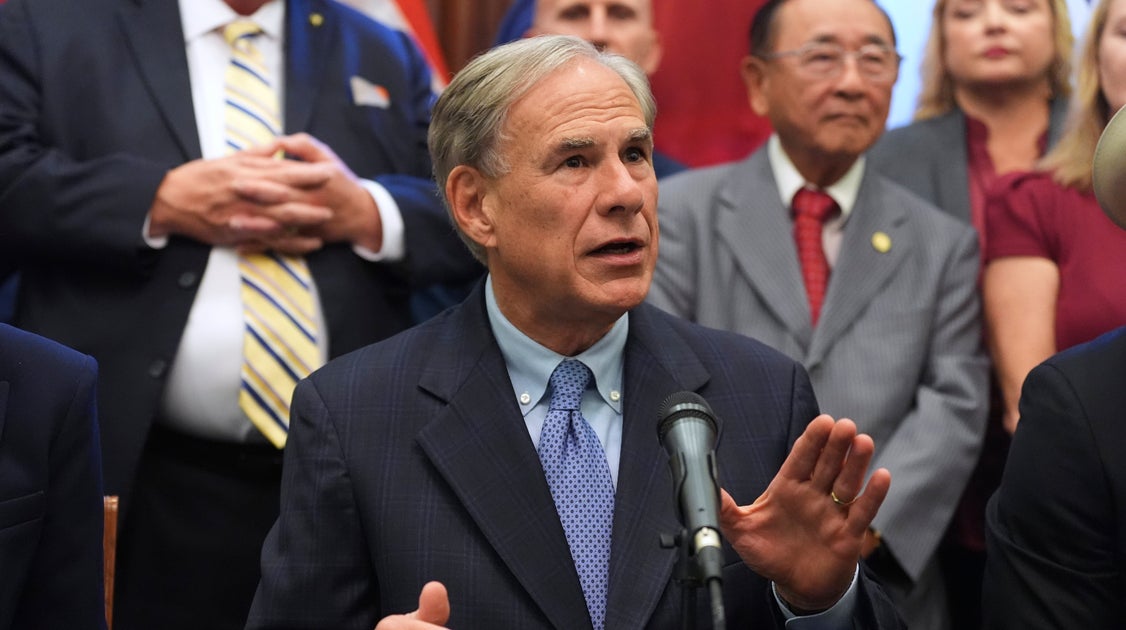
Republican Gov. Greg Abbott signed the controversial bill into law last June. Legal organizations and parents from diverse religious backgrounds immediately filed lawsuits, and the law was placed on hold in the districts those parents represented. But other districts have been forced to comply, and Republican Attorney General Ken Paxton sued school districts that didn’t.

The legal fight isn’t over. The organizations that sued the state over the law, including the ACLU of Texas, have said they intend to bring the case to the Supreme Court.

“There’s some dangers there. If the Supreme Court takes it and they lose, now it’s a nationwide ruling,” Lupu said.

Indeed, a debate over whether schools may be forced to display the Ten Commandments has been playing out in several states.

Louisiana, Arkansas and Oklahoma all introduced bills in recent years that would force schools to display the Ten Commandments. Arkansas’ was struck down by a lower court, while Oklahoma’s died in the legislature. After a legal battle, Louisiana’s law went into effect in February after the Fifth Circuit said it didn’t have sufficient information to rule on whether its law would infringe on the First Amendment. Ohio’s legislature is advancing a bill that would allow public schools to display the Ten Commandments alongside other documents.

The Supreme Court has recently ruled on religious beliefs in the classroom and what role parental rights play. Last year, a group of parents sued the public school system in Montgomery County, Maryland, over its refusal to allow them to opt their children out of lessons that included books with LGBTQ+ themes, alleging that the school system’s decision imposed on their religious beliefs. The court sided with the parents, saying their religious views trumped public school curriculum.

But if the high court took up the Ten Commandments case and ruled against the parents who object to religious directives in the classroom, it would set up a direct contradiction to Mahmoud v. Taylor in Maryland — signaling that these cases may be more about allowing Christianity in schools than protecting religious liberty.

“You can’t opt out of a rule that requires a poster in every single classroom,” Lupu said.

“Maybe there is going to be way more room for religion in public school than there’s been since the 1960s,” he said.

Former HuffPost journalist Ahmed Shihab-Eldin has been detained for

days in Kuwait. He must be freed immediately.

Learn more here.

Credit: Grace Rivera

By entering your email and clicking Sign Up, you're agreeing to let us send you customized marketing messages about us and our advertising partners. You are also agreeing to our Terms of Service and Privacy Policy.