Press
Supreme Court rejects bid to revoke adoption of sisters
Images
1 / 8

2 / 8
3 / 8
4 / 8
5 / 8
6 / 8
7 / 8
8 / 8
A woman has lost an attempt to undo her adoption of two sisters after judges said to do so would go against the long held principle that adoption is "final and permanent".

The woman made clear in her submission that she had not rejected the children, who are now 18 and 19 and have not been named.

She said she brought the case because of their wishes after they resumed contact with their birth mother, who also supported the application at the UK Supreme Court.

Child protection experts were concerned that if the court had ruled in favour of ending the adoption, it would have destabilised the adoption system itself and made it harder to find potential adopters.

The judges said the state should continue to have the power to decide matters of adoption.

"Parens patriae" or "father of the people" powers,  existed "to secure a child's protection and safety from serious harm where there is no adequate mechanism available", they said.

The ruling at the UK's highest court said adoption should be "permanent and irrevocable" except in rare cases where an adoption decision had been wrongly taken.

The two children, known as X and Y, had made their own decision to move back in with their birth mother.

The court decided that allowing the appeal would have cut across "detailed and comprehensive" laws passed by parliament to protect children.

The local authority supported the application to revoke the adoption order in respect of Y but not X, while the Department for Education (DfE) also lodged a written case arguing that adoption orders could only be revoked in highly exceptional circumstances.

It said that allowing them to be revoked "based simply on welfare" could undermine their permanency.

"It would leave adopters, birth parents and, perhaps most significantly, children in a state of uncertainty," the DfE's written submission said.

"That would inevitably have an impact on the recruitment of prospective adopters and could either make adopters less committed to their adopted children if difficulties arise or conversely less willing to support ongoing contact with birth families as a consequence."

The children's adoptive mother brought the case because of the children's "wishes and feelings" about the breakdown of the adoption, according to written submissions to the court.

She felt they had been forced to live a "legal fiction", despite the fact their "de facto parent" was again their birth mother.

"This is not because [the adoptive mother] has rejected the children. Her appeal is driven by their welfare alone" the submission says.

The girls were adopted in 2012 aged four and five after a period in foster care - but later resumed contact with their mother, which was supported by their adoptive mother.

In 2021, they left their adoptive mother and moved to live with their birth mother.  One sister later decided to live with her father.

In February 2023, the local authority issued care proceedings on the basis that the girls were "beyond parental control" and conferred parental responsibility on to their birth parents.

In April 2023, the adoptive mother made an application in the High Court seeking revocation of the adoption order.

A judge then found the court had no power to revoke the adoption orders and refused the application, but the judge made orders allowing both girls to change their surnames to that of their birth mother.

Michael Wells-Greco from legal firm Charles Russell Speechlys - which specialises in family law, but was not involved in this case - said there was "no easy legal solution where an adoption later breaks down" but the Supreme Court has "now made it clear that adoption is meant to be permanent".

He said: "The court also stressed that, in law, an adopted child is treated no differently from a child born to their parents and just as parenthood cannot be undone in those cases, adoption cannot simply be reversed."

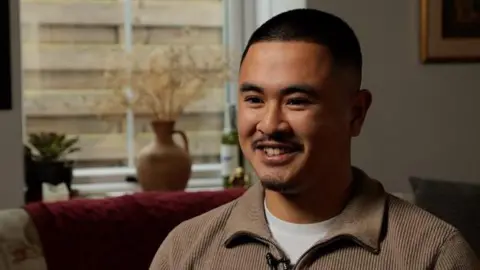
Ike Robin says meeting his birth mother helped solve the "missing piece of the puzzle" in his life.

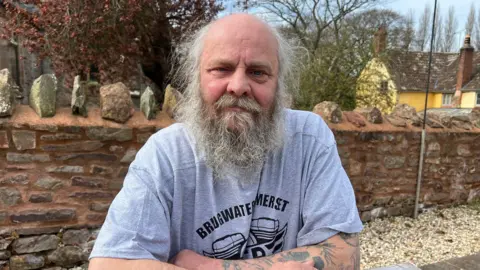
Gare MacQuarrie is backing calls from MPs for the UK government to apologise for forced addoption.

Thousands of unmarried English women were forced to give their babies away in the 1950s, 60s and 70s.

The children and families minister for England apologises to families who have received "support from services that isn't good enough".

A charity receives hundreds of enquiries in response to an appeal to find a home for three sisters.