foxnews Press
Trump envoy to Turkey doubles down after backlash, pushes ‘peace through strength’ policy
Images
1 / 20
2 / 20
3 / 20

4 / 20
5 / 20
6 / 20

7 / 20
8 / 20
9 / 20
10 / 20
11 / 20
12 / 20

13 / 20
14 / 20

15 / 20
16 / 20
17 / 20

18 / 20

19 / 20
20 / 20
U.S. envoy Tom Barrack met with Lebanon's president and said he was satisfied with Beirut's response to a proposal to disarm the Hezbollah terrorist group. (ASSOCIATED PRESS, LEBANESE PRESIDENCY HANDOUT.)

EXCLUSIVE: U.S. Ambassador Tom Barrack is pushing back after backlash over remarks seen as equating Israel with Hezbollah, insisting his comments reflect "realism" and not a change in U.S. policy.

Barrack appeared to equate America’s closest ally in the Middle East with a U.S.-designated terrorist organization, suggested Turkey should soon regain access to the F-35 program despite its purchase of Russia’s S-400 system, and argued that only "powerful leadership regimes" have succeeded in the region.

In exclusive written answers to Fox News Digital’s questions, Barrack rejected accusations that he was softening the administration’s stance toward Hezbollah or Iran, and argued that President Donald Trump’s "peace through strength" approach requires a more pragmatic reading of the Middle East.

WALTZ HAILS ‘NIGHT-AND-DAY’ MIDDLE EAST SHIFT AS TRUMP’S GAZA PLAN RESHAPES REGION

U.S. Ambassador Tom Barrack is pushing back after backlash over remarks seen as equating Israel with Hezbollah.  (Hussein Malla/AP)

Fox News Digital: During your remarks at the Antalya Diplomacy Forum Friday, you described the Israel–Hezbollah ceasefire as a "time out" and said that "everybody has been equally untrustworthy." How do you reconcile that characterization with the U.S. designation of Hezbollah as a terrorist organization?

Does your statement that the goal is "not killing Hezbollah" reflect any shift from the previous "maximum pressure" approach toward a strategy of containment or political inclusion?

U.S. Ambassador to Turkey and Special Envoy for Syria Tom Barrack: Let me be very clear about my remarks at the Antalya Diplomacy Forum on April 17.

When I described the Israel–Hezbollah ceasefire as a ‘time out’ and said that ‘everybody has been equally untrustworthy,’ I was simply stating the obvious reality on the ground. This is realism, not criticism of any side.

The November 2024 ceasefire and the recent April 2026 ceasefire have repeatedly proven fragile because all parties — Israel, Hezbollah and their backers — have tested the limits in the past. Historical patterns of violations, rearmament and proxy escalation confirm that mutual mistrust is the core challenge.

That mutual mistrust is exactly why this administration brokered the ceasefire in the first place: to stop the senseless killing, create breathing room and build a monitored, enforceable path forward that strengthens Lebanese sovereignty and Israeli security.

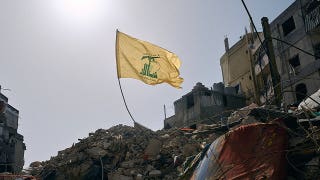
This characterization in no way softens our ironclad position: Hezbollah is a designated terrorist organization responsible for the deaths of Americans and countless acts of destabilization.

We have never trusted them. We acknowledge that within Lebanon itself, the Hezbollah political party is differentiated from Hezbollah the terrorist group, which holds parliamentary seats within the Lebanese government. Political trust in that regard will have to be earned.

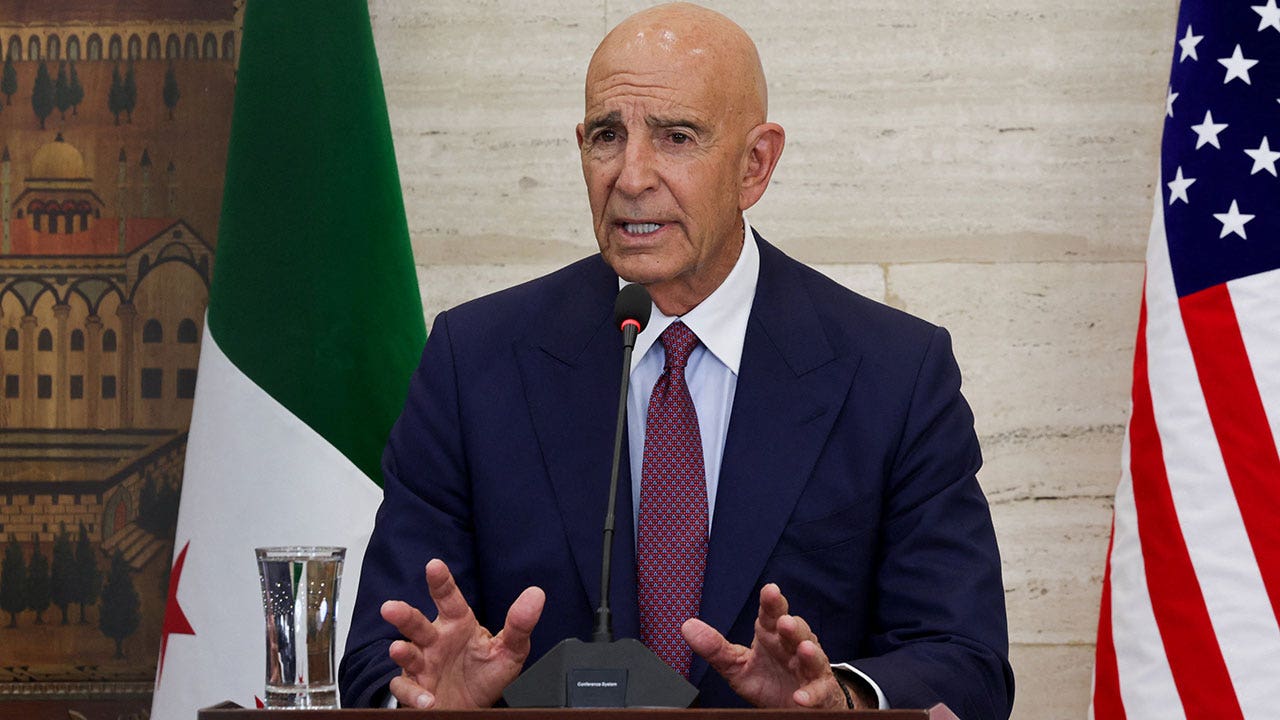
U.S. Special Envoy for Syria and Ambassador to Turkey Tom Barrack speaks during a session at Antalya Diplomacy Forum in Antalya, Turkey, April 17, 2026.  (Umit Bektas/Reuters)

My point was straightforward: durable peace requires confronting that mistrust head-on, not pretending it does not exist. This approach fully supports President Trump’s policy of maximum pressure on Iran and its proxies while delivering real results: positioning us to degrade Hezbollah’s terrorist capabilities through a combination of enforcement, Lebanese state authority and the renewal of an economy that can provide a new era of hope to Lebanese communities in both the north and south.

On the goal not being ‘killing Hezbollah,’ I stand by every word. After decades in the region, you cannot eliminate an embedded militia solely by kinetic means when a sovereign state like Iran continues to arm and fund it. Pure ‘mowing the lawn’ has never worked. To the contrary, it often fuels recruitment and prolongs conflict.

Our objective has always been to degrade Hezbollah’s terrorist infrastructure to the point where diplomacy and a sovereign Lebanese government can take over under Lebanon’s confessional system, reflecting Christian, Sunni and Shiite interests. This is not a shift toward containment or political inclusion of a terrorist group. It is the same ‘maximum pressure plus smart diplomacy’ playbook this administration has used successfully against ISIS and other threats.

We continue to back Israel’s right to defend itself decisively, as Secretary Rubio explicitly affirmed in the current ceasefire terms, while also pushing for an end to the idiocy of endless war. Stopping the bleeding first, then enforcing the win. That is exactly what President Trump and Secretary Rubio achieved with this ceasefire.

No policy changes whatsoever. Just clear, effective execution.

TRUMP’S GAMBLE IN NORMALIZING RELATIONS WITH SYRIA IN THE FACE OF IRAN: ‘HIGH-RISK, HIGH-REWARD’

Tom Barrack, U.S. ambassador to Turkey and special envoy to Syria, meets Lebanese President Joseph Aoun in Baabda, east of Beirut, on July 7, 2025. (Lebanese Presidency Press Office/AP)

Fox News Digital: You described the dispute over Turkey’s participation in the F-35 program as "insane" and suggested the Russian S-400 issue could be resolved within months.

What specific safeguards regarding possession and operability are under consideration to satisfy Section 1245 of the National Defense Authorization Act and address concerns that the Russian S-400 system could compromise sensitive F-35 technology? How do you respond to members of Congress who have threatened to oppose F-16 upgrades or any future F-35 transfer to Turkey until your comments regarding Hezbollah and Israel are clarified?

(For example, Sen. Rick Scott, R-Fla., who responded directly to Barrack’s April 2026 remarks by saying Turkey would not receive either F-35s or F-16s. Scott wrote that Turkey "funds Hamas and the Muslim Brotherhood, hates Israel, and loves Russia and Iran," adding: "Good luck buying F-35s, F-16s, and other American-made defense platforms.)

Barrack: Calling the prolonged impasse "insane" is blunt common sense. It highlights exactly why the administration is right to pursue a resolution: NATO unity against Russia and China is a core U.S. national security interest.

Turkey remains a vital ally, hosting critical U.S. assets, contributing to NATO missions and countering shared threats. Sanctions and exclusion from the F-35 program, triggered by the S-400 purchase, have strained ties unnecessarily while Russia benefits from the wedge.

The S-400 issue can and should be resolved within months through surgical diplomacy from Secretary Rubio, grounded in the strong personal relationship between President Trump and President Recep Tayyip Erdoğan.

Let me be explicit: any resolution will fully satisfy Section 1245 of the NDAA. That means verifiable cessation of possession and operability of the Russian S-400 system, with formal certifications from the secretaries of Defense and State confirming there is no risk of compromise to sensitive F-35 technology.

There will be no shortcuts on American security standards. What I am signaling is that real breakthroughs are imminent: restoring Turkey’s role in the F-35 ecosystem, strengthening NATO interoperability, boosting U.S. industry and denying Russia leverage.

This is classic Trump deal-making: enforce the law, protect our technology and rebuild alliances that advance American strength.

In every one of these statements, I am speaking directly in support of this administration’s foreign policy. We believe in peace through strength, candid assessment of realities and delivering results that protect U.S. interests without dragging America into endless conflicts.

These comments reflect that approach: maximum leverage against terrorists, pragmatic engagement with key partners like Turkey and a clear-eyed path to greater stability in a volatile region."

Another point of contention was Barrack’s repeated argument that strong centralized rule, rather than Western-style democracy, has been the most successful model in the Middle East. Reiterating comments he had made previously, Barrack said at the Antalya Diplomacy Forum on April 17: "The only thing that’s worked, the only thing, are these powerful leadership regimes: either benevolent monarchies, the kind of monarchical republic.

IRAN'S COLLAPSE OR SURVIVAL HINGES ON ONE CHOICE INSIDE THE REVOLUTIONARY GUARD

Turkey was removed from the American F-35 program in 2019 after purchasing Russia’s S-400 air defense system, which U.S. officials warned could allow Moscow to gather intelligence on the stealth fighter.

Under Section 1245 of the National Defense Authorization Act, Turkey cannot rejoin the program unless the president certifies to Congress that Ankara no longer possesses or operates the S-400 and that the system poses no risk to the F-35.

Syrian President Ahmed Sharaa met with U.S. Special Envoy for Syria Thomas Barrack at the People’s Palace in Damascus on Jan. 18, 2026. (Syrian Presidency/Handout/Anadolu)

Fox News Digital: You said that "powerful leadership regimes" are the only structures that have worked in the Middle East.

Does that statement reflect a broader shift away from longstanding U.S. support for democratic governance and human rights in the region?

Barrack: When I said that ‘powerful leadership regimes,’ whether benevolent monarchies or the kind of monarchical republics seen elsewhere in the region, are the only structures that have actually worked in the Middle East, I was speaking from decades of hard-earned observation, not ideology.

Look at the track record. Countries that tried to adopt Western-style democracy quickly after the Arab Spring largely failed, often descending into chaos, civil war or new forms of authoritarianism.

Meanwhile, stable, results-oriented leadership in places like the Gulf monarchies has delivered security, economic growth, modernization and real improvements in people’s lives.

Israel, which one can rightly point to as a vibrant democracy in the region, stands as a notable outlier that has thrived under extremely strong, bold leadership capable of delivering security and prosperity under extraordinary challenges, even as some critics describe it as a "flawed democracy."

Turkey, operating as a presidential republic with regular multiparty elections, also demonstrates how strong, centralized leadership under President Recep Tayyip Erdoğan has delivered stability, economic dynamism and assertive regional influence, though critics have described it as a hybrid regime with strong authoritarian tendencies.

This is not a change in U.S. policy away from supporting democratic governance and human rights. It is a realistic assessment of what produces stability so that human rights and prosperity can take root.

CLICK HERE TO DOWNLOAD THE FOX NEWS APP

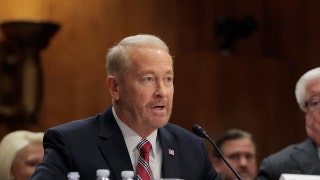
Warren Stephens, Tom Barrack, and Tilman Fertitta sit for their confirmation hearings. (Getty Images)

President Trump’s approach has always been peace through strength: deal with the world as it is, not as we wish it to be. We support effective governance that prevents chaos, counters terrorism and creates conditions for long-term progress.

That includes backing strong, accountable leaders who deliver for their people, whether in monarchies that have modernized successfully or in evolving systems that prioritize security and opportunity over imported models that have repeatedly collapsed.

Efrat Lachter is a foreign correspondent for Fox News Digital covering international affairs and the United Nations. Follow her on X @efratlachter. Stories can be sent to efrat.lachter@fox.com.

Fox News' Antisemitism Exposed" newsletter brings you stories on the rising anti-Jewish prejudice across the U.S. and the world."

By entering your email and clicking the Subscribe button, you agree to the Fox News Privacy Policy and Terms of Use, and
        agree to receive content and promotional communications from Fox News. You understand that you can
        opt-out at any time.

Subscribed

You've successfully subscribed to this newsletter!