huffpost Press
Florida’s Constitution Bans The Sort Of Map-Rigging Republicans Want To Do There
Images
1 / 4

2 / 4
3 / 4

4 / 4
WASHINGTON – Bloodied by the mid-decade redistricting brawl started by President Donald Trump, Republicans are now urging their Florida colleagues to jump into the fray this week, even though their every public utterance makes a legal challenge to a new map there more likely to succeed.

Unlike most states, Florida’s constitution explicitly prohibits exactly the sort of partisan gerrymandering Trump demanded of GOP states last year as a way to maintain control of the House in the coming midterm elections.

“This should not be happening at all. It is fully illegal,” said Amy Keith, state director of Common Cause Florida, one of the groups that got the “Fair Districts Amendments” added to the state constitution 16 years ago. “We are wasting time, money and effort on something that’s illegal that people don’t want.”

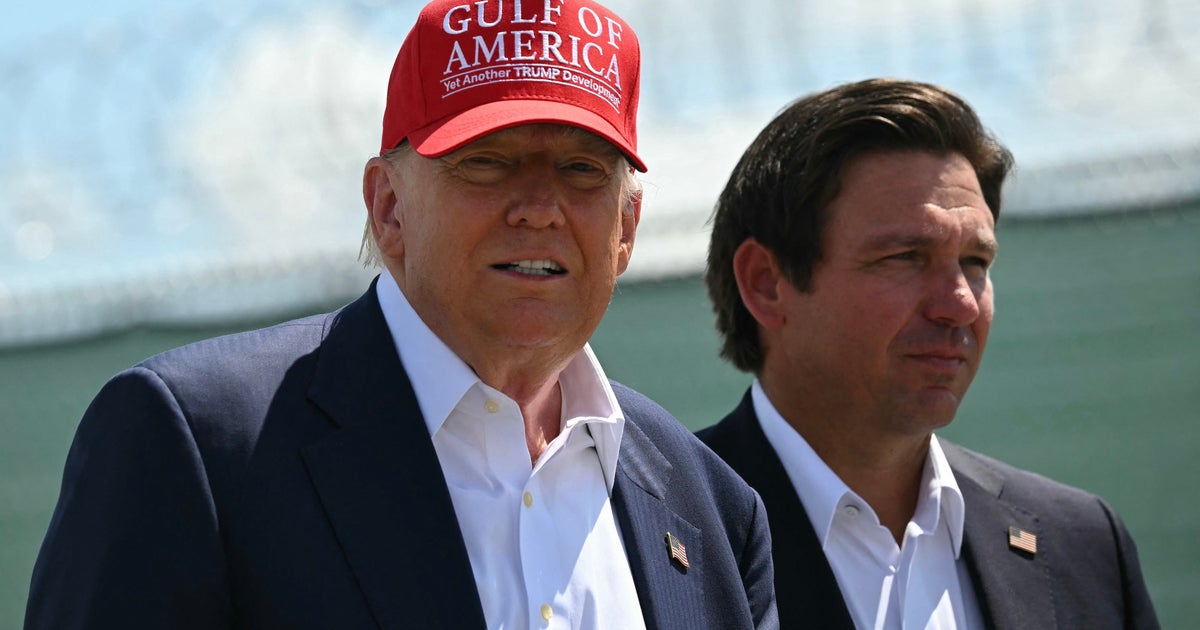
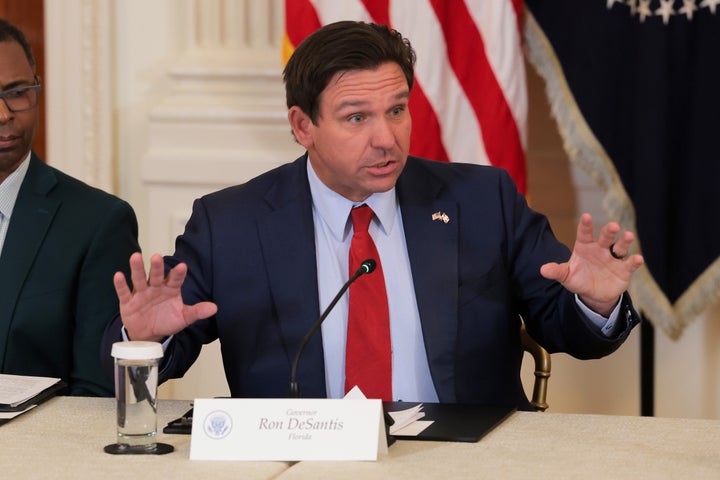
Gov. Ron DeSantis, clearly aware of the legal problems of drawing a map to benefit Republicans, has instead been offering various other rationales, including the mystifying claim that a new map was now necessary because Florida had been undercounted in the 2020 Census.

“He talks about the bad Census in 2020 as some justification,” said a top Florida Republican who spoke on condition of anonymity. “It is just him blathering.”

DeSantis’s office did not respond to a HuffPost query for this story.

“They know they can’t do what the president is asking, so what they’re doing is coming up with different reasons to cover their butts,” Keith said.

Trump’s allies nationally, meanwhile, have continued acting like the constitutional prohibition doesn’t exist and have created a solid record of partisan intent by urging DeSantis to step up following last week’s loss of four GOP seats in Virginia in a new voter-approved map.

House Speaker Mike Johnson told reporters Wednesday: “Florida has the right, and they’ve expressed the interest of doing it there, and I think that should happen.”

“Florida Can Still Give Republicans the WIN [sic] in by Adding +5 Seats,” Benny Johnson, a podcaster popular among Trump followers, wrote on social media after the Virginia vote. “Republicans in Florida need to go hard and have the courage to secure all 5 of those seats. Or more…”

Why Trump supporters have decided that DeSantis and state Republican leaders can squeeze five additional GOP seats out of an already aggressively gerrymandered congressional map favoring Republicans 20-8 is unclear. A Democratic-leaning political climate and recent Democratic wins in Florida special elections have Republicans worried that the party could end up losing seats under the existing map, let alone one that further dilutes GOP margins.

“Five seats is all a Ron wet dream,” the top Republican said.

A pro-Trump Republican consultant, who also spoke on condition of anonymity, said five seats are probably a stretch.

“I think you can legally squeak out two to three seats,” he said. “There’s not a lot of wiggle room here.”

Yet whether Republicans draw a map designed to win them five more seats or one, they are virtually guaranteed to end up in court just weeks before Florida’s qualifying deadline for federal candidates.

“They’re disregarding the constitution with impunity,” said Dan Gelber, a former Democratic state lawmaker and a lawyer on the team that successfully sued the state a decade ago on the same issue.

Marc Elias, a Democratic elections lawyer who was also on that legal team, said he would file suit again if the legislature pushes through a new map that adds Republican seats.

“Ron DeSantis, you pass an illegal map, you’re going to get sued, and you’re going to get sued fast. And yes, we are going to get relief for 2026,” he told MS Now on Thursday.

Back in 2010, opponents of gerrymandering in Florida put proposals on that November’s ballot to ban the drawing of congressional or state legislative districts to protect incumbents or benefit specific political parties. They both won handily, with the amendment on congressional districts getting 3,153,199 votes in favor versus 1,857,748 opposed.

Two years later, though, the Republican-led legislature and then GOP Gov. Rick Scott approved a map for a state that would soon vote to re-elect Democrat Barack Obama with 17 Republican seats and 10 Democratic ones. The groups that had sponsored the Fair Districts Amendments sued and, three years later, won in the Florida Supreme Court.

In a 5-2 opinion, the court found “unconstitutional intent to favor the Republican Party and incumbents.” And, using testimony collected by the trial court, it detailed how GOP officials and operatives had worked to produce a map that benefited them in clear contravention of the constitutional amendment.

As a remedy, the court implemented a map drawn by the amendment proponents, which in the 2016 election produced 16 Republicans and 11 Democrats but which two years later, in the Democratic wave midterm election of Trump’s first term, gave the state’s delegation 14 Republicans and 13 Democrats.

That legal history prompted Republican state Senate President Ben Albritton to remind legislators earlier this month to, essentially, keep their mouths shut about why they are suddenly drawing new maps.

“Sitting legislators may be compelled to produce records or be subject to questioning under oath about conversations with colleagues, with legislative staff, or with outside parties who may attempt to persuade the legislature to pass maps that favor or disfavor a political party or incumbent,” he wrote in an April 15 memo.

This silence appears to be a key part of DeSantis’ strategy, according to an Axios report on Friday which suggested the governor hopes to stonewall legal action before the November midterms by keeping legislative discussion of the maps to a minimum and asserting executive privilege to avoid having to testify or turn over documents himself.

Whether this strategy will work is unclear, given that the Florida Supreme Court did not permit state lawmakers to claim legislative privilege to avoid discovery in the 2012 lawsuit.

The clear-cut language of the Fair Districts Amendments notwithstanding, some Republicans believe that the Florida Supreme Court, the majority of whom were appointed by DeSantis during his seven years in office, will not reverse a map passed by a GOP legislature and signed into law by DeSantis.

As evidence, they point to the existing map which has 20 Republicans and only eight Democrats after a harsh gerrymander by DeSantis in 2022. That map began with the state legislature drawing a plan following a one-seat pickup from the 2020 Census that likely would have produced 16 Republican seats and 12 Democratic ones.

DeSantis threatened to veto it, and to accommodate him, GOP legislative leaders passed an 18-10 map. DeSantis vetoed it anyway and then proceeded to draw his own map that gave Republicans a 20-8 edge. That four-seat advantage compared to what lawmakers originally produced afforded DeSantis hero status within the GOP when it helped Republicans narrowly win back the House that November.

Proponents of an even more extreme gerrymander now argue that because the DeSantis 2022 map was not struck down, it showed that Florida’s high court will let him draw one that gives Republicans still more seats.

That view, though, may be misconstruing what the Florida Supreme Court did and did not consider in its 2025 ruling on the 2022 challenge. That case centered on a Black-majority district held by former congressman Al Lawson that the DeSantis map eliminated. The plaintiffs’ lawyers decided to focus on the portion of the constitutional amendment that prohibited the weakening of districts drawn for racial minorities and largely ignored the prohibition against drawing a partisan map.

The justices ruled that the constitutional language pertaining to racially drawn districts violated the U.S. Constitution under recent federal court rulings and let DeSantis’ map stand. It did not address the partisan nature of the new map because the plaintiff’s lawyers had not made it an issue in their challenge.

“We were fucking shocked,” said one Democratic lawyer familiar with, but who had not supported, the strategy in the 2022 challenge.

Traditionally, absent court rulings that require a new map, there is zero talk or discussion about redistricting in years that do not end in a “2,” when states draw new legislative and congressional districts based on the nation’s decennial Census.

Trump, a convicted felon, has demonstrated little regard for laws and even less for mere norms and traditions. Faced with the increasing possibility that Republicans would lose control of the House in the midterms and, in so doing, expose him to congressional investigations and even impeachment, Trump last year began demanding that Republican governors and state lawmakers redraw district lines to increase the party’s numbers in the House.

“Texas will be the biggest one. And that’ll be five,” he said last July. “A very simple redrawing. We pick up five seats. But we have a couple of other states where we’ll pick up seats also.”

Things, though, did not go as planned, with Democrats fighting back in California and Virginia and GOP efforts flaming out elsewhere. Democrats now appear to have a slight edge in the redistricting wars ― unless Republicans in Florida bail out Trump.

Yet with just days before the special session begins, it is uncertain whether the Florida legislature will pass anything at all.

Republicans in Florida’s congressional delegation have privately and, in some cases, publicly opposed the push to redraw districts now. The state legislature itself is doing little to move things along, with Senate President Allbritton informing his members that he does not expect to see a map until Tuesday, the first day of DeSantis’ special session.

Rick Wilson, a longtime Republican consultant in the state and a leading figure in the Never-Trump Republican movement, said Florida lawmakers have little interest in dealing with the issue, especially with Trump polling so poorly less than seven months from the elections.

“There’s a chill in the air now,” he said. “It is striking everyone as very bad mojo.”

By entering your email and clicking Sign Up, you're agreeing to let us send you customized marketing messages about us and our advertising partners. You are also agreeing to our Terms of Service and Privacy Policy.