Press
UK weather: Extreme heat warning extended to four days as 38C heatwave approaches
Images
1 / 17
2 / 17
3 / 17

4 / 17
5 / 17
6 / 17

7 / 17
8 / 17

9 / 17
10 / 17

11 / 17
12 / 17

13 / 17

14 / 17

15 / 17

16 / 17
17 / 17
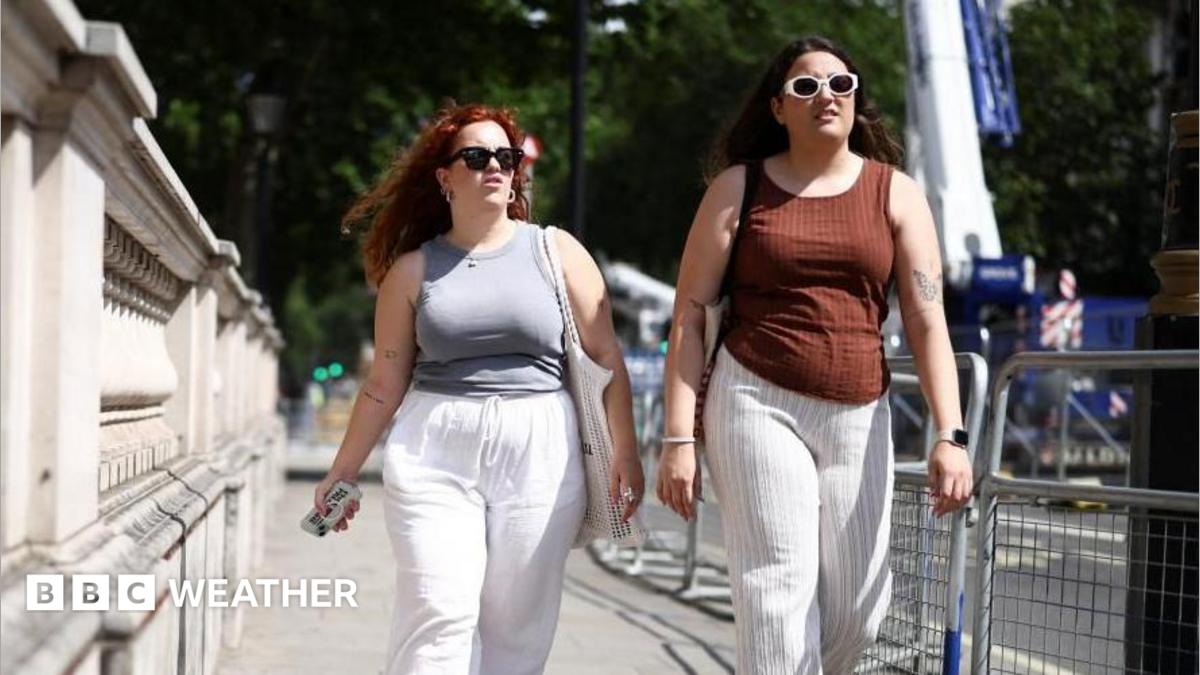
An amber weather warning for extreme heat has been extended by the Met Office, with forecasts suggesting temperatures could reach 38C (100F) in parts of England later next week.

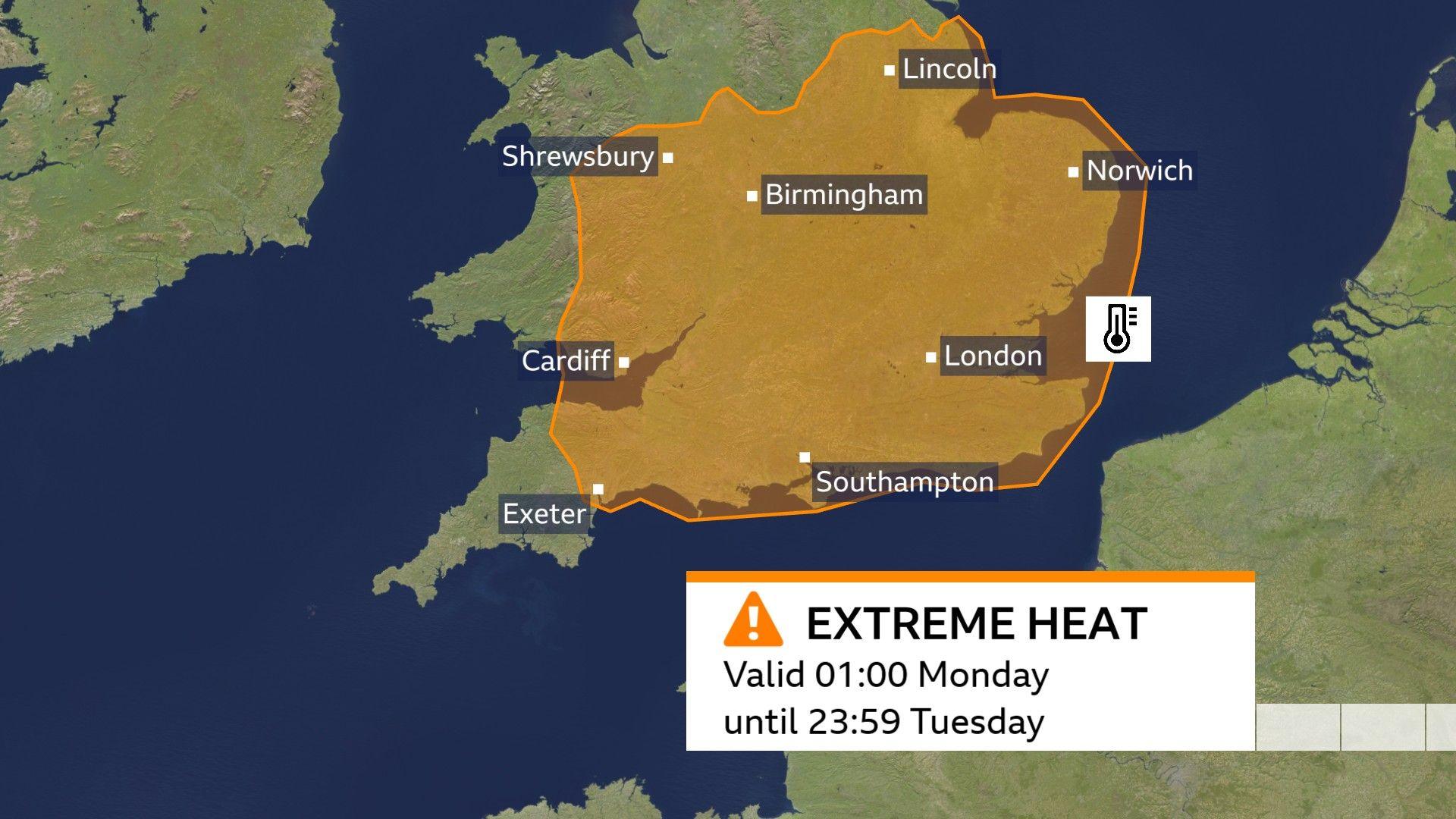
An updated warning will now be in force from 01:00 BST on Monday through to 23:59 BST on Thursday, reflecting growing confidence that exceptionally hot and humid conditions will continue through the middle of the week.

Large swathes of England and Wales are covered, though more northerly areas are only under the warning on Wednesday and Thursday.

The warning means population-wide impacts are likely, including serious health risks, disruption to daily routines and increased pressure on infrastructure.

Daytime temperatures are expected to exceed 30C (86F) widely across the warning area, with the hottest locations potentially reaching around 38C (100F).

Overnight temperatures are also forecast to remain unusually high, with some urban areas struggling to fall below 20 or 21C (68-70F), resulting in so-called tropical nights.

The heat is spreading from continental Europe where an extremely intense hot spell has developed.

Temperatures in parts of western France could climb to 43 or 44C (109-111F) over the next few days.

Paris is likely to reach 40C (104F) which would be unprecedented for June.

For a hot spell to officially become a heatwave, temperatures must exceed a threshold - which varies from 25-28C (77-82F) in different parts of the country - for three consecutive days.

An amber warning for Monday and Tuesday, external will come into force early Monday across parts of England and Wales, where temperatures are expected to reach the low to mid-30C.

It will then extend across further parts of England and Wales on Wednesday and Thursday, moving north to cover Manchester and north Wales, and further west towards Plymouth.

This is only the sixth amber extreme heat warning the Met Office has issued since they were introduced in 2021

By Tuesday, temperatures in the mid-30Cs are expected to become more widespread, with some locations remaining above 20C overnight.

You can check the forecast temperatures for your area on the BBC Weather website and app.

High UV and pollen levels are anticipated in many places.

Staying safe in water when the weather's hot

Hay fever: Did you know your pets can suffer too?

How to get a good night's sleep during hot weather

The Met Office says adverse health effects are likely to be experienced not only by vulnerable groups but across the wider population.

Substantial changes to working practices and daily routines may be required, while heat-sensitive systems and equipment could be affected.

There are also concerns about increased demand on transport and energy networks, alongside a heightened risk of water safety incidents as more people head to beaches, rivers and lakes to cool off.

The UK Health Security Agency has also issued heat-health alerts across parts of England.

Very hot conditions are expected to continue until at least Thursday across much of England and Wales.

Temperatures above 30C could persist for several consecutive days, while overnight temperatures remain exceptionally high in some locations.

The Met Office says cooler conditions may begin to edge in from the west late next week, although confidence in the timing and extent of any breakdown remains low.

As with previous heatwaves, scientists say rising global temperatures caused by human-induced climate change are making extreme heat events more frequent and more intense in the UK.

How has the hot weather affected you? Tell us how you've been managing the heat.

High and very high levels of pollen are expected widely across the UK, external over the next week.

Wales, the Midlands and southern England are forecast to have very high grass and weed pollen in the coming days, while north-east England and Northern Ireland can expect generally high levels.

Scotland will continue to see generally lower levels over the coming days.

The Met Office says it "has no data to support the claim that pollen is 'worse' this year", adding pollen levels are affected by the timing of weather patterns and the types of pollen in season.

What is the summer solstice and why is it the longest day of the year?

Weather for the week ahead