Press
Dozens of ships head through Strait of Hormuz after US-Iran deal
Images
1 / 20
2 / 20
3 / 20
4 / 20

5 / 20

6 / 20

7 / 20

8 / 20

9 / 20

10 / 20

11 / 20

12 / 20

13 / 20

14 / 20

15 / 20

16 / 20

17 / 20

18 / 20

19 / 20

20 / 20
At least 172 vessels have crossed through the Strait of Hormuz since the US and Iran signed a deal aimed at ending the war, including 42 ships on Saturday alone, according to new data from maritime intelligence firm Kpler.

The number of vessels making the transit from 18 June, the day after the deal was signed, is still well below the pre-conflict average of some 138 crossings each day.

Ship-tracking data analysed by BBC Verify shows more than 200 tankers appear to be waiting inside the strait on Tuesday, with at least 10 ships moving west into the Gulf so far.

The price of a barrel of Brent crude, the global oil benchmark, has dropped to its lowest level since the war began.

Many of the tankers that have transited the strait in recent days have been linked with Iran following the lifting of the US naval blockade as part of the deal.

At least 30 tankers have departed from the Gulf laden with Iranian oil and petrochemicals since the deal was agreed, according to Jemima Shelley, a senior research analyst at the United Against Nuclear Iran campaign and monitoring group.

The US Treasury has also eased decades-old sanctions by issuing a license to allow the sale of Iranian crude oil, petrochemicals and other oil products until 21 August.

On Monday at least five tankers previously sanctioned by the US for links with Iran moved through the strait, ship tracking data shows, carrying up to four million barrels of oil.

"That said, there has been an increase in 'normal' trade too," said Martin Kelly of crisis management firm EOS Risk Group.

Four liquefied natural gas tankers were seen on ship-tracking platforms heading through the strait to Qatar's Ras Laffan port on Monday and at least three tankers and three cargo vessels sailed out of the Gulf on Tuesday.

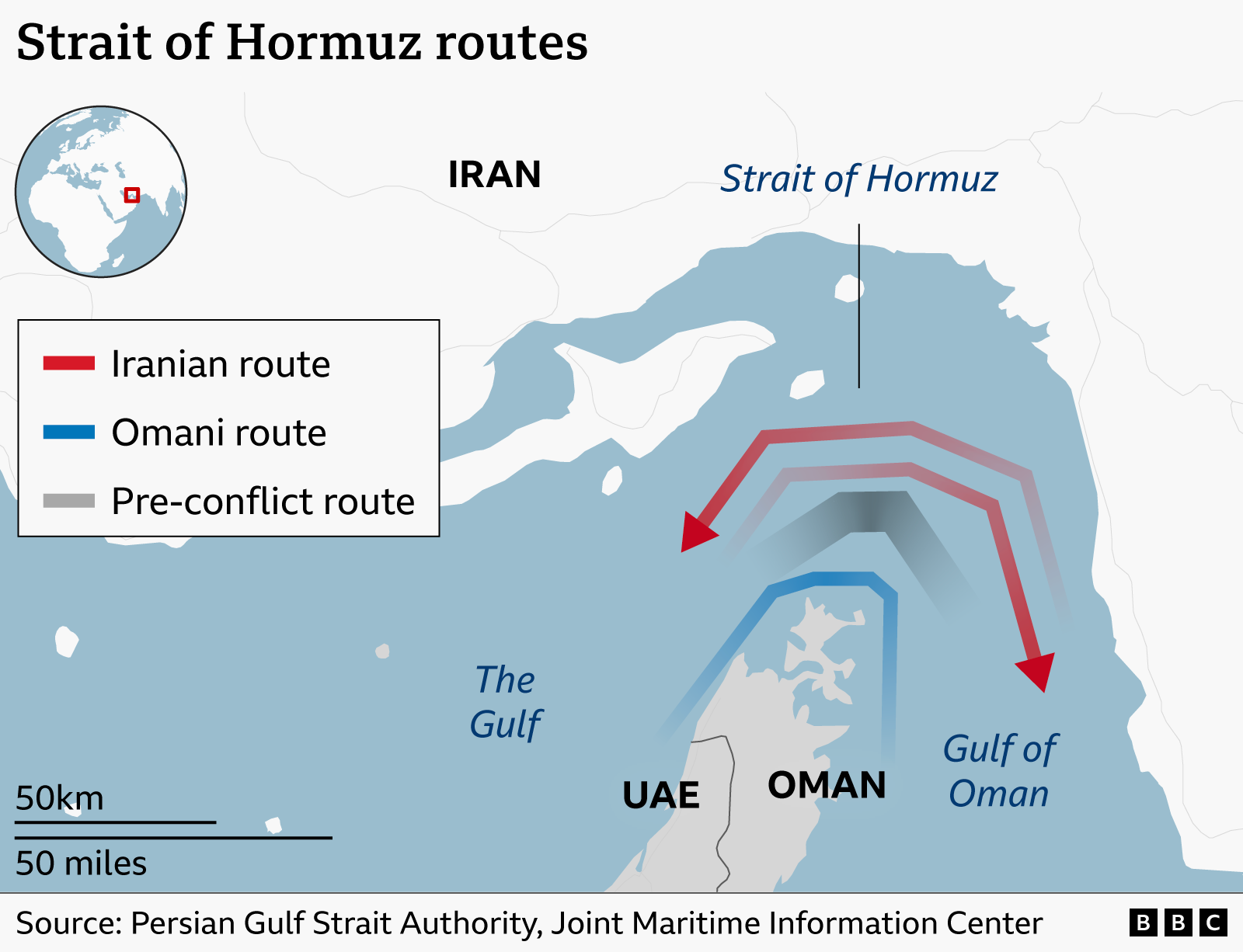
All of these transits were made along the Iranian-approved northern route through Iranian waters, rather than the US-recommended southern route close to the coast of Oman.

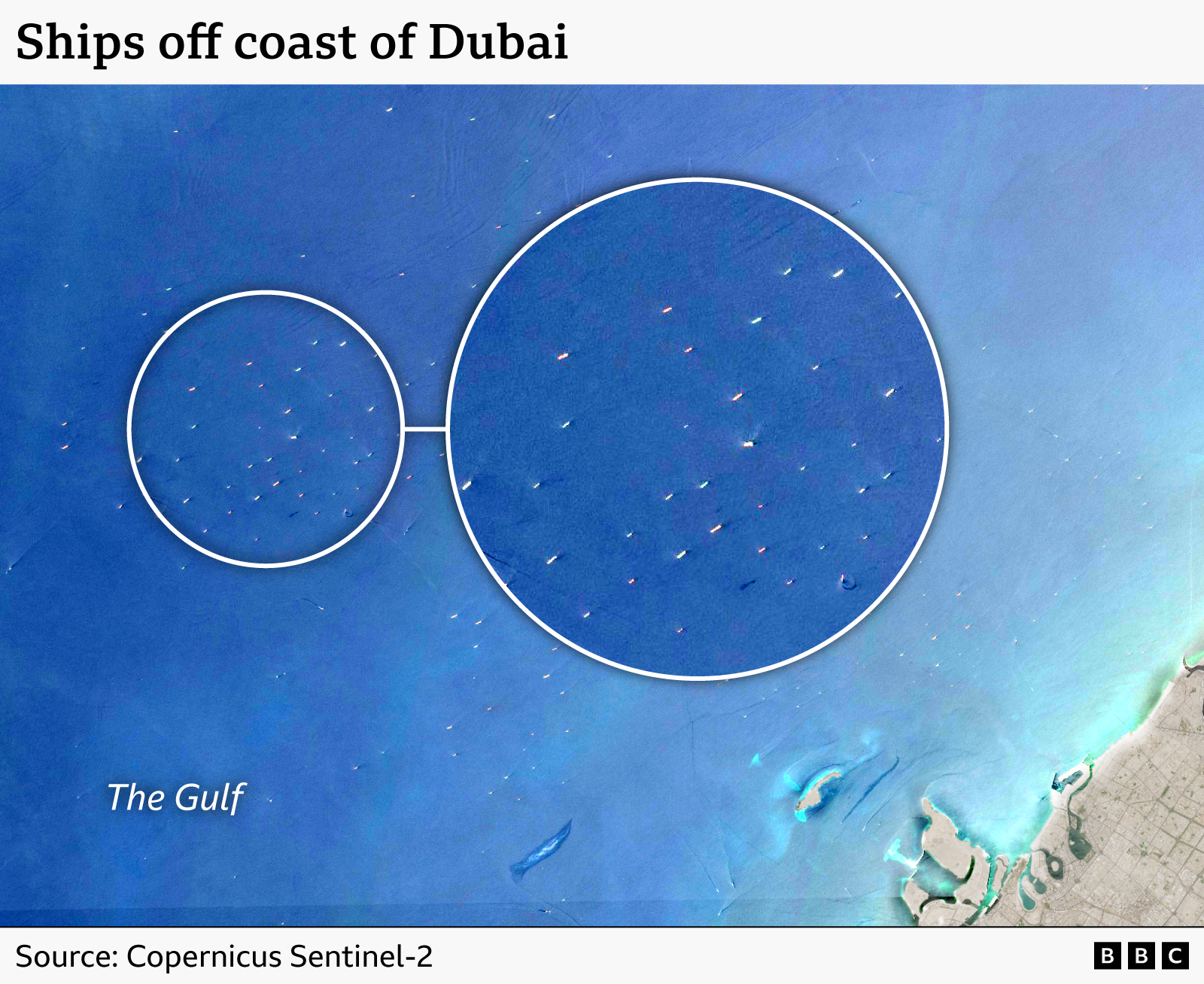
And, according to ship-tracking data, more than 250 tankers and 440 cargo ships are still inside the Gulf, based on their last reported positions. More than 80% of the tankers are stationary or at anchor and about one in six appears to be carrying cargo.

Despite the US and its Gulf allies repeatedly rejecting Iranian attempts to exert control over the strait during the conflict, the deal signed last week committed Iran to using its "best efforts for the safe passage of commercial vessels with no charge for 60 days".

The agreement also said Iran will work with Oman to "define the future administration and maritime services" of the strait.

Iran's Persian Gulf Strait Authority (PGSA) published its terms for transiting the strait on Friday. "No vessel is permitted to pass through the Strait of Hormuz without a valid passage permit issued by the PGSA," the authority said.

The PGSA has been sanctioned by the US and Kelly said this may be holding some ship owners back from requesting Iranian permits.

There have also been conflicting messages from Iranian officials about the status of the strait.

Iran's Islamic Revolutionary Guard Corps (IRGC) said on Saturday the strait had been closed in response to Israeli strikes on Lebanon, but some traffic continued to flow.

Then on Tuesday Tehran's ambassador to the UN in Geneva reportedly said the strait was open while a military source told an Iranian news agency the number of daily transits would be capped.

Concerns about sea mines in the internationally recognised shipping lanes through the middle of the strait have also played a part in holding ship traffic back from its pre-war levels.

The Joint Maritime Information Center (JMIC), a multinational maritime group which includes the US, has warned ships to avoid this central part of the strait "due to the existence of mines".

So far, the JMIC has issued warnings and co-ordinates for two mines and said "active mine clearance operations are ongoing".

The JMIC has recommended vessels take a narrower southern route through the strait, closer to the coast of Oman, which it says "has been confirmed clear of mines".

"We saw tankers passing along the southern corridor at the end of last week and then when Iran declared the strait closed again on Saturday 20 June the transits stalled," said Shelley.

"There has been some resumption of tankers passing today but still only a trickle," she added.

At least four tankers appeared to be transiting the strait through the southern route on Tuesday, ship-tracking data showed, including a Norway-flagged ship sailing to Singapore and a Liberia-flagged vessel heading to Taiwan.

Additional reporting by Ghoncheh Habibiazad, BBC Persian