huffpost Press
Experts Say Trump's Attack On Kindergarteners' Attire Sends A Chilling Message
Images
1 / 11

2 / 11
3 / 11
4 / 11
5 / 11
6 / 11
7 / 11

8 / 11
9 / 11
10 / 11

11 / 11
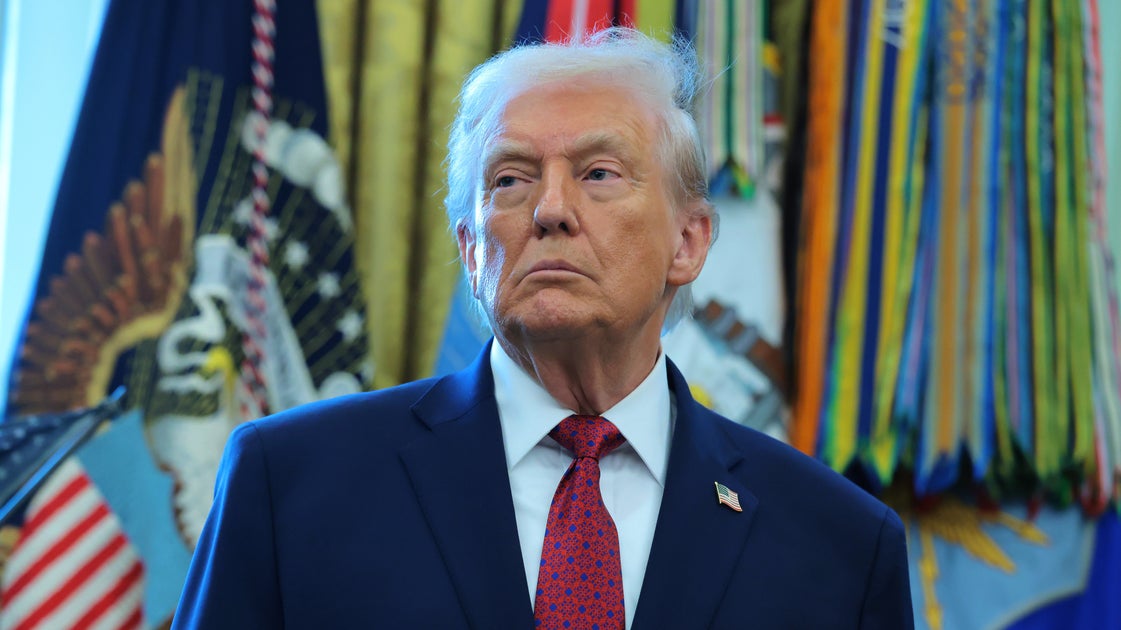
President Donald Trump is a prolific poster on Truth Social. His feed moves fast, with reposts of AI images depicting him as a muscular action hero and insults aimed at world leaders and Democratic lawmakers quickly piling up.

But one post from Monday deserves far more attention than it received. This time, the target wasn’t a political opponent. It was a group of children.

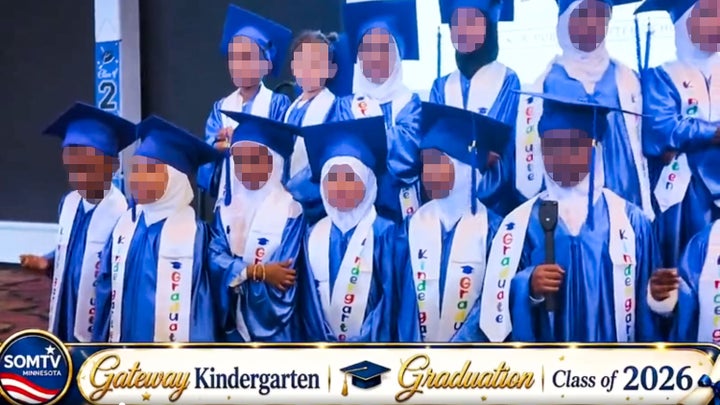
Trump reposted a video to Truth Social showing a group of kindergarteners at Gateway STEM Academy, a majority-Black K-8 charter school in Minnesota, smiling onstage in caps and gowns as they sang during their graduation ceremony. Beneath their blue graduation caps, many of the girls were wearing hijabs.

The clip was originally shared on X in June by the right-wing account End Wokeness, with the caption, “Public school in St. Paul, Minnesota. Every girl is in a hijab ... in kindergarten.” Trump didn’t add any additional comment on his repost, letting End Wokeness’ disbelief speak for itself.

Muslim Americans have long been a frequent target for Trump, whether he’s equating them with terrorists in tweets, attacking Minnesota Rep. Ilhan Omar (D) for her faith, or calling Somali immigrants “garbage” during a televised Cabinet meeting.

But criticizing children for their religious beliefs (and posting videos where their faces are clearly visible) is setting a dangerous precedent, said Gernaro Waheed, the executive director of the Muslim Anti-Racism Collaborative.

“Minnesota’s Somali community has been a target of this administration for years, so this feels like an escalation, not an aberration. Our children aren’t safe when elected officials target them,” Waheed told HuffPost.

“Attacking children for how they dress in their own faith is an attack on their humanity and their right to simply exist as who they are,” Waheed continued.

Trump is “showing his Islamophobic true colors yet again,” said Arsalan Iftikhar, a former Georgetown University senior fellow and author of “Fear of a Muslim Planet.”

“This time, he’s using images of young black Muslim girls with headscarves to rile up his anti-immigrant base in the most un-American way,” he told HuffPost.

Minnesota Gov. Tim Walz spelled out what Trump was doing on social media in simple terms on Monday.

“The President of the United States is attacking a group of kindergartners because of the clothes they wore to school,” Walz said on his own social media pages.

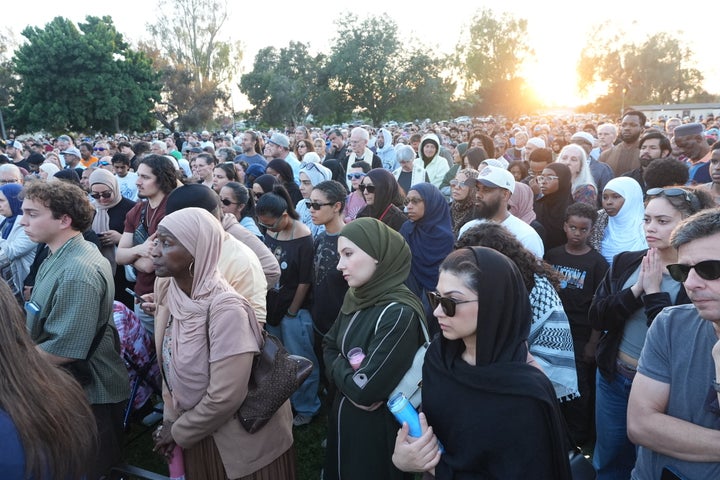
The repost came at a time when Muslim children are likely already feeling uneasy in their schools and community. Just two months ago, two white supremacist teens attacked a mosque and private school full of Muslim children in San Diego. (Three adults were killed: A security guard, a teacher’s husband and an elder of the mosque.)

Posts like this “embolden white nationalists to commit hate crimes as they see themselves as patriots and vigilantes,” Waheed said.

Even scholars who study Trump’s rhetoric were taken aback by this post.

“Reposts of this variety would have been unthinkable for presidents of both parties in past years,” said Robert C. Rowland, a professor of communication at the University of Kansas and the author of “The Rhetoric of Donald Trump: Nationalist Populism and American Democracy.”

“His message is strikingly different from the message that President George W. Bush sent after 9/11, which made it clear that Islamic Americans were citizens just like everyone else,” Rowland told HuffPost.

Without saying it outright, the message Trump and End Wokeness are sending is that kids like the ones in the video — young Muslim girls wearing hijabs — are not part of the American identity, Rowland said.

That message is in keeping with his policies. During Trump’s first term, he signed an executive order that banned people from seven Muslim-majority countries from entering the U.S. for 90 days.

Rowland thinks the End Wokeness repost appeals to those in his audience who equate American identity with being white, as well as those who embrace Christian nationalism, the idea that the U.S. was founded as a Christian nation and that our government should enforce laws based on conservative Christian values.

While the post suggests Islam has no place in America’s schools, the same standard has not been applied to Christianity. During Trump’s presidency, we’ve seen a number of state-level efforts to bring Christianity more directly into public education, including measures requiring the Ten Commandments to be displayed in public school classrooms.

Just last week, passages from the Bible became required reading for the roughly 5.5 million public school students in Texas, a move that critics say raises serious constitutional questions under the First Amendment, which prohibits government establishment of religion.

Waheed believes that Trump sharing the post without comment is strategic. By retweeting End Wokeness’ video without additional commentary, he’s able to keep just enough distance to claim plausible deniability or ignorance if he was pressed on the message of the post.

“But Trump is not a bystander. He holds the highest elected office in a multifaith, pluralistic country,” Waheed said. “Amplifying the post is an endorsement.”

“The president is giving permission when he reshares content from an account built on this kind of hateful rhetoric,” he said. “This is not just words, though. We see this clearly in the San Diego manifesto.” (In the shooters’ manifesto, they describe Muslims as “invaders” and heavily reference the “Great Replacement,” a white supremacist conspiracy theory that mass immigration is engineered to replace white people. Vice President JD Vance and Trump ally Elon Musk have spread the theory.)

Trump’s commentless repost earlier this week is part of an established pattern for him on social media: By resharing without commentary, experts noted he can endorse the rhetoric of another account and later deny or downplay his own beliefs. In February, the White House initially defended an AI video that Trump reposted depicting Barack and Michelle Obama as apes; it was “from an internet meme video,” they claimed, and he hadn’t watched the full clip before sharing. Later, they deleted the clip and blamed a staffer for “erroneously” posting it.

The White House has yet to address the post, but a similar backpedaling could happen with the Muslim kindergarten post.

“Trump can claim that the End Wokeness didn’t add something like, ‘and look how awful this is,’” said Ian Reifowitz, a professor of historical studies at SUNY Empire State College, and the author of “Riling up the Base: Examining Trump’s Use of Stereotypes Through An Interdisciplinary Lens.”

“He could say they just put up the video and people can draw their own conclusions,” Reifowitz told HuffPost.

But the lack of additional commentary muddies the narrative, while the real, underlying message of fear spreads as intended, the professor said.

Trump’s actual words about Somali immigrants are no less divisive than the End Wokeness post.

“They contribute nothing. I don’t want them in our country,” Trump told reporters near the end of a lengthy Cabinet meeting last December, adding, “I’ll be honest with you ... Somebody will say, ‘Oh, that’s not politically correct.’ I don’t care. I don’t want them in our country.”

Given Trump’s long history of making hateful comments about Islam in general, and Somali immigrants in Minnesota in particular, “perhaps this post shouldn’t come as a surprise,” Reifowitz said. “It tracks with Donald Trump’s rhetoric on Islam.”

By entering your email and clicking Sign Up, you're agreeing to let us send you customized marketing messages about us and our advertising partners. You are also agreeing to our Terms of Service and Privacy Policy.