buzzfeed Press
"They Cannot Do Basic Math": 41 Teachers On Just How Scary It Is Teaching Gen Alpha
Images
1 / 13
2 / 13

3 / 13
4 / 13
5 / 13
6 / 13
7 / 13
8 / 13

9 / 13
10 / 13
11 / 13
12 / 13
13 / 13
“I am routinely asked questions like, ‘What’s eight times zero?’ Or, ‘how many sides does a triangle have?’ These are eighth graders.”

I'm a Senior Staff Writer based in New York City, where I've been covering classic BuzzFeed-style content since 2020.

"I'm back in college as a 41-year-old, and I'm doing a summer literature course right now. We have weekly discussion boards, and last week the average grade was 2.6/10 because 90% of the class didn't read the directions. We had to pick a specific prompt to respond to, and most just wrote about the lecture generally. The prompt involved quoting a passage from the weekly readings and writing 100-150 words about it; the class is not difficult at all. Not being able to follow basic instructions has been a consistent problem with my younger classmates. These are Gen Z kids. I imagine the problem is much worse with Gen Alpha."

"They'll pitch me 'compromises': they'd agree to do one small part of an assignment but expect full credit, or they'd tell me they were taking a break to game for 10 minutes but would 'get back to me' after. I remember one pair of girls who regularly sat for 40 goddamn minutes doing absolutely nothing, just waiting to see if I'd 'make an offer' to get them moving. When I did speak to them, it was to complain and make demands: sometimes they didn't like the questions I asked on the paper and wanted new ones, or maybe they timed me speaking for seven minutes when I said I would only take five, and now I owe them that time back.

When I gave a detention, instead of just getting mad or trying to weasel out of it, they'd pull out an encyclopedic 'memory' of the school handbook, looking for any loophole to justify why the rules didn't apply to them. There was a lot of tit for tat — trying to find the angle to get them to do what I wanted, while making them feel like I was giving them a special deal. I was flexing my brain every single day, having to think like a lawyer while still teaching these kids and acting like their babysitter. They were still way academically lower than they should be, and their behavior was atrocious on top of it. My colleagues are seeing the exact same thing.

The other issue that has come along is now also having to deal with guidance, administration, special ed, and the families holding water for these kids, playing defense over the kind of shit that was never ever a consideration before they came along. I've never gotten so many emails or phone calls asking me to change grades, modify assignments, or take back consequences. This is not what I signed up for. And I do wonder what exactly went on in these kids' lives before they got to high school that produced this attitude of everything getting to be debatable or flexible for them."

"What it looks like concretely: students who can produce a polished essay overnight but can't summarize it aloud the next morning. The polish is up, the ownership is down. And the fix every teacher I know is converging on is the same: make the live, unassisted moment the thing that counts, because it's the only thing left that can't be outsourced."

"I asked them how they decide who an expert is, and not one of them said because of credentials or a PhD. That may not seem egregious, but they had been dismissing some of the textbook authors' 50+ year-long niche careers, countless foundational research contributions, and scientific innovations, while in a university-level science course.

They framed everything as left vs. right politically, and while it's great they're looking to be politically engaged, this particular area of study has far greater nuance than that framing, and to paint the theory we're learning and its experts as black-and-white or always up for debate hurts to hear. One of my professors says it's learned thoughtlessness. Ugh."

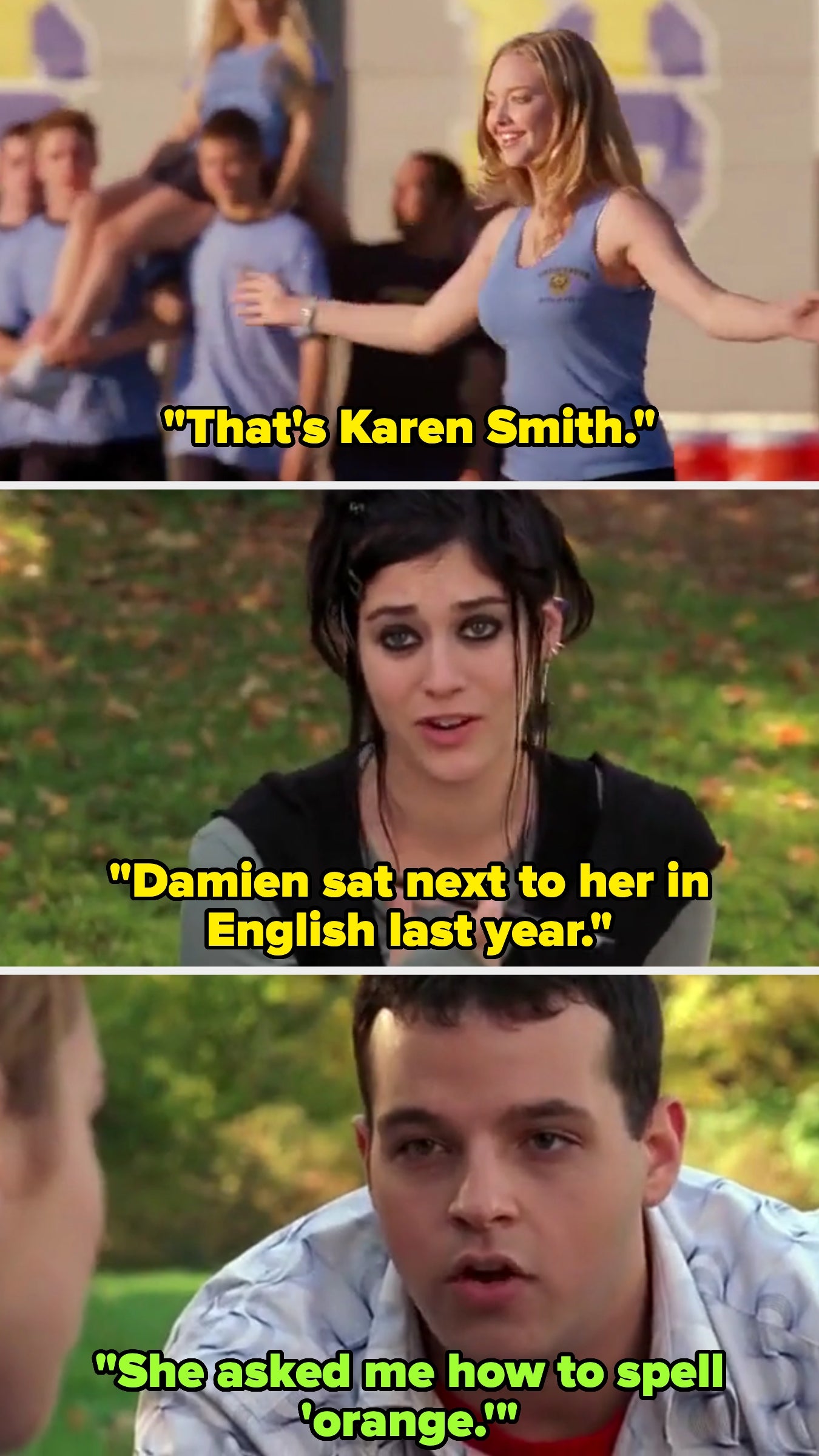
"Most don't know how to spell their name or write on the lines."

"Stimming is short for 'self-stimulating behavior.' It's when you do something for the sensory input, basically. It can either be a soothing thing (like block out a bad feeling by touching something nice instead) or a stimulating thing (like the brain not getting enough sensory input to know where your body is in space, so the person taps on something to ground themself). It used to be a thing you'd only hear about autistic people doing, as autism commonly leads to overstimulation or understimulation, depending on the individual. An overstimulated person can block out overwhelming sensory input with a more soothing one, and an understimulated person can stim to get the stimulation needed for the brain to function properly.

Stimming can be basically anything that gives sensory input, and is often done repeatedly. The stereotypical ones for autism tend to be things like rocking and hand flapping. A vocal stim is when the stimulation comes from making a noise, often an imitation of something that has been heard, usually over and over. I'm autistic, and when I was a kid, I'd imitate the same lines and sound effects from TV shows and toys over and over and over. Drove my parents wild.

It's very concerning that non-autistic individuals are doing it so much. It indicates they're used to being so constantly overstimulated (likely by high-dopamine screen content) that they can no longer function properly in a normal situation. So they start quoting the thing they like over and over as a socially acceptable way to try to bring back the stimulation they're craving."

"The phone thing is wild to see in real time — like, you can almost predict their test scores by how many times they try to sneak a peek during class."

"At the end of the school year last year, my first grader brought home a phone number from one of his friends. What does a first grader need a phone for? Is he running a business, wandering around town, or setting his own appointments? They're probably buried in that thing for 12 hours a day. It's really bad for adults, and we aren't in key developmental years."

"It's clear as night and day. The two kids that do read can also tell me what their parents do for work and where they are from. They ask questions and are generally curious kids. The other eight couldn't tell me what their parents do, and some of them couldn't even tell me what country/city they are from. They dont want to know why fire is hot, they just want to be told it is."

"My nephew's teacher said something similar at parent night, basically told everyone the kids who read at home are miles ahead, and it's not even subtle."

"3) Having empathy for characters is slower to develop. I would normally see it in 80% of the class by year nine; now it's year 10 onwards, and the majority of students understand character motivation and empathy at a decent level.

4) A decline in problem-solving, not when applied to complex problems, but general troubleshooting or finding a solution to small issues. It's almost a base-level learned helplessness.

5) A decline in personal responsibility, e.g., homework completed on time, remembering the correct items. Typically, these issues disappear in Senior years, but still remain.

6) Rise of right-wing extremism in general conversation and discussion. Asking for their evidence beyond 'Trust me, bro' works in making them question their beliefs.

It's not that they can't read. It's a much more complex issue. I have also found a lack of basic domestic skills in families. Such as fixing small tears or lost buttons on uniforms, getting stains out of uniforms, cleaning shoes and belongings. In the early 2000s, as an older teen, I was responsible for my school uniform, and I just don't see that now."

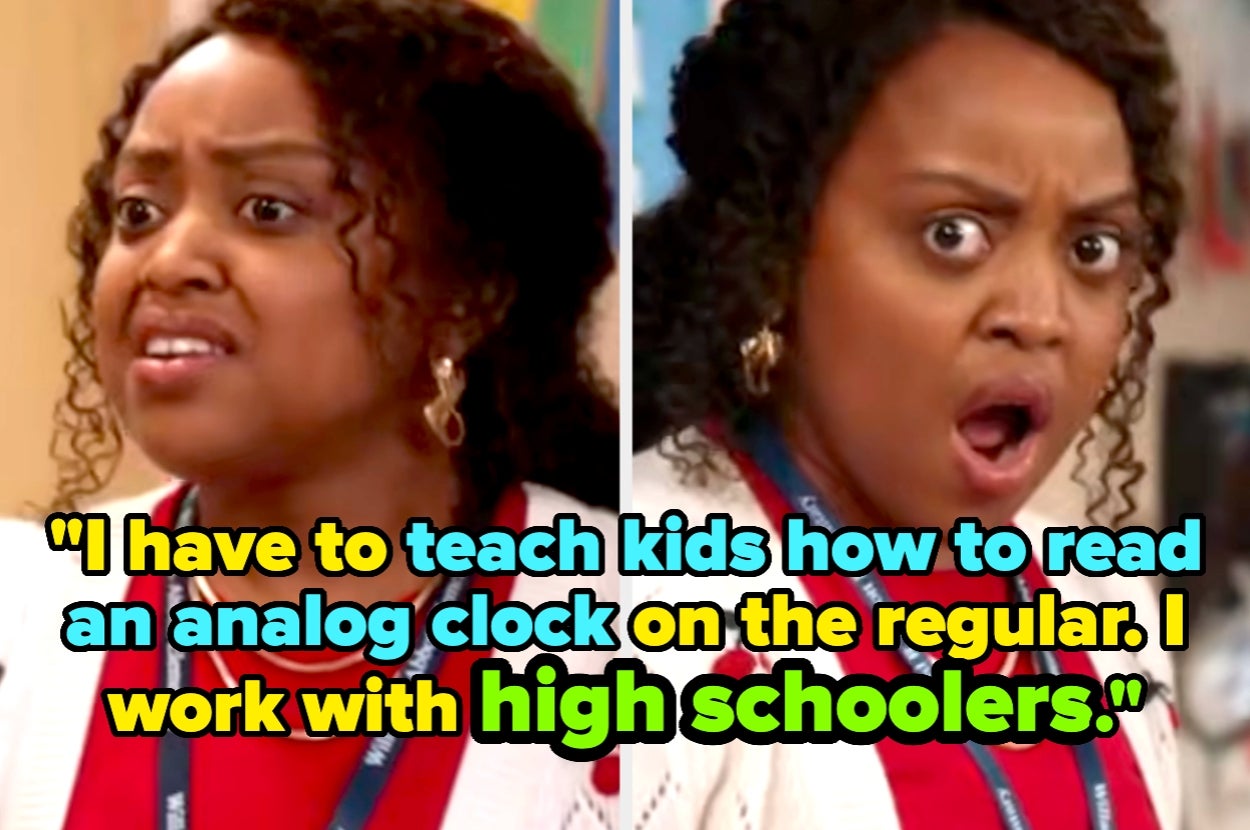
"I have to teach kids how to read an analog clock on the regular. I work with high schoolers."

"There's a slow shift towards going back to paper and pen; the schools that have done this have shown drastically better results. I do paper assignments, and my kids do better than the kids in classes where it's tech-driven."

"Not to bemoan how things 'used to be' but I distinctly remember our final spelling test in first grade included words like 'elephant' and 'giraffe' and we were expected to recognize and write most foundational high-frequency words (we had parents who came in to help us write little stories of our own in a writer's workshop-type set-up that got put in the classroom library) and the teacher regularly read books with complex vocabulary (his favorite word was 'pandemonium'). We were taught to check out and return our own books at the school library, memorize our lunch code and bus number, and color card (#264, Magenta), among so many other things.

The younger generation is not inherently less capable, though. The children in the school-age room love hearing complex chapter books and understand the storyline well. They are imaginative and creative, but often dont know how to express themselves. They are empathetic and much more inclined to include and not judge other children. Something has changed, and it is holding children back from learning critical capacities to be lifelong learners and to enjoy learning and reveling in pushing their abilities to the next level."

"For those who don't know, CVC = consonant-vowel-consonant. 'The younger generation is not inherently less capable, though.' I agree with this. I've been running TTRPGs for kids as an extracurricular activity for a few years, and while it takes them a bit, a lot of these 'missing' skills show up by the end of my program."

"It's the parents' and the people in charge's fault. EVERYTHING is done on Chromebooks, so they genuinely never develop writing skills. In the middle schools, on the rare occasion that they have to read a book, they're given an audiobook option in case actually reading feels like too much work.

The students are, frankly, incredibly lazy, bordering on illiterate, and do not give a flying fuck. But that's a result of the environment they're in now."

"You either coddle them, or you lose whatever imaginary control you have over the classroom. Every single classroom is dragged down by the kids with emotional problems that are impossible to solve."