foxnews Press
Russia pulled back from the Arctic, for now. NATO must act before those troops return
Images
1 / 20

2 / 20
3 / 20

4 / 20

5 / 20

6 / 20

7 / 20

8 / 20

9 / 20

10 / 20

11 / 20

12 / 20

13 / 20

14 / 20

15 / 20

16 / 20

17 / 20

18 / 20

19 / 20
20 / 20
Fox News chief political analyst Brit Hume says bipartisan support for a Russian sanctions bill in the wake of Sen. Lindsey Graham’s, R-S.C., death heightens its chances on ‘The Story.’

While serving as an infantry battalion and brigade operations officer in Alaska, I learned that the Arctic is among the most unforgiving battlefields on earth. Aircraft can deliver soldiers to remote areas, but they cannot improvise roads, fuel or supply units once the fighting begins. In extreme cold, poor preparation kills soldiers as surely as enemy fire.

That lesson returned as I studied recent satellite imagery from Russia's far north. Advanced air-defense systems are disappearing from established Arctic positions even as Russia pours concrete for barracks and depots closer to Finland and Norway.

The two trends look contradictory. They are not. Russian President Vladimir Putin is operating on two clocks: sustaining today’s war effort while building options for a confrontation on NATO's northern flank once the Ukraine conflict slows.

TWO ICEBREAKERS HEADED TO ALASKA AS US COMBATS RUSSIAN, CHINESE INFLUENCE IN ARCTIC

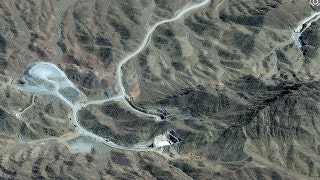
Start with what Moscow is giving up. Near the Rogachevo airfield on Novaya Zemlya, Russia's Arctic archipelago, most air-defense assets at a longstanding missile position have been removed. Farther south, roughly two dozen S-300 and S-400 systems have disappeared from sites around Severodvinsk, the White Sea city where Russia builds and repairs nuclear submarines. Some protection may remain, but the reduction at these two vital locations is unmistakable. Russia is not abandoning the Arctic. It is accepting greater risk there.

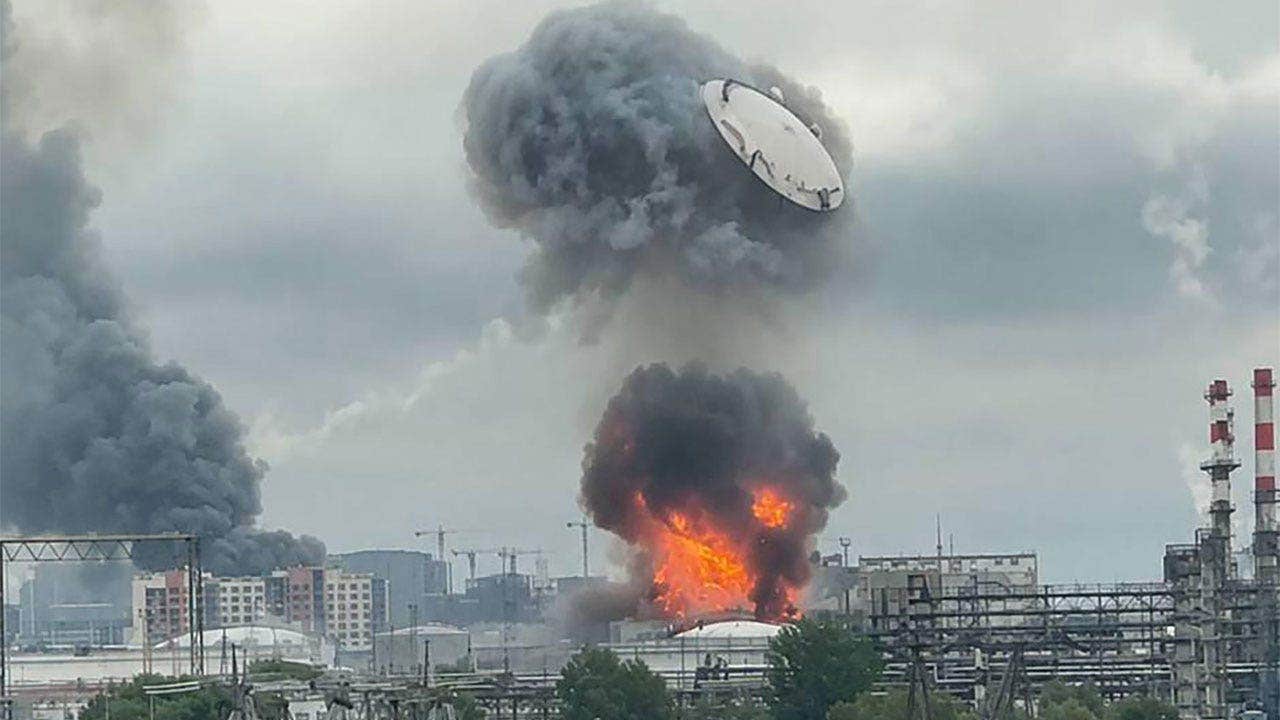
The Moscow Oil Refinery in Kapotnya burns after being hit during Ukraine’s June 18, 2026, drone attack on the Russian capital. (East2West)

Katarzyna Zysk, a professor at the Norwegian Institute for Defence Studies, says the removals reflect "a growing mismatch" between the targets Russia must protect and its available launchers, interceptors and trained personnel.

UKRAINE UNLEASHES MORE THAN 400 DRONES NEAR MOSCOW IN ONE OF WAR'S BIGGEST ATTACKS

Moscow apparently judges that NATO is unlikely to launch an imminent large-scale attack on Russia’s far north. That calculation allows the Kremlin to thin its Arctic defenses without incurring what it considers unacceptable risk. The empty positions show what Putin believes he can afford to expose today, and the reason traces straight back to Ukraine.

Kyiv has imposed a tax on Russia's air defenses. Its long-range drones have threatened airfields, refineries and other facilities, forcing Russia to protect an expanding target list with a finite number of launchers, missiles and crews. Air-defense batteries have appeared near the repeatedly targeted Saratov oil refinery and even in Moscow city parks.

'PURE HELL' IN MOSCOW AS UKRAINIAN DRONES STRIKE MAJOR REFINERY SUPPLYING CAPITAL'S FUEL MARKET

The exact destination of each system can't be confirmed, but the pattern is plain: Russia is shifting scarce defenses toward the cities, refineries and sites it now considers most vulnerable. Every target that demands new protection leaves something else exposed, and every interceptor fired at a Ukrainian drone must be replaced.

Russia’s problem is no longer merely stopping attacks. It is deciding which targets matter most, and selected Arctic sites keep losing that argument. Russia's predicament is also NATO's warning: fixed air-defense sites, fuel depots and airfields are acutely vulnerable to drones and saturation attacks.

That triage helps explain the empty positions at Rogachevo and Severodvinsk. It does not explain the construction farther west, along NATO's newly expanded northern frontier. Satellite-based reporting shows expanding Russian military facilities along the Finnish and Norwegian frontiers.

At Pechenga, near the Norwegian and Finnish borders, an expanded base could eventually hold as many as 17,000 troops, up from roughly 7,000. Construction at Kandalaksha includes new barracks, ammunition depots and a headquarters facility, with activity also rising around Petrozavodsk in Karelia. Finland's army commander, Lt. Gen. Pasi Välimäki, has warned that Russian forces near the Finnish border could eventually grow from roughly 20,000 to 80,000.

That does not mean 80,000 troops are assembled there today; Russia remains committed to Ukraine, and buildings aren't battalions. But infrastructure changes what becomes possible. Barracks, fuel depots and rail connections determine how fast formations can arrive and how long they can fight. Moscow may lack the troops to fill these installations now, but it is making certain that a shortage of prepared bases will not limit its choices later.

Russia’s problem is no longer merely stopping attacks. It is deciding which targets matter most, and selected Arctic sites keep losing that argument.

Skeptics will argue that a military bogged down in Ukraine lacks the strength to open another major conventional front. They are right about Russia’s current limitations — and wrong if they conclude those limitations make it harmless. Moscow does not need to occupy a continent to create a crisis. It could seek temporary local superiority near a port, airfield or reinforcement corridor, combining sabotage, drones, cyberattacks and limited military action to test whether NATO responds as one.

Together, the empty missile positions and the expanding frontier bases reveal Moscow's sequence: defend the regime and the war effort now, and preserve the ability to regenerate and redeploy formations once the war slows, freezes or ends on terms that let Moscow rebuild.

The new bases do not prove Putin has decided to attack Finland or Norway; they show Moscow wants the capability available. NATO has a window between Russia's northern construction and Moscow's ability to fill it with regenerated forces, and that window will not stay open indefinitely.

The alliance has begun to use that window. The accession of Finland and Sweden has already strengthened NATO’s northern posture. In February, NATO launched Arctic Sentry to integrate allied activity across the High North; in June, it established Forward Land Forces Finland, pairing a Swedish battlegroup in Boden with a multinational staff in Rovaniemi. But new organizations matter only if they produce deployable capability, and what NATO needs now is a clear division of labor.

Europe should provide the conventional mass required to defend its own territory: ground forces, counter-drone defenses, hardened ports and civil preparedness. The United States should keep providing what Europe cannot quickly replace: space-based intelligence, undersea surveillance, integrated air and missile defense and the nuclear deterrent underwriting the alliance.

That division of labor requires an orderly transition, not a politically driven pullback. Washington should preserve the bases, intelligence links and logistics nodes that make reinforcement possible even as European allies assume more of the conventional ground burden.

CLICK HERE FOR MORE FOX NEWS OPINION

In any northern conflict, logistics would shape the outcome before the first shots were fired. Deterrence in the High North rests not on summit declarations but on ports that remain open, rail lines that keep functioning, fuel that reaches the front and interceptors that can be replaced within the first week, not the first year.

CLICK HERE TO DOWNLOAD THE FOX NEWS APP

The Arctic punishes every planning failure: soldiers cannot fight if their vehicles will not start, their fuel freezes or their aircraft cannot land. The side that can move, supply and replace forces across the High North holds the advantage before the first brigade ever crosses a border.

Empty missile positions do not mean Russia is retreating. Unfinished barracks do not mean war is imminent. Together, they show Moscow accepting vulnerability now to preserve military options later. NATO must use the interval before those options become deployable. The time to prepare the Arctic is before the troops arrive.

CLICK HERE TO READ MORE FROM ROBERT MAGINNIS

Robert Maginnis is a retired U.S. Army infantry officer, senior fellow for National Security at the Family Research Council, and the author of 14 books. His latest, "The New AI Cold War: Liberty vs. Tyranny in the Age of Machine Empires," examines the global contest for AI supremacy and its implications for freedom.

Get the recap of top opinion commentary and original content throughout the week.

By entering your email and clicking the Subscribe button, you agree to the Fox News
        Privacy Policy
       and
        Terms of Use
      , and
      agree to receive content and promotional communications from Fox News. You understand that you can
      opt-out at any time.

Subscribed

You've successfully subscribed to this newsletter!